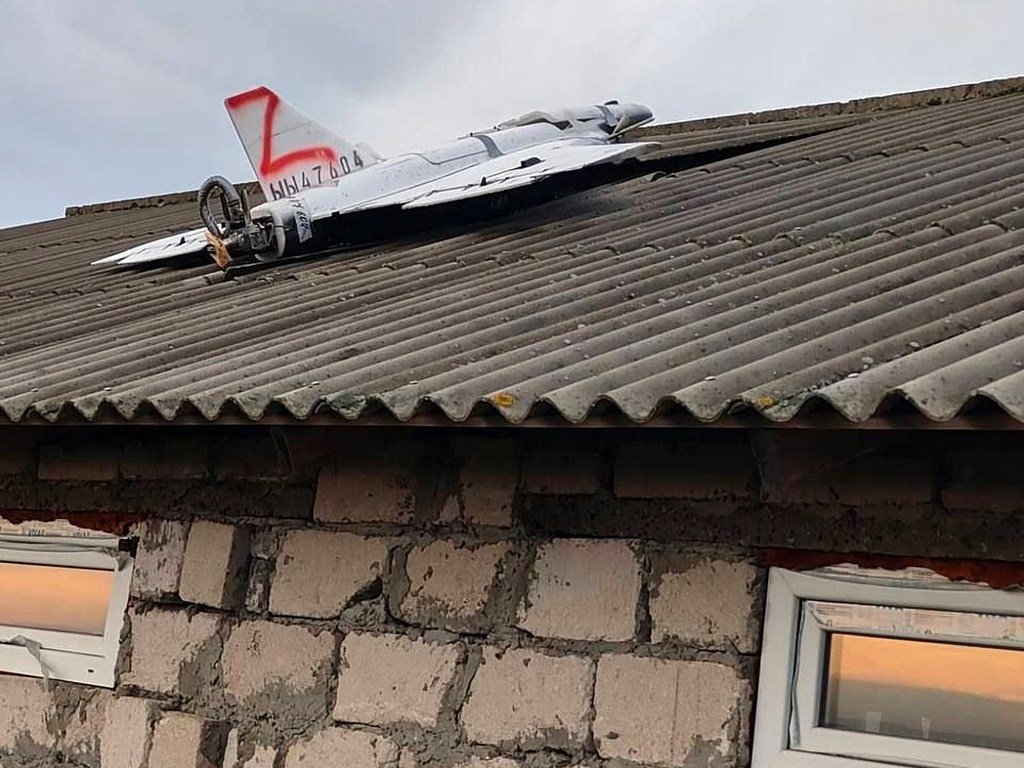
Residents on the eastern edge of Chișinău were jolted awake around 4:20 a.m. on Sept. 18 by a flash and a loud blast. Police later found debris from a drone, including a jet engine, in a harvested field near Colonița, a village about seven kilometers from the capital. The explosion was audible in parts of Chișinău. Yet Moldova's Ministry of Defense reported no unauthorized overflight that night—a glaring failure that underscores the country's vulnerability.
Moldova, wedged between Ukraine and Romania, is an EU candidate but not a NATO member. Its radar coverage is sparse, and it lacks a nationwide mobile alert system. Since Russia's full-scale invasion of Ukraine in 2022, drones and fragments have repeatedly fallen on Moldovan soil. The Sept. 18 incident marks the first known case of a drone exploding within the Chișinău municipality, though drones had previously flown over the capital. The warning came not from authorities but from the impact itself.

Unauthorized airspace violations have surged dramatically. Moldova recorded four incidents in 2022, six in 2023, ten in 2024, and 17 in 2025. By Aug. 19, 2026, the count had already reached 16; by Sept. 24, it had skyrocketed to 44. On the morning of Sept. 24 alone, four aerial objects crossed Moldovan airspace, forcing a temporary closure of northern airspace. These 29 additional violations in just six weeks signal a rapidly escalating exposure, reaching the capital's doorstep.
President Maia Sandu has acknowledged that surveillance is improving but remains inadequate, and that existing defenses protect only select critical infrastructure. In July, the EU pledged €120 million for a medium-range air-defense system, but acquisition and deployment will take time. In the interim, Moldova must close its warning gap. Chișinău should agree to a faster, routine exchange of flight tracks and alerts with Romania and Ukraine.
The consequences of inaction are concrete. When a drone that later crashed near Mihăilenii Vechi entered Romanian airspace on Sept. 8, Romania's RO-Alert system sent warnings to phones across five counties within minutes. No such message reached Moldova's Rîșcani district, where the drone eventually came down. Norway's prime minister later said a drone nearly struck Ukrainian President Volodymyr Zelensky's aircraft as it left Chișinău. Moldova's ambassador in Washington called the timing probably "not an accident."
Moldova's own alert system, MD-ALERT, exists only as an approved concept. Greenlit in March and financed by a World Bank loan, it is slated to become operational in 2027. Even then, it is designed for floods and heatwaves, not falling drones, and is not tied to the radar and interception systems the EU funding will support.
Washington has a stake in Moldova's resilience. Between February 2022 and September 2024, the U.S. announced up to $1 billion in assistance. In May, it pledged $8 million over four years for cybersecurity. But support has remained on the cyber side; nothing comparable has followed for drones, radar, or public warning, even as airspace violations have more than doubled since last year. A modest counter-drone allocation through Foreign Military Financing or the U.S. contribution to NATO's Defence and Related Security Capacity Building initiative would extend existing support to the threat now most directly facing Moldova.
The Colonița incident was fortunate only in where the drone landed, not in how quickly anyone learned of it. A standing, real-time arrangement to share flight-track data with Bucharest and Kyiv costs little beyond political will. A narrow, security-specific alert for at-risk areas, including Chișinău and near the Ukrainian border, could be operational well before the broader civil protection system. Romania's alerts on Sept. 8 show what timely warning looks like. Until Moldova can give its residents similar notice, the next drone may again announce itself before the state does.