Democrats are recalibrating their national strategy after a series of stunning midterm victories across the South, with party operatives and elected officials now pressing for sustained investment in the region ahead of the 2028 presidential race.
The party flipped Senate seats in North Carolina, South Carolina, Texas, and Mississippi, and captured governorships in Georgia and Texas. It also took control of state legislative chambers in Texas, Georgia, and North Carolina, signaling a broad realignment in a region long considered Republican territory.

Fred Hicks, a Democratic strategist based in Georgia and Florida, argued that the South is no longer a lost cause. "The South is not just winnable; it also completely changes the calculus of the path of victory for the presidency if any Southern states are in play," he said. Hicks suggested Democrats should borrow from the GOP's 2024 playbook of targeting the blue wall, but aim it at the red wall. "We should not cede anything in the South," he added.
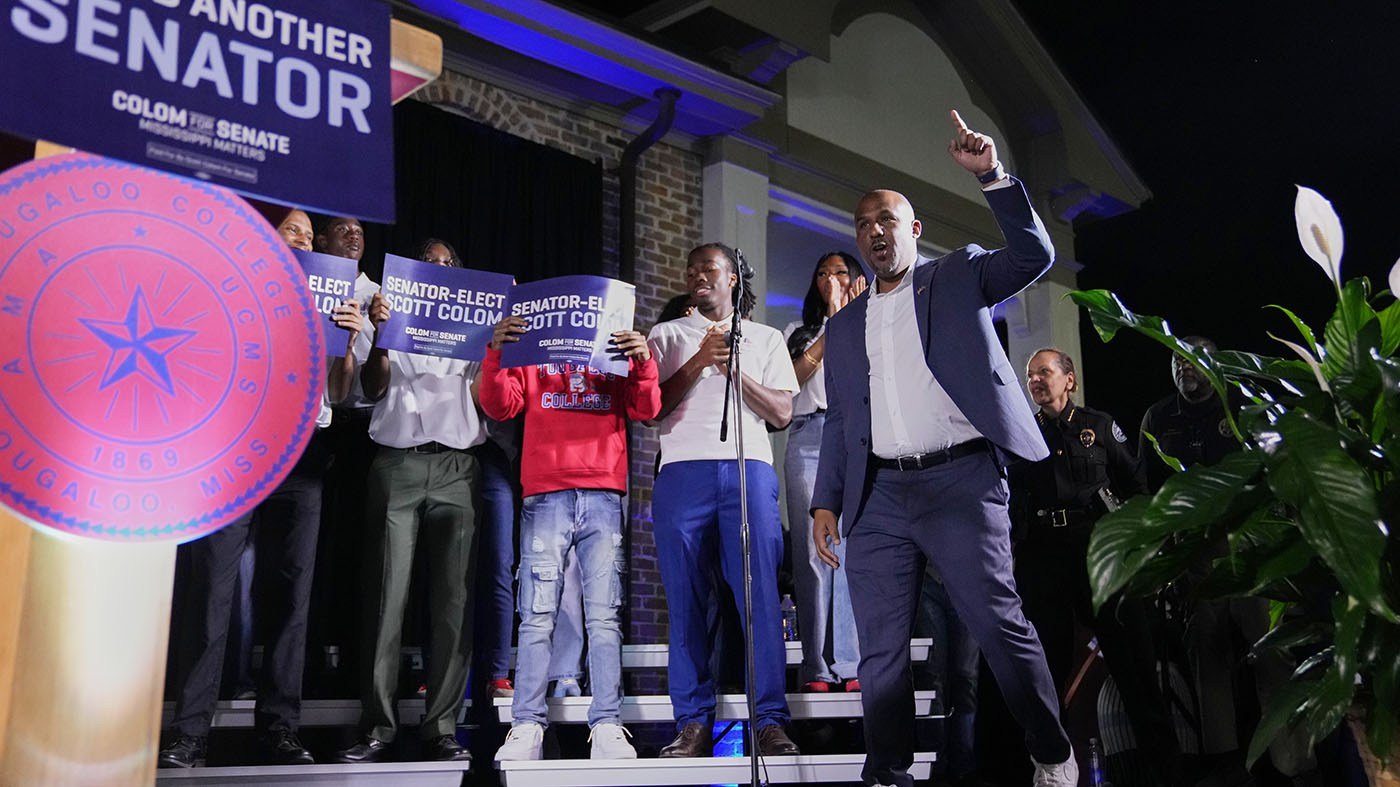
The party's optimism was crystallized by Democrat Scott Colom's upset victory in Mississippi's Senate race, flipping a seat that had been in Republican hands for decades. Kentucky Governor Andy Beshear, a rare Democrat in a deep-red state, celebrated the win on social media, saying Southern Democrats have been "overlooked, left out, and even looked down upon" but are now "on the rise."
Senator Raphael Warnock (D-Ga.) noted that in the past, the party only invested in Southern states to force Republicans to spend money. "Until we began to win," he told The Washington Sun. Colom himself blamed the "solid R" rating from prognosticators for making fundraising difficult, arguing it "proves that the future of the party has to include the South."
National Democrats had begun eyeing the region early in the cycle. The Democratic Senatorial Campaign Committee expanded its battleground map to include Florida, Georgia, and Texas, and the Democratic National Committee launched a Southern States Research Hub in August. But serious spending in Mississippi did not begin until October, when the DSCC injected $500,000 just days before the election.
Florida Senate candidate Angie Nixon, who narrowly lost to Republican incumbent Ashley Moody, criticized her party for being "gun-shy" about supporting Democrats in the South, especially Black women. Despite backing from top Democrats, she said on "The Don Lemon Show" that the money arrived too late to make a difference.
Black voters were pivotal in these victories, turning out in large numbers amid low approval ratings for President Trump and Republican redistricting efforts that critics said diluted Black political power. Strategist Antjuan Seawright, based in South Carolina, described a "tectonic plate shift" across the region. "We have to treat the South and the coalitions that make up the Southern coalition as a long-term investment, not an expense," he said.
The wins also made history: Colom will be Mississippi's first Black senator in over a century, Georgia's Keisha Lance Bottoms will be the nation's first Black woman governor, and Texas's Gina Hinojosa will be the state's first Hispanic woman governor. As Democrats look to 2028, the question is whether they will heed the call to build on these gains or revert to a focus on the Midwest. The party's recent victories serve as a warning to the GOP, not a mandate, and history may favor Democrats in 2028.