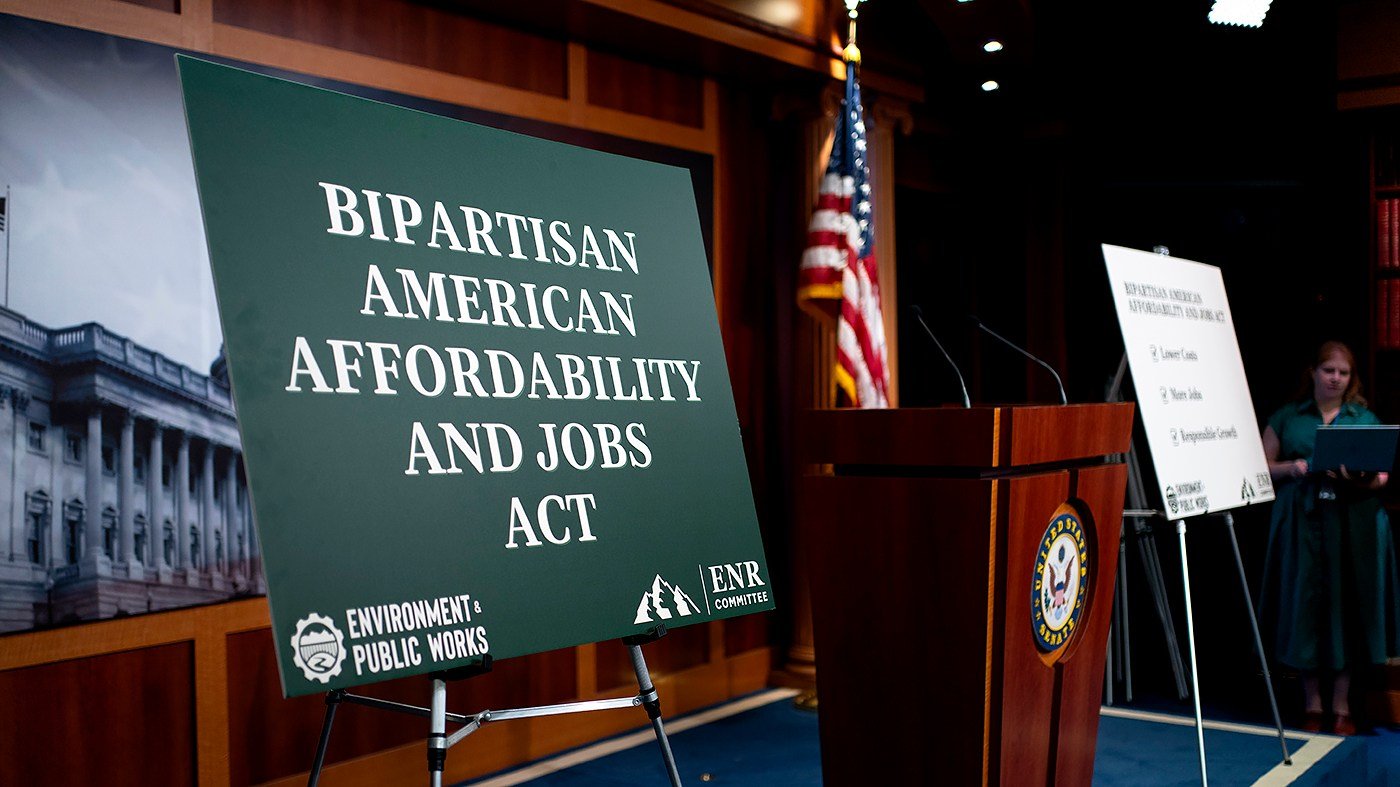
The Senate on Monday voted 73-0 to invoke cloture on the Bipartisan American Affordability and Jobs Act, a sweeping permitting reform package that has been under negotiation for nearly two years. The procedural move sets up the bill for consideration and possible passage before the 119th Congress adjourns on Jan. 3.
The vote followed a day of lobbying by Citizens' Climate Lobby volunteers, who fanned out across the Capitol complex. In a statement, the group's executive director, Ricky Bradley, said the momentum is real but more work remains. "Senators should use that time to finalize and pass it, and the House should follow suit," he said.
The bill's sponsors—Sens. Shelley Moore Capito (R-W.Va.), Mike Lee (R-Utah), Sheldon Whitehouse (D-R.I.), and Martin Heinrich (D-N.M.)—crafted the compromise to address a permitting system that supporters say has stalled clean energy projects and driven up costs. The legislation would impose firm deadlines on federal agencies for environmental reviews and permitting decisions, prevent agencies from arbitrarily pulling permits, require data centers to pay their fair share of grid costs, and give the federal government authority to approve interstate transmission lines.
Backers point to a litany of projects delayed or killed by the current process. The SunZia wind and transmission project in New Mexico, capable of powering about 1 million homes, began permitting in 2008 and only finished this year. Cape Wind, which would have been the nation's first offshore wind farm, went through 17 agencies and 30 lawsuits over 15 years before it was canceled. The Esmeralda 7 solar and storage project in Nevada, designed to power roughly 2 million homes, had its environmental review canceled mid-evaluation and was told to start over.
"Every clean energy project that gets put on hold means worsening climate impacts, dirtier air, fossil fuel plants that keep running in frontline communities, more threats to biodiversity, higher energy bills, and more blackouts and brownouts," Bradley said.
According to Resources for the Future, the bill would cut power-sector emissions by about 2 billion tons through 2041 and expand total American transmission capacity by 30 percent. The Center for Climate and Energy Solutions estimates that delaying these reforms until 2030 would forfeit roughly $55 billion in electricity system savings and 800 million metric tons of emission cuts through 2040.
The bill has drawn support from a broad coalition, including climate advocacy groups, organized labor, and the clean energy industry. Its bipartisan nature was reflected in the 73-0 cloture vote, though some senators supported the procedural motion with the expectation of further adjustments before final passage. The Senate is expected to remain in session to continue work on the bill.
Supporters warn that this may be the last chance for comprehensive permitting reform. In January, a new Congress will convene with a new majority, new committee leaders, and new members. Because permitting policy cannot pass through party-line reconciliation, any future reform would still require bipartisan support. "Holding out for a different deal in 2027 requires us to bet on a bill that probably won't come, while clean energy projects keep waiting in line and energy costs keep rising," Bradley said.
Citizens' Climate Lobby volunteers have held over 2,000 meetings with congressional offices on permitting reform since 2023. Bradley said the Senate has done the heavy lifting by finding a bipartisan deal. "Now, Congress needs to finish the job. Pass the Bipartisan American Affordability and Jobs Act, send it to the president's desk before the end of the year, and get clean energy built," he said.