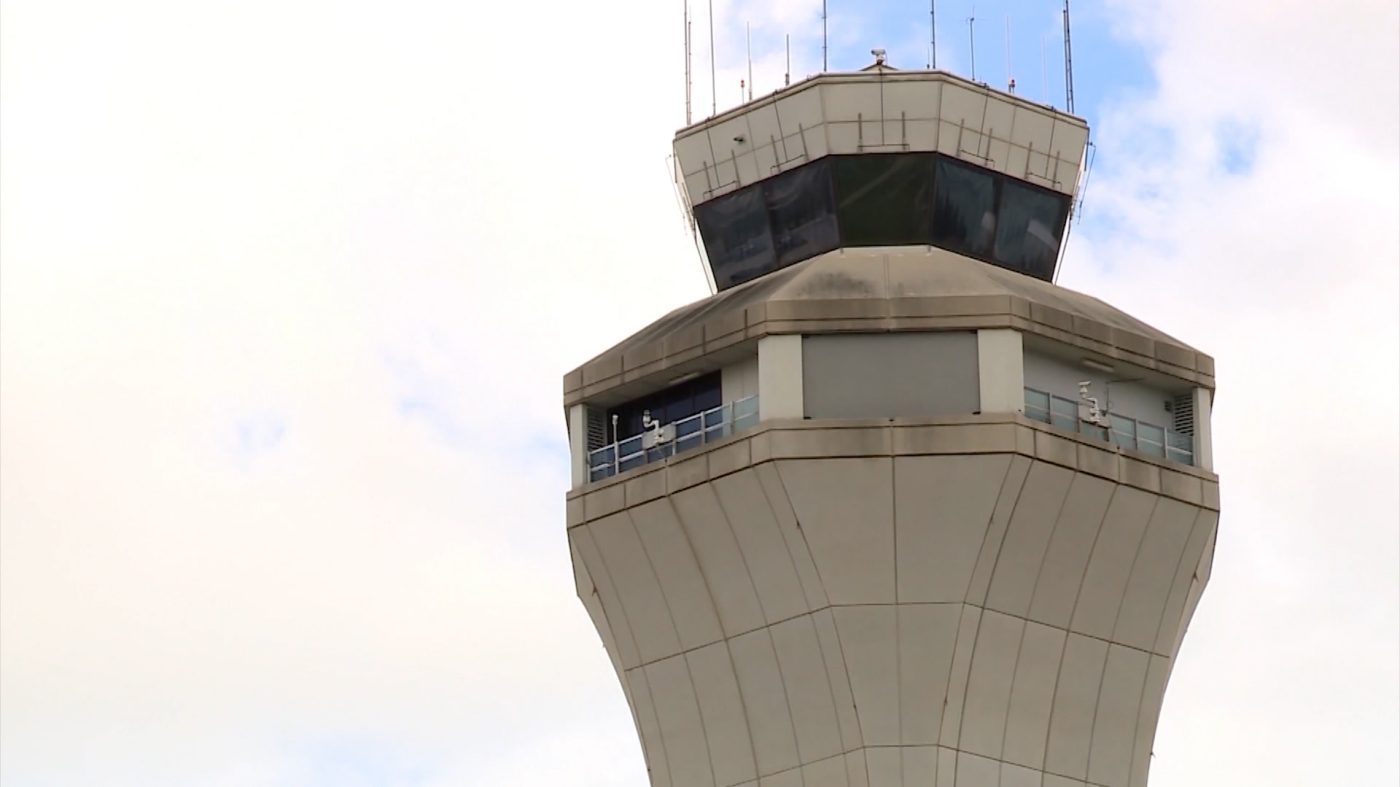
Transportation Secretary Sean Duffy is pressing Congress for $50 billion in emergency funding to modernize the nation's air traffic control system, following a weekend ground stop that forced the cancellation of roughly 17,000 flights. But Democratic lawmakers are pushing back, demanding a full accounting of why the system failed and what happened to billions already approved for the Federal Aviation Administration (FAA).
The request comes after a communications failure on Friday triggered a nationwide halt in air travel, stranding passengers and exposing the fragility of the FAA's aging infrastructure. Duffy has framed the funding as a bipartisan necessity, telling CNN on Sunday, "This is the most bipartisan idea in Washington right now, because everyone agrees to it. And when everyone agrees, shouldn't we then take action? Let's pass a bill and give us the resources to finish this job."
President Trump echoed that urgency on Truth Social, calling the money "desperately needed" and urging Congress to act "all at once, not in drips and drabs." But on Monday, he distanced himself from the failure, telling reporters, "I think the one good thing that comes out of it — I'm sure Congress now will give us the money to pay."
Republicans point to the $12.5 billion already allocated to the FAA in the One Big Beautiful Bill Act passed in July 2025, which was intended to replace aging radar systems, upgrade telecommunications, and boost controller hiring. Democrats, however, are questioning whether that money has been spent effectively. Rep. Rosa DeLauro (D-Conn.), the top Democrat on the House Appropriations Committee, called Duffy's new request a "ransom with no plan," noting that previously appropriated funds "sat largely unspent."
Sen. Tammy Duckworth (D-Ill.), ranking member on the Senate Commerce Subcommittee on Aviation, Space and Innovation, has vowed to "demand answers" from the FAA about the ground stop's root cause. She also pushed back on Duffy's suggestion that a new telecommunications system could be built "quickly," warning, "We don't need to just 'build it quickly.' We need to build it safely."
The administration's response has drawn criticism from both sides of the aisle. At a late-night press conference Friday, only Duffy and Homeland Security Secretary Markwayne Mullin appeared, with Mullin crediting Trump's leadership. Republican strategist Doug Heye called the president's absence a "missed opportunity," saying, "Instead, he was absent." Brookings Institution senior fellow Darrell West agreed, arguing Trump should have been there "just to reassure people that things were under control."
Industry groups, including the National Air Traffic Controllers Association (NATCA), support the funding push. NATCA President Nick Daniels likened the current system to "a PlayStation One trying to talk to a Game Boy," stressing the need for a modernized, integrated platform. "They know, just like we know, the investment is needed more than ever if we're going to keep up with the next demands of aviation in the U.S.," he said.
Legislation introduced by Sen. Eric Schmitt (R-Mo.) and Rep. Tracey Mann (R-Kan.) — the Modern Skies Act — proposes $30 billion in total funding, with $10.1 billion for ATC modernization and $10 billion for terminal improvements. Schmitt urged the Senate to "take it up immediately."
But West cautioned that Congress is unlikely to act without a "very detailed" plan showing how the new money would be spent and what happened to the previous funds. With the midterm elections fresh and the administration facing scrutiny, the ground stop has become a flashpoint in the broader debate over government competence and spending priorities. For more on the political fallout, see how Duffy is deflecting blame and his criticism of Congress and past administrations.