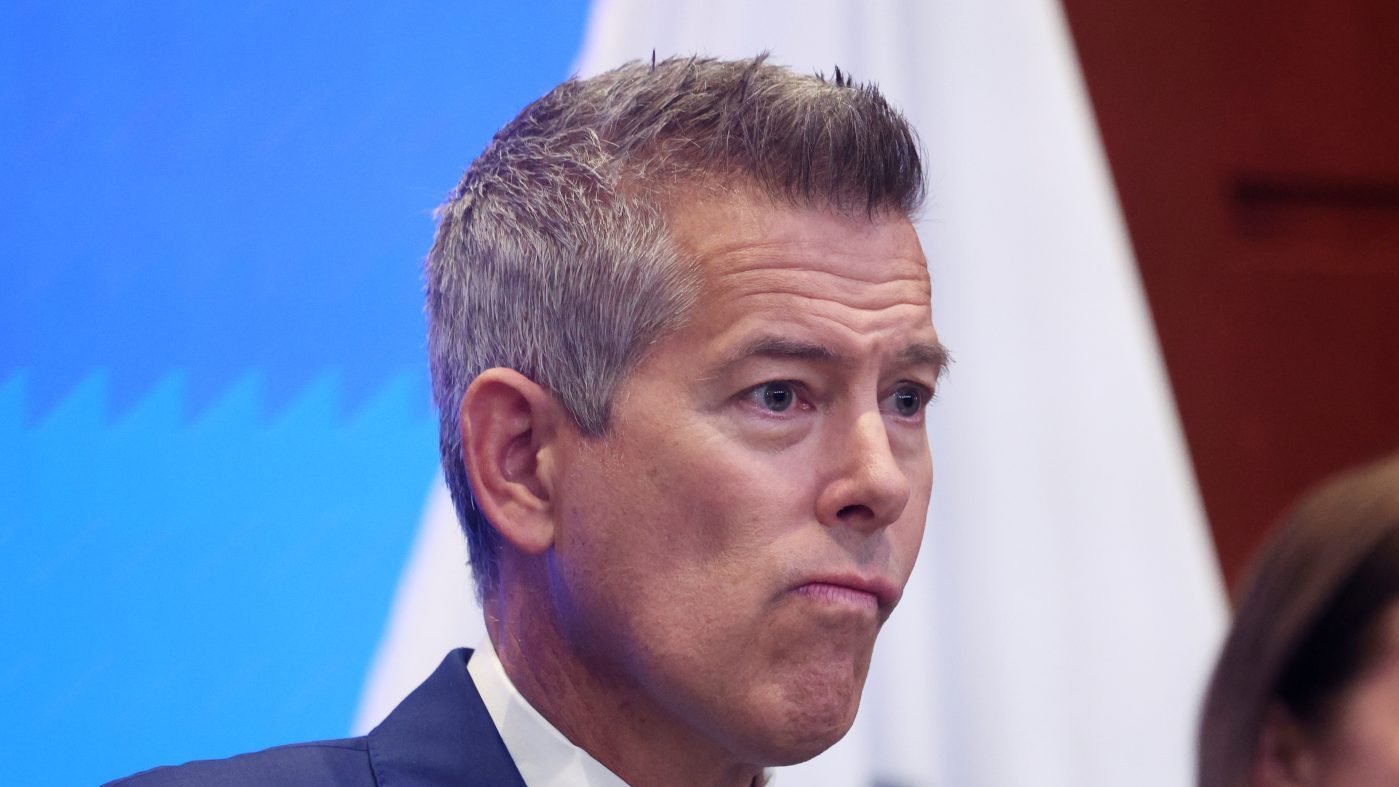
Transportation Secretary Sean Duffy on Sunday blamed Congress and his predecessors for the chronic underfunding of the nation's air traffic control system, days after a technical failure triggered a nationwide ground stop that snarled air travel across the country.
In an interview with CNN's "State of the Union," Duffy doubled down on his request for an additional $50 billion to modernize the system, arguing that decades of neglect have left critical aviation infrastructure dangerously outdated. He noted that the $12.5 billion previously approved by Congress for upgrades is insufficient.
"$12.5 billion after decades of lack of investment is not nearly enough money to fix all the problems we have in the airspace," Duffy said, pointing to specific needs like radios, radar, and telecommunications equipment that the existing funds were earmarked for, which he argued leaves other deficiencies unaddressed.
The secretary highlighted deteriorating facilities, including air traffic control towers with broken elevators, failing air conditioning, and leaking roofs, as evidence of the system's decline. He deflected personal responsibility for Friday's disruption, telling CNN, "I take responsibility for what was given to me by prior administrations."
"When we do work and things go wrong, of course I'm the secretary. But I also have to acknowledge what was delivered to me," Duffy said. "I have systems that are from the 90s. I have radar that are from the 60s and 70s."
Democrats, however, pushed back on Duffy's attempt to shift blame. Sen. Chris Van Hollen (D-Md.) argued that Congress has already provided the administration with the funding it requested, calling Duffy's criticism "rich."
"It's really rich to hear the secretary pointing the fingers at Congress when Congress has given the administration what they asked for," Van Hollen said. "If they need more, they should come up and justify it. I will support what is necessary to have a safe system and a reliable system."
The dispute comes as the Trump administration pushes for new air traffic modernization funds following the ground stop, which also sparked broader questions about FAA oversight. Key takeaways from the disruption include concerns about aging technology and the political fallout.
Duffy's comments arrive amid his public demand for $50 billion to replace the outdated system, a proposal that has drawn both support and skepticism from lawmakers. The fallout from the ground stop continues as new airport incidents emerge, intensifying scrutiny on the FAA's readiness.