Flock Safety, a leading surveillance technology firm, has deployed more than 100,000 automated license plate readers across over 6,000 communities in 49 states, partnering with more than 5,000 law enforcement agencies. The company’s rapid expansion has sparked a growing debate over privacy and civil liberties, with critics warning that the systems enable mass tracking of innocent citizens.
Flock’s cameras are solar-powered and use artificial intelligence to capture not just license plate numbers but also vehicle characteristics such as make, model, color, roof racks, and bumper stickers. Law enforcement agencies can then search the collected data for specific vehicles or patterns, a capability that supporters say is invaluable for solving crimes. However, opponents argue that the indiscriminate collection of data on all passing vehicles represents a form of mass surveillance that lacks proper oversight.

Knox County Mayor Glenn Jacobs, a vocal critic, described the system during a NewsNation interview: “They’re just collecting data as an active surveillance system, and every car that passes through, the data is collected from that car license plate, using AI. They make a vehicle fingerprint of the car that includes distinguishing features, make, model, color, bumper stickers, roof racks, all these different things.” He added, “And then it’s retained for sometimes 30 days or more and then in a searchable database, which really turns the whole concept of a license plate reader on its head in that they’re not looking for one specific vehicle or specific vehicles. They’re just pulling everything in.”
Flock founder Garrett Langley says the company was born out of frustration with crime in his hometown of Atlanta. During a TED talk in April, Langley recounted: “Crime felt too easy to get away with. It didn’t make sense that you could steal someone’s car … or you could kill someone and have a 50 percent chance of getting away with it. … So I did what engineers do. I built a license plate-reading camera.”
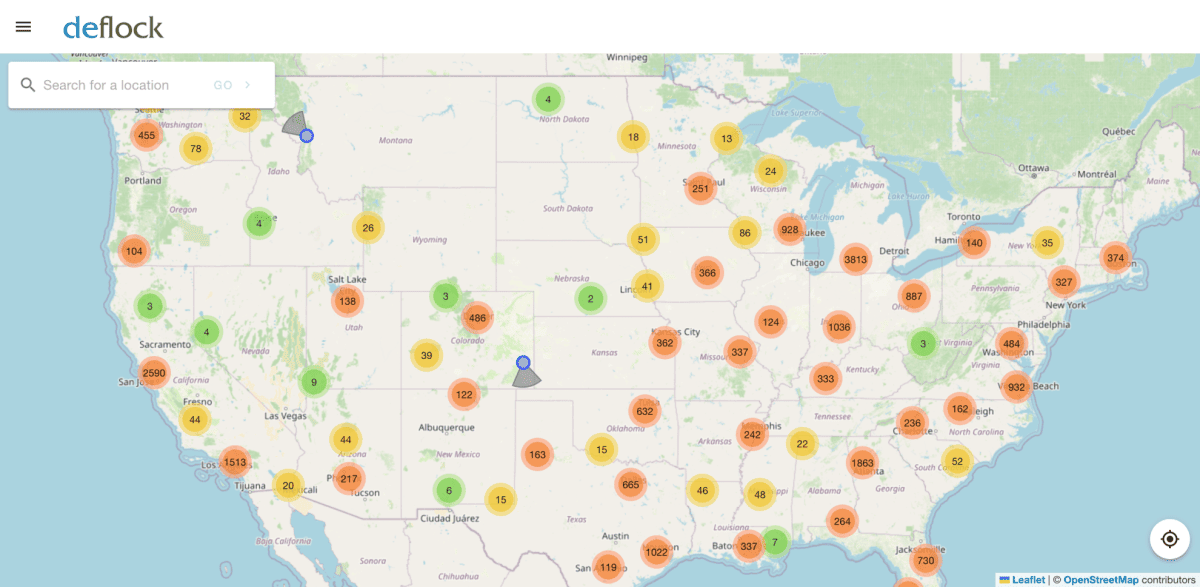
While Flock doesn’t publish a detailed list of camera locations, an organization called DeFlock has stepped in to fill that gap. DeFlock, which aims to raise awareness about the privacy threats of automatic license plate readers, maintains a crowdsourced map of alleged camera locations across the U.S. The map relies on volunteer contributions and the OpenStreetMap community, not on data from Flock or any government agency. Nexstar could not independently verify the locations, but the interactive map allows users to zoom into their neighborhoods and see reported cameras.
The map includes cameras from other tech companies as well, not just Flock. It’s part of a broader trend of surveillance technology deployment, which has drawn scrutiny from lawmakers and privacy advocates. In recent months, dozens of city councils have voted to remove or reject Flock cameras, reflecting a rising backlash. Some jurisdictions are instead implementing stricter safeguards. For instance, San Jose, California, limits data storage to 30 days and restricts camera placement outside abortion clinics, health care facilities, and places of worship, as reported by San Jose Spotlight.
The debate over Flock cameras intersects with broader discussions about digital surveillance and privacy. A recent Supreme Court privacy ruling and new Delaware legislation are reshaping the legal landscape for such technologies. Meanwhile, federal efforts like the Kids Online Safety Act have stalled in the Senate, highlighting the difficulty of passing comprehensive privacy legislation.
As Flock cameras continue to multiply, the tension between public safety and personal privacy remains unresolved. For residents wondering how many of these cameras are in their own neighborhoods, DeFlock’s map offers a starting point—though the accuracy of that data is unverified. The company itself maintains that its technology is a valuable tool for law enforcement, but the growing chorus of critics suggests that the debate is far from over.