President Trump on Tuesday would not commit to honoring a federal court decision if a judge strikes down his administration's ban on three news organizations, saying he has the authority to purge what he calls fake news from the White House press pool.
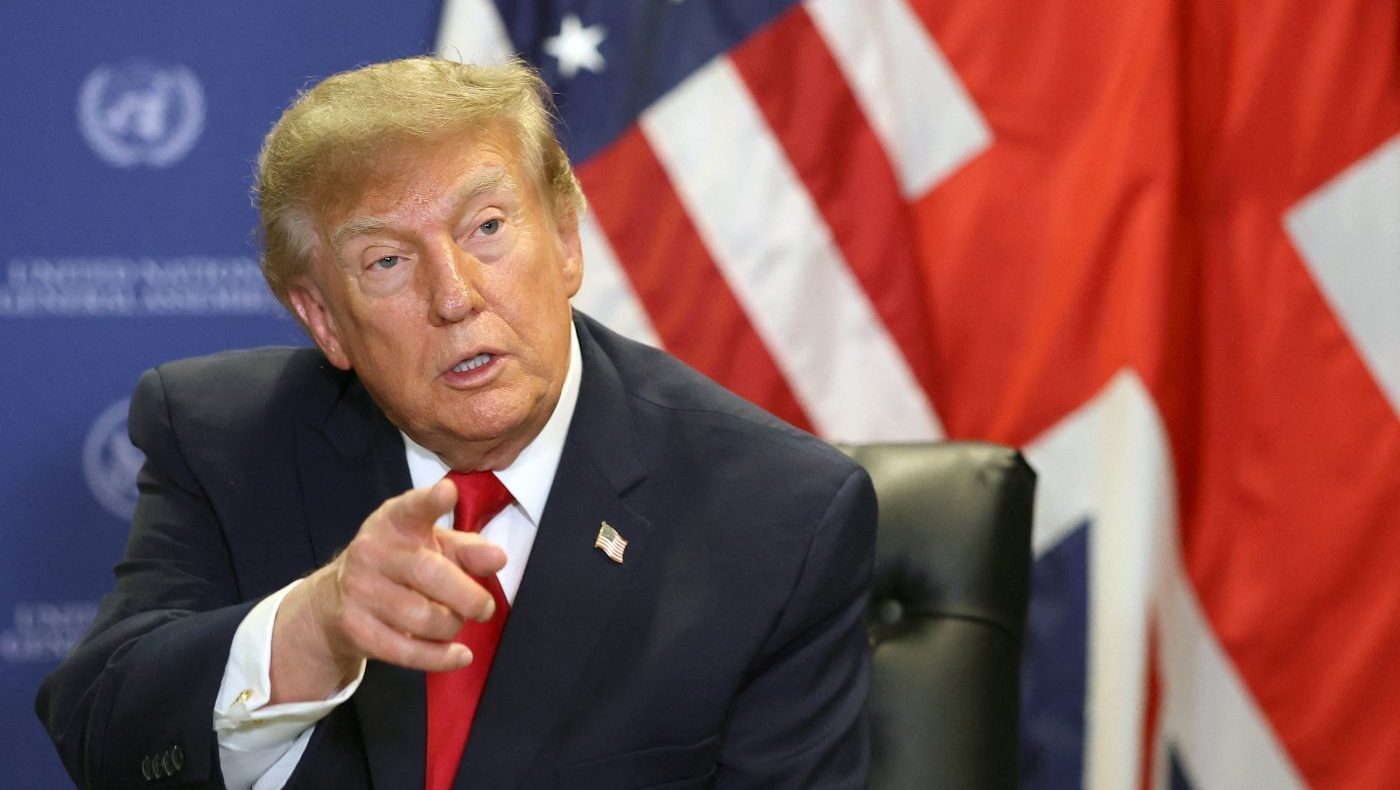
During a bilateral meeting with UK Prime Minister Andy Burnham on the sidelines of the United Nations General Assembly, Reuters asked Trump: "If the district court decides against you, will you let the three media outlets back in?"
"It probably will, because this is a judge who is not a particularly fair judge," Trump replied, without stating whether his administration would comply with the ruling.
"I think we have a right to clean out fake news," he added. "And by the way, they said they weren't going to be here, but they came. I knew that would happen."
The three outlets—CNN, MSNOW, and Politico—were banned from White House coverage last week and subsequently sued the administration. The case is before U.S. District Judge Timothy Kelly, whom Trump appointed to the federal bench in Washington during his first term. A telephonic hearing is scheduled for Wednesday afternoon.
Kelly previously ruled in CNN's favor in a similar dispute during Trump's first term, when the White House revoked the hard pass of correspondent Jim Acosta.
Trump's comments come as major broadcast networks and Fox News announced they would not participate in the White House TV pool in solidarity with CNN. However, none of those outlets said they would boycott coverage of Trump's UN address and meetings.
When pressed to explain why the banned outlets' reporting was dangerous, Trump accused them of making "false statements about the war" and of lacking sources. "It's very dangerous for our country, and I won't stand for it," he said.
In a joint statement announcing their lawsuit on Monday, the three outlets said: "The government does not decide what the press reports or publishes. Without notice or process, the White House revoked our journalists' credentials because it objected to our reporting. Left unchallenged, this threatens press freedom and the public's right to independent journalism free from government interference."
The legal showdown underscores broader tensions between the Trump administration and the press, with the White House asserting broad authority over media access. The outcome could set a precedent for how far the executive branch can go in restricting credentials based on coverage. As Trump continues to dominate international headlines—from threatening Iran at the UN to pressing for an end to the Ukraine war—the media ban fight at home remains a flashpoint over First Amendment protections.