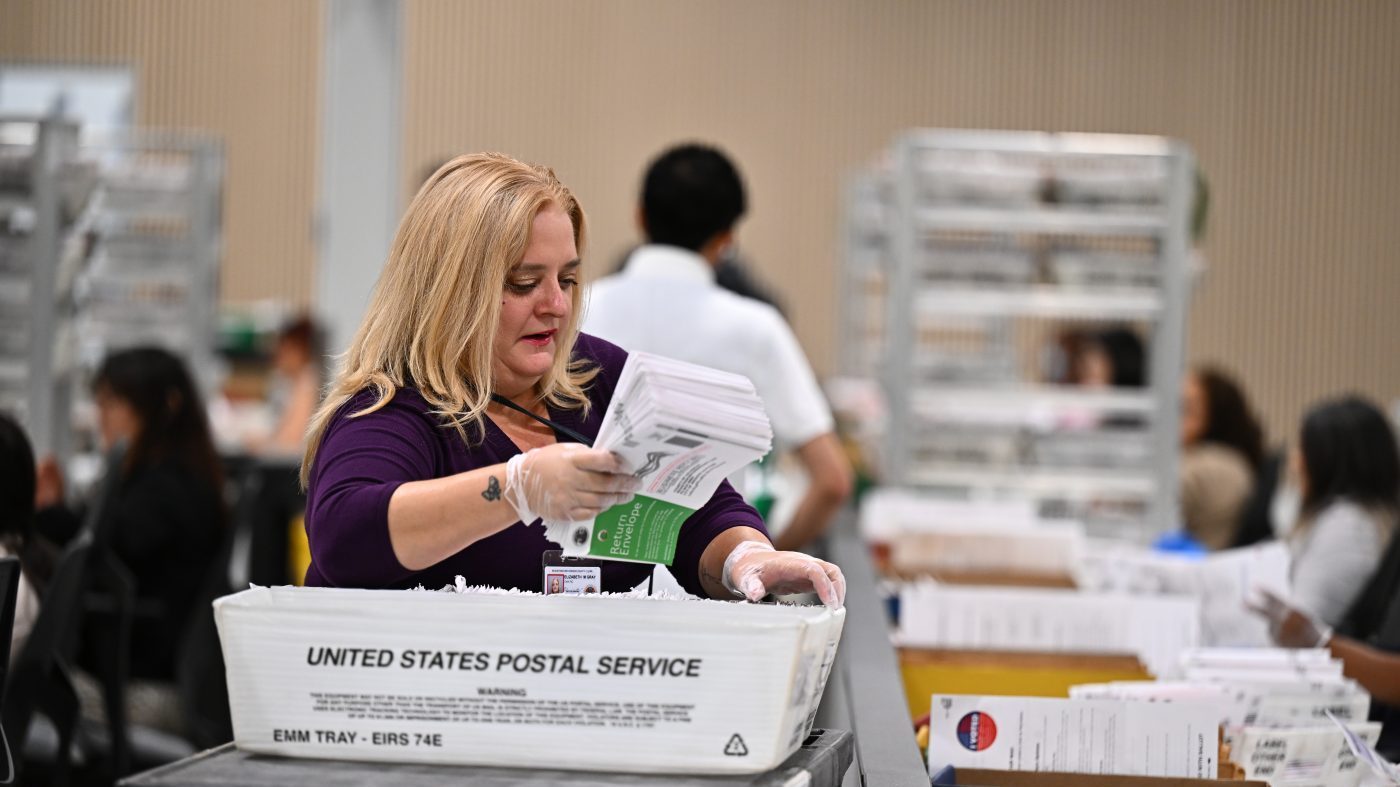
The Justice Department on Friday moved to dismiss its lawsuit against California, a case that had sought to force election officials to quarantine roughly 20,000 ballots cast by voters the federal government claimed were not U.S. citizens. The withdrawal comes after the Supreme Court rejected the administration's emergency request just before Election Day, and after Republicans suffered sweeping losses in the midterms.
The DOJ's original complaint, filed in late October, argued that the state's refusal to set aside those ballots for citizenship verification posed a risk of illegal voting. A federal judge had already denied the administration's request, and the Supreme Court's unsigned order on November 4 effectively ended the effort. Friday's motion formally closes the case.
The California suit was one of several election-related legal actions the Trump administration pursued in the final weeks of the campaign. In Alaska, the DOJ had sued to block certification of the Senate race if incumbent Republican Dan Sullivan lost, alleging that the presence of another candidate named Daniel J. Sullivan Jr. on the ballot could confuse voters. A judge dismissed that case before Election Day, though the administration signaled it would appeal. As of Friday, Sullivan trailed his Democratic challenger, Mary Peltola, with thousands of ballots still uncounted.
The decision to drop the California case follows a bruising election night for Republicans, who lost at least seven Senate seats and 42 House seats, with more races still outstanding. The DOJ's retreat is seen by legal observers as an acknowledgment that the legal fight was both unlikely to succeed and politically untenable after the voters' verdict.
The administration's broader push against alleged noncitizen voting has drawn criticism from voting rights advocates and state officials. Earlier this year, the Department of Homeland Security accused Nevada of having nearly 16,000 potential noncitizens on its rolls, but later revised that figure to 185. When Nevada officials investigated, they found that all of those individuals were actually U.S. citizens, according to The New York Times.
Noncitizen voting is illegal in federal elections, though some local jurisdictions permit it. Multiple studies have found that such voting is extremely rare, undercutting the administration's claims of widespread fraud. On Election Day, DHS Secretary Markwayne Mullin issued a stark warning on social media, saying that any noncitizen who voted illegally would be "found," "hunted down," and "prosecuted to the fullest extent of the law."
The DOJ's dismissal does not affect other pending litigation, including the Alaska case. Legal experts note that the administration's aggressive use of the Justice Department to challenge election procedures has raised concerns about the politicization of the agency. With the midterm results now favoring Democrats, the practical impact of the California suit is moot, but the episode underscores the ongoing tension between federal and state election authority.
In California, the news of the DOJ's retreat was met with relief from state officials, who had argued that the lawsuit was an unfounded federal intrusion into state election administration. The state's voter ID measure, Proposition 39, was also rejected by voters on Tuesday, a separate signal of the state's resistance to stricter voting rules.
As the legal dust settles, the focus shifts to the remaining uncounted races and the broader implications for election integrity debates. The DOJ's withdrawal may mark the end of one legal battle, but the political fight over voting rules is far from over.