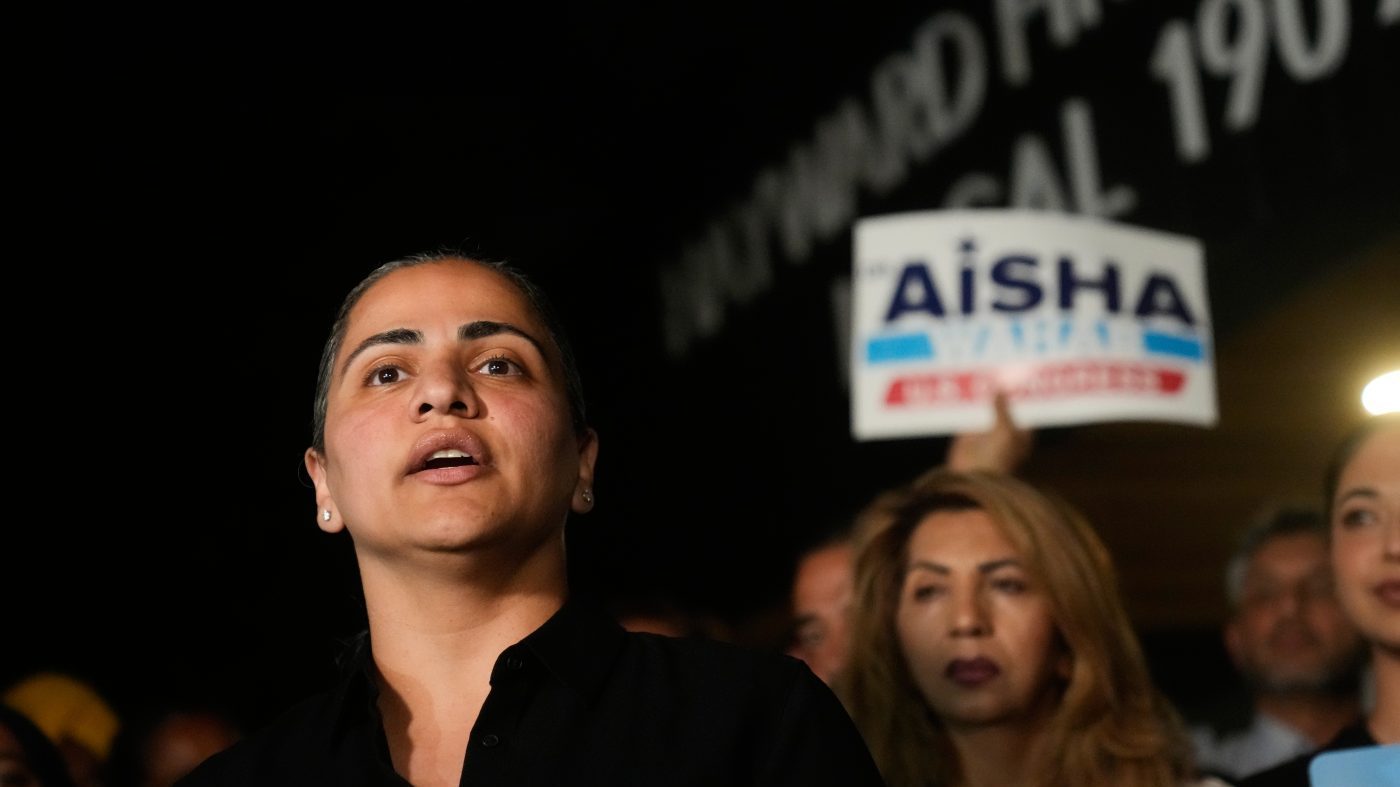
Rep. Aisha Wahab (D-Calif.) has secured a full term representing California's 14th District, defeating fellow Democrat Melissa Hernandez in Tuesday's election, according to Decision Desk HQ (DDHQ). The victory is a rematch of the August special election that sent Wahab to Congress, and it solidifies her hold on a seat that became a battleground for intraparty tensions.
Wahab's win comes after a bitter and expensive campaign that saw millions of dollars in outside spending, including from groups like the American Israel Public Affairs Committee, which sought to influence the direction of the Democratic Party. The district, which DDHQ rated as "safely Democratic," nonetheless became a fierce contest between two candidates with similar policy priorities but sharply different visions.

A Race Defined by Conflict
The rivalry between Wahab and Hernandez escalated during an October debate when Hernandez accused Wahab of communicating with the Taliban. Wahab condemned the accusation as a racist attack, while Hernandez defended it as criticism of Wahab's position on diplomacy with Afghanistan. The exchange underscored the deep divisions that emerged between the two Democrats.
Wahab, the first Afghan American elected to Congress, campaigned on housing affordability, public safety, and her record in the California state Senate and on the Hayward City Council. Hernandez, the former mayor of Dublin and a past president of the Bay Area Rapid Transit board, also emphasized public safety and the economy, while questioning Wahab's legislative achievements.
Endorsements and Outside Influence
Wahab secured high-profile endorsements from California Gov. Gavin Newsom (D), Sens. Adam Schiff (D-Calif.) and Alex Padilla (D-Calif.), as well as Sen. Bernie Sanders (I-Vt.), the California Democratic Party, and several labor organizations. These endorsements helped bolster her campaign, but the race remained tight and contentious until the end.
The seat became vacant after former Rep. Eric Swalwell (D-Calif.) resigned in April amid sexual misconduct allegations, which he has denied. Swalwell's departure triggered the special election that Wahab won in August, setting the stage for Tuesday's rematch.
Looking ahead, Wahab's victory is part of a broader Democratic landscape as the party grapples with its direction. The race highlighted the influence of outside money and the challenges of intra-party competition in safe districts. Wahab's win also comes as Democrats are weighing their next moves in a divided government.
In her victory speech, Wahab emphasized unity and a focus on delivering for constituents, promising to work on housing, public safety, and economic issues. Hernandez has not yet conceded, but the projection by DDHQ indicates Wahab will retain the seat.
The election also saw voters in California reject a billionaires' wealth tax, a measure that had been championed by some progressive groups. That outcome, along with Wahab's win, suggests a nuanced political climate in the state, where voters are open to new leadership but cautious about sweeping tax changes.
Wahab's full term will begin in January, and she will represent a district that includes parts of Alameda and Contra Costa counties. Her victory is seen as a significant moment for Afghan American representation and for the progressive wing of the California Democratic Party.
As the political landscape shifts, Wahab's win is a reminder of the importance of local races in shaping national policy debates. Her focus on economic gains and countering Republican strategies will be closely watched in the coming months.