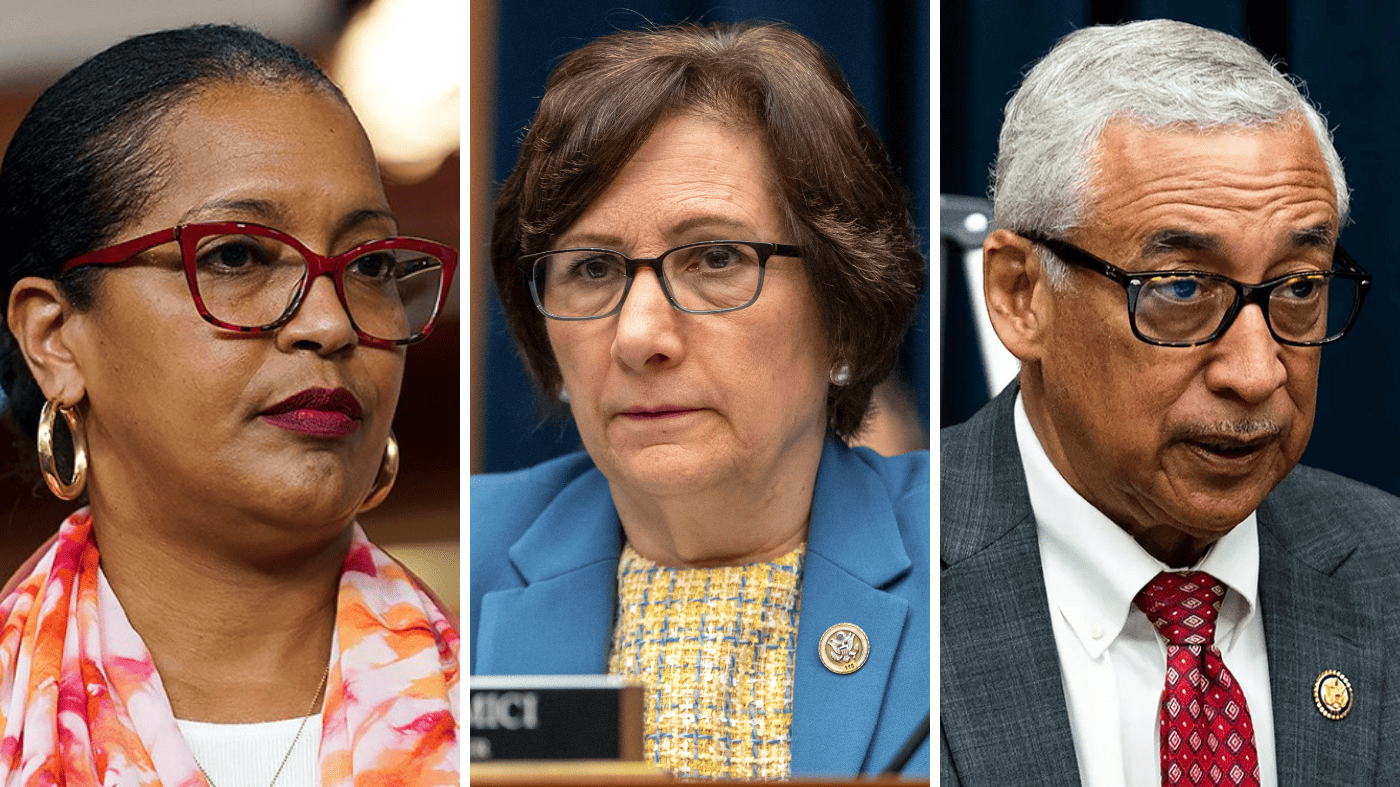
House Democrats are gearing up for a competitive internal battle over who will steer their education policy counteroffensive against the Trump administration in the next Congress. The contest pits incumbent Ranking Member Bobby Scott (D-Va.) against two challengers—Reps. Suzanne Bonamici (D-Ore.) and Jahana Hayes (D-Conn.)—as the party prepares to use its newly won majority to reverse the administration's cuts to the Education Department and tackle child care costs and student debt.
The race is expected to be collegial, with Hayes telling The Hill that all three have served on the committee for years and share core Democratic priorities. However, Hayes argues that fresh leadership is needed to confront the current political moment. "We've worked together, but there are some things that I just think that I could do differently," she said, pointing to her repeated requests for hearings on school shootings that have gone unaddressed. "As Democrats, we have to just have a broader imagination, and it can't just be about seniority. It has to be about meeting the moment that we are in."

Hayes, who entered Congress seven years ago, is the least senior of the three. Bonamici has served since 2011, while Scott has been on the committee since 1993—and previously chaired it from 2019 to 2023. That long tenure has earned Scott significant goodwill among colleagues, including Rep. Donald Norcross (D-N.J.), who praised Scott's focus on results over self-promotion. "He advances results versus advancing his own brand," Norcross said. "There is no reason other than personal ambition to change the direction of the leadership of our committee. And I stand 100 percent with Bobby."
Bonamici, who announced her bid in October, has pledged to reestablish the Civil Rights and Human Services Subcommittee and hold hearings on gun violence. In a letter to colleagues, she wrote, "The Education and Labor Committee needs a leader who can meet this moment with passion and experience—a leader who can work collaboratively, unite and uplift our members, and deliver results."
Scott, meanwhile, has emphasized his "proven record" and has already signaled an aggressive oversight agenda. In a statement, he accused the Trump administration of "abandoning the people these departments were established to serve" and vowed to "use Congress' oversight tools and leave no stone unturned." He also sent letters to federal agencies reminding them of their duty to preserve public records—a move that aligns with Democrats' broader strategy to use congressional power to check Trump.
The committee's Democratic members are looking for a leader who can both counter the administration and advance a proactive legislative agenda. Rep. Adelita Grijalva (D-Ariz.) outlined priorities including reversing Education Department cuts, repealing the federal voucher tax credit, expanding Pell Grants, and making child care more affordable. "With a new majority, we have an opportunity and a responsibility to change course," she said.
Other members cite child care, civil rights, AI in education, and apprenticeships as key issues. The contest comes as Democrats prepare to leverage their midterm wins, which were partly fueled by voters' rebuke of Trump and the GOP. The outcome of this leadership race will shape how aggressively the party pursues its education agenda, and whether it can translate its policy ambitions into tangible results.
Across the Capitol, Senate Democrats are also planning to exercise new oversight powers against the Education Department, signaling a coordinated effort to challenge the administration's actions. The Education Department did not respond to a request for comment.