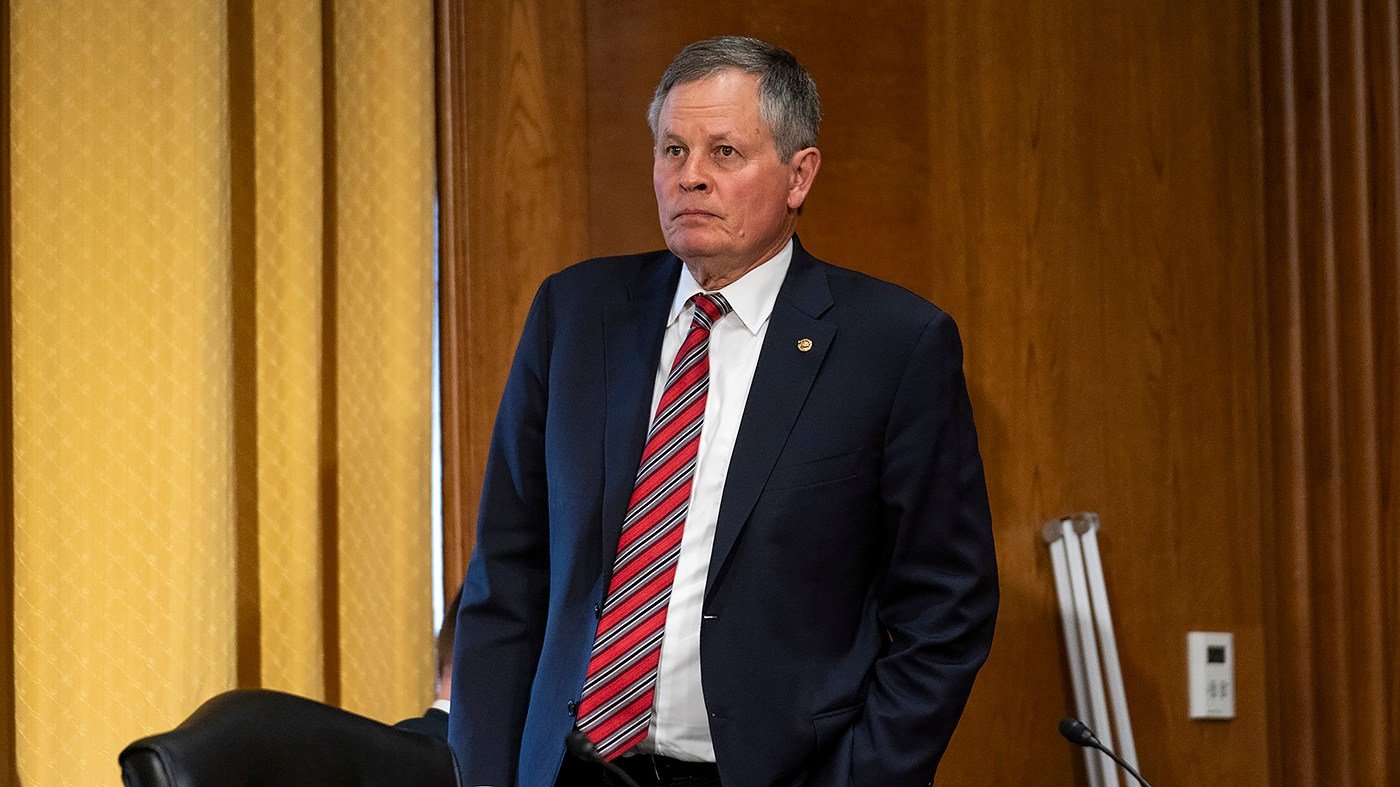
Sen. Steve Daines (R-Mont.) is sounding an alarm for Republicans ahead of the 2026 midterms, drawing direct parallels to the 2006 election cycle when the party lost control of both the House and Senate. Daines, who chaired the National Republican Senatorial Committee in the last cycle, says the political climate today bears an uncomfortable resemblance to two decades ago.
Speaking at the Grand Strategy Summit in Washington, Daines pointed to the public's growing opposition to the Iran war and the spike in gas prices as troubling signs for the GOP. "There arguably could be some similarities between the '06 cycle and the 2026 cycle," he said. "Think about the condition of the country back in '06. An unpopular war, 6 in 10 Americans opposed the Iraq war at that point. Gas prices had doubled. Does it sound familiar? We ended up losing six seats."

In 2006, Republicans entered the cycle with a five-seat Senate majority and were widely expected to hold it. Instead, they lost six seats, including in several traditionally red states. Sen. Mike DeWine (R-Ohio) fell to Democrat Sherrod Brown, Sen. Conrad Burns (R-Mont.) lost to Jon Tester, and Sen. Jim Talent (R-Mo.) was defeated by Claire McCaskill. Democrats also picked up 32 House seats, handing the Speaker's gavel to Nancy Pelosi and making Harry Reid the Senate majority leader.
Daines sees similar dynamics now: "Today 6 in 10 Americans oppose the Iran war. Gas prices — enough said on gas prices. There's an argument, if you look at history, that 2026 feels a lot like 2006." His comments come as President Trump has acknowledged the conflict could hurt Republican candidates, though he insists it should help.
The political environment has deteriorated for the GOP. A recent AP-NORC poll puts Trump's job approval at just 26%, with 69% of Americans saying the war with Iran has not been worth fighting and only 28% approving of his handling of it. Decision Desk HQ currently gives Democrats a 75% chance of retaking the House and a 54% chance of flipping the Senate.
Daines' warning echoes concerns from other Republicans about the expanding electoral map. Trump's red-state rally tour has done little to reassure strategists, and several Senate retirements have deepened GOP fears of losing the majority.
Republicans are also grappling with voter anger over data center power bills and other domestic issues that could further erode support. Daines' historical comparison is a stark reminder that even seemingly safe seats can flip in a wave election.
As the November election approaches, Daines' message is clear: Republicans must not repeat the mistakes of 2006, or they risk losing not just seats, but the chamber itself.