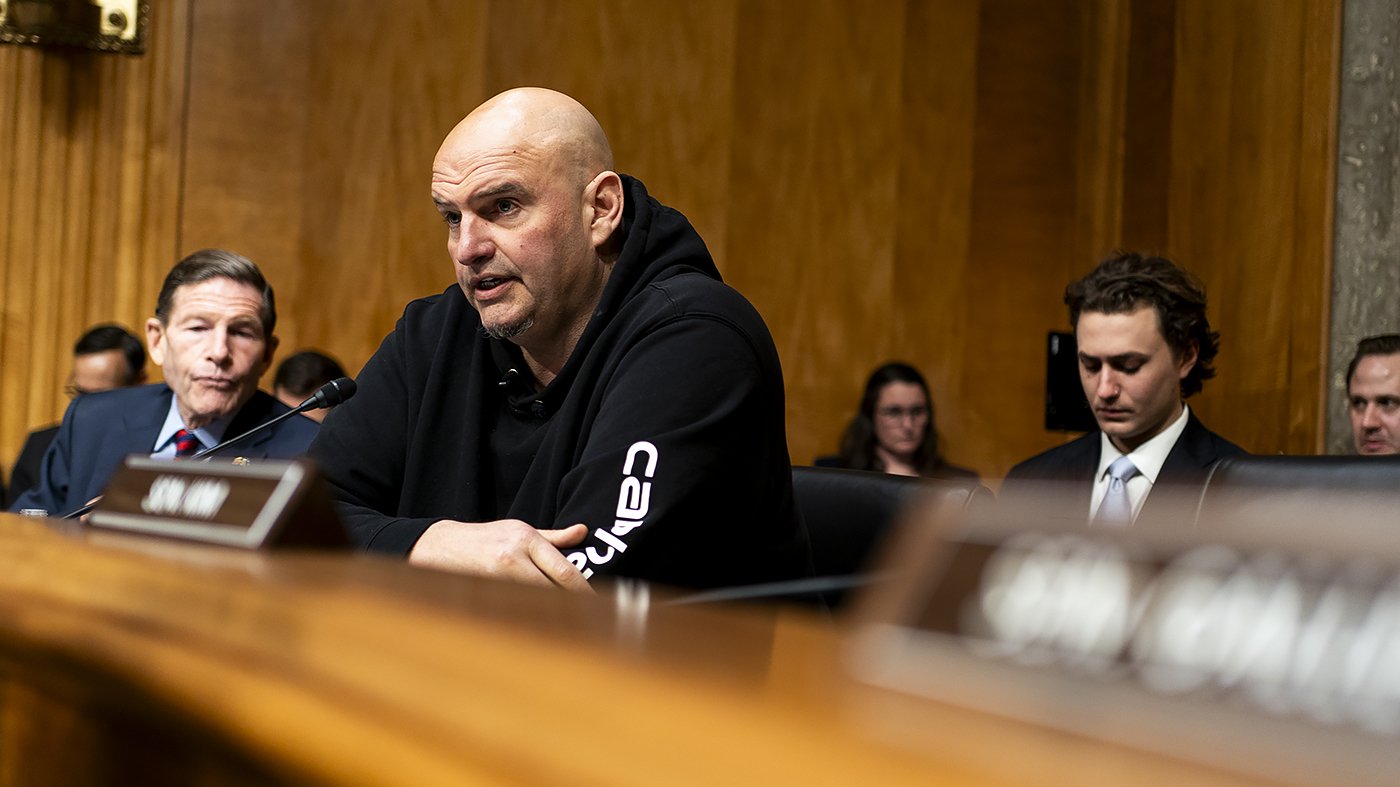
Senator John Fetterman, the Pennsylvania Democrat, has publicly expressed confusion over polling data that shows him enjoying significant popularity among Republican voters in his state, despite maintaining a voting record that aligns overwhelmingly with his own party.
"I am more popular with Republicans, which is confusing because I vote in the 90s [percentage-wise] Democratic line," Fetterman told NewsNation's Chris Cuomo. He noted he has not supported major legislative priorities associated with former President Donald Trump, suggesting that "a lot of misinformation" may be at play. The senator pointed to his staunch support for Israel and his vote for a controversial Department of Homeland Security nominee as potential factors.
Polling Reveals Striking Partisan Divide
A recent Quinnipiac University poll illustrates the unusual dynamic. While only 22% of Pennsylvania Democratic voters approved of Fetterman's job performance, a striking 73% of the state's Republican voters backed him. Overall, 46% of Keystone State voters approved, with 40% disapproving. This places the first-term senator in the rare position of being more favorably viewed by the opposition party's base than by his own.
Policy Positions Bucking Democratic Trends
Fetterman's political identity has increasingly diverged from the Democratic mainstream on several key issues. He has adopted a hardline, unwavering stance in support of Israel's military campaign in Gaza, a position that contrasts sharply with the growing unease within his party over the high Palestinian casualty count. This alignment on foreign policy has likely resonated with conservative voters.
His break with party leadership extended to a recent Senate vote, where he was one of the few Democrats to confirm Markwayne Mullin as Secretary of the Department of Homeland Security. This vote highlights his willingness to cross the aisle, even as House Republicans resist Senate plans to separate ICE funding from broader DHS legislation, showcasing the complex negotiations surrounding homeland security policy.
Criticism of Democratic Party Leadership
Beyond specific votes, Fetterman has leveled direct criticism at his party's overall strategy. In a recent interview, he argued that the Democratic Party is currently "governed by Trump Derangement Syndrome (TDS)," suggesting an obsessive focus on the former president is clouding its political judgment. This rhetoric, which echoes conservative talking points, further explains his appeal across the aisle.
Fetterman's political evolution presents a case study in intra-party tension. While he votes with Democrats on most domestic priorities, his outspoken views on foreign policy and cultural issues create a unique brand. This phenomenon occurs as other Democrats, like Texas Democrat James Talarico, test different electoral strategies for appealing to a broad coalition.
The senator's support for Israel also intersects with broader international tensions. His stance aligns with U.S. strategic interests in a region where Iran has demanded control of the Strait of Hormuz among conditions to end regional conflict, and where nuclear concerns persist despite reported strikes having only a marginal impact on Iran's advancing program.
Whether Fetterman's cross-party appeal represents a sustainable political model or a personal anomaly remains to be seen. It underscores a shifting landscape where traditional partisan loyalty is increasingly tested by individual politician brands and single-issue voting blocs. His experience may signal challenges for party discipline as the 2024 election cycle intensifies.