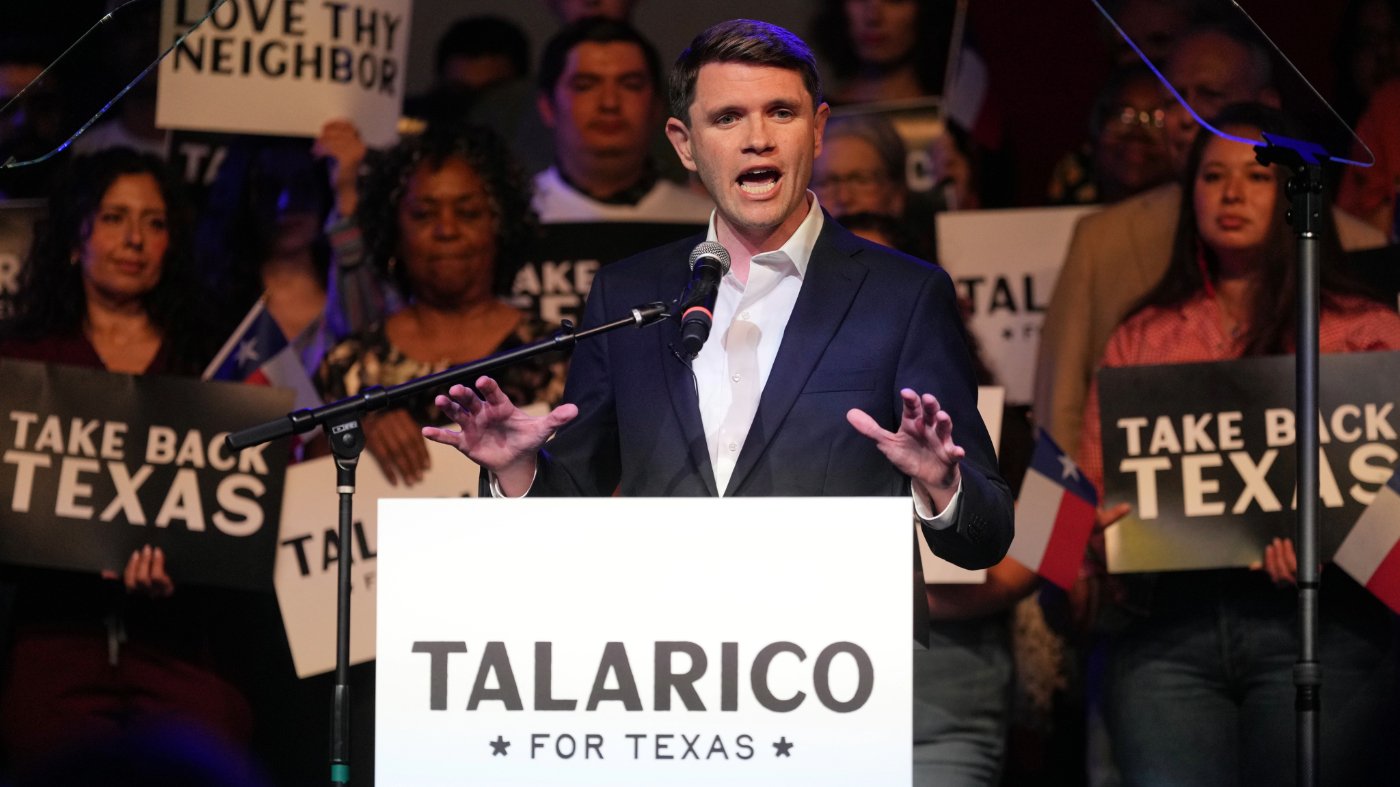
Texas State Representative James Talarico's entry into the U.S. Senate race represents the latest test of Democratic efforts to recruit candidates who can broaden the party's appeal beyond its core constituencies. The young legislator faces significant challenges in a state where Republicans hold structural advantages, and his prospects largely depend on which Republican emerges from what could be a contentious primary.
The Texas Calculus
Should incumbent Senator John Cornyn secure the Republican nomination, Talarico would face an uphill battle against an established figure with deep ties to the state's political establishment. A campaign attacking Cornyn's proximity to former President Donald Trump could risk unifying Republican factions after a potentially divisive primary. However, if Attorney General Ken Paxton—who faces his own ethical controversies—wins the GOP nod, analysts suggest Talarico might find a more viable path by contrasting himself against a more polarizing opponent.
The Democratic Party must weigh whether investing substantial resources in Texas represents the best use of finite campaign funds, particularly as it faces cash constraints while managing multiple competitive races nationwide. This strategic calculation echoes broader party debates about resource allocation in challenging states.
A National Search for Relatable Messengers
Talarico's candidacy reflects a deliberate Democratic strategy to identify white male candidates who can credibly connect with voters outside the party's traditional strongholds of college-educated women and Black voters. The challenge lies in finding figures who both appeal to these target demographics and maintain support from the progressive base.
Recent history offers cautionary tales. The selection of Minnesota Governor Tim Walz as a vice presidential candidate was intended to project a relatable, middle-American image but was criticized by some as tokenism that failed to resonate with key voter groups the campaign needed to reach. This mirrors criticisms often leveled at Republican efforts to recruit minority candidates who present what some view as a nonthreatening facade.
Maine's Unconventional Contender
In Maine, Democratic Senate candidate Graham Platner presents a different model. The Marine veteran-turned-oyster farmer offers progressive voters an unconventional profile: a former online anarcho-communist with a tattooed, rough-edged persona that contrasts sharply with traditional political figures. While he has faced scrutiny over past misogynistic comments, Platner offers uncompromising progressive positions on most issues, with one notable exception being gun control—a strategically pragmatic stance in a state with strong hunting traditions.
His primary opponent, Governor Janet Mills, has built her career on bipartisan cooperation, including previous productive relationships with Republican Senator Susan Collins, whom Democrats hope to unseat. Platner's appeal rests on offering ideological purity without the compromises that have characterized Mills' tenure. However, his controversial background may present too much risk in a race Democrats must win to maintain realistic hopes of retaking the Senate majority.
Iowa's Model of Midwestern Appeal
Perhaps the most promising template for Democratic outreach emerges in Iowa, where State Auditor Rob Sand has demonstrated unique cross-partisan appeal. As the only Democrat holding statewide office—and the only Democrat to win statewide in Iowa over the past four years—Sand has cultivated an image of earnest Midwestern values. A churchgoing family man who champions local institutions like Casey's gas station pizza, he has won bipartisan praise for his efficient management of the auditor's office.
Sand's recent victory at the Iowa Deer Expo, where he won recognition for a trophy whitetail, generated positive local and national coverage that reinforces his authentic connection to state culture. With Iowa showing signs of potential political shift after years of Republican dominance, Sand is positioned as a frontrunner for governor, particularly as state Republicans face what could be a damaging primary contest. His background—including a brief modeling career that remains largely unknown to most voters—presents what appears to be the ideal blend of relatability and electability that Democratic strategists seek.
These parallel candidacies in Texas, Maine, and Iowa illustrate the Democratic Party's ongoing struggle to rebuild a broad coalition. As the party rewrites its campaign playbook to prioritize new outreach methods, the success or failure of candidates like Talarico, Platner, and Sand will provide crucial data about which approaches can win in diverse political landscapes. Their campaigns unfold against a backdrop of intense partisan conflict, including ongoing Senate procedural battles and persistent government funding disputes that shape the national political environment.