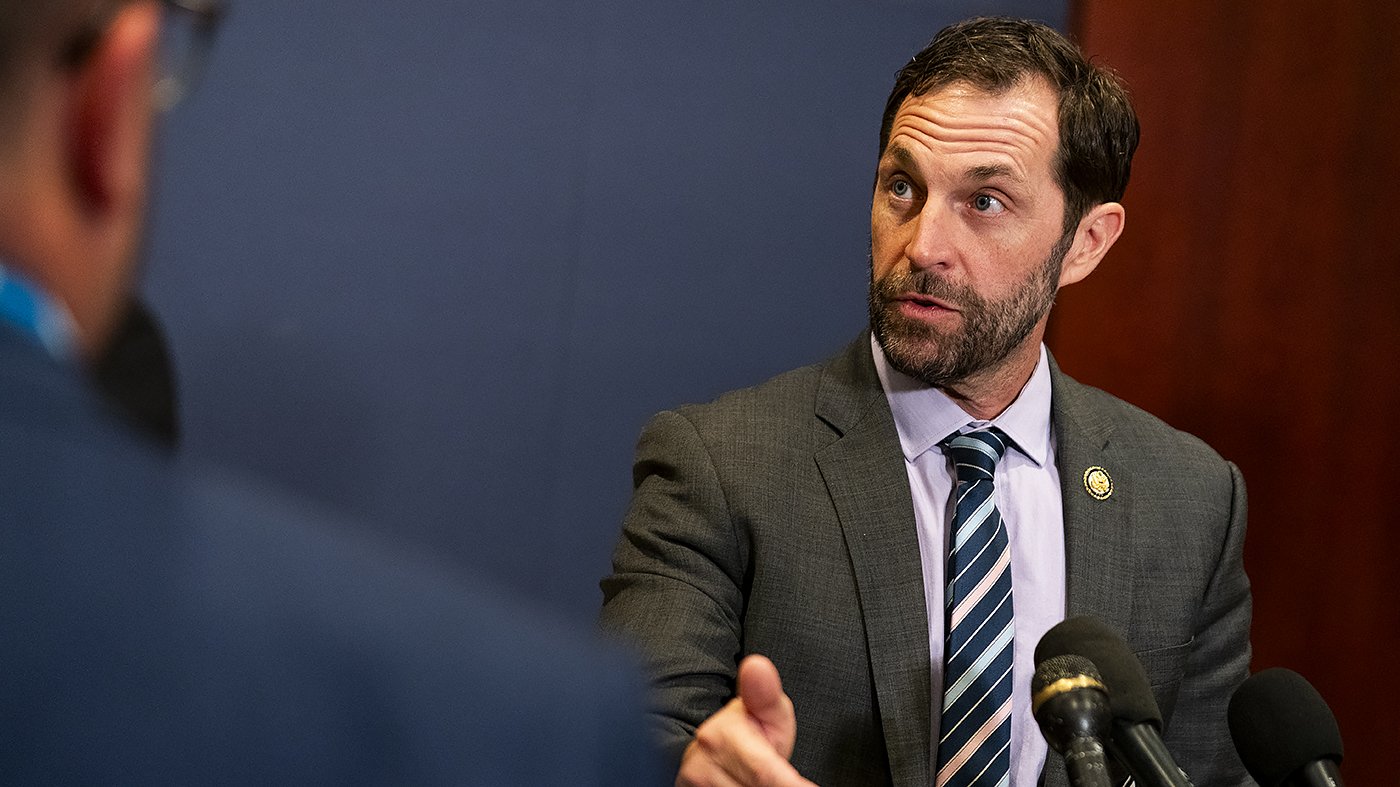
Congressman Jason Crow, a Democrat from Colorado, delivered a sharp critique of the Trump administration's naval blockade in the Strait of Hormuz on Tuesday, arguing that the primary beneficiary of the action is not the United States but Russia. Speaking to CNN, Crow stated that the disruption to global oil flows effectively boosts Moscow's ability to sell its own crude at higher prices, calling into question the strategic wisdom of the move.
A Question of Strategy and Winners
Crow explicitly labeled Russia as the "real winner" of the blockade, which has contributed to elevated global oil prices. "Because Russia then has to go in and they can—they'll be able to sell more of their oil," he explained. He further questioned the logic of the U.S. imposing its own blockade when, he asserted, Iran was already obstructing the critical waterway. The congressman characterized the broader conflict with Iran as "a mess" driven by a reactive approach.
"There's no strategy here," Crow continued. "That's the biggest problem. There's a series of short-term tactical decisions every two or three days. The Trump Administration rolls out a new idea, a new tactic. But there's no strategy, there's no end game, and we're just going to continue to spin our wheels until they can create some kind of long-term plan."
Blockade Origins and Market Pressures
The U.S. military action began Monday morning following the collapse of peace talks led by Vice President Vance, which lasted 21 hours without an agreement. The Pentagon stated the blockade aims to halt vessels paying tolls to Iran. This escalation coincides with complex energy market dynamics. The U.S. waiver permitting countries to purchase Russian crude expired on April 11, a factor highlighted by CNBC. India, for instance, bought 1.5 million barrels per day from Russia in March.
In response to market instability, the U.S. temporarily allowed purchases of Russian oil already stranded at sea. Analysts suggest Washington may be forced to extend such waivers to prevent prices from climbing further. As of Tuesday, benchmark prices remained high, with West Texas Intermediate crude over $91 per barrel and Brent crude near $95. The national average for gasoline in the U.S. was $4.19.
Divergent Views on Diplomatic Impact
Not all assessments of the blockade are negative. Retired Navy Rear Adm. John Kirby suggested the action could be "helpful" by compelling Iran to return to negotiations. He also noted it might "encourage the Chinese to be more helpful with Iran and get them back to the negotiating table because China certainly is dependent upon oil coming in and out of the Gulf." This perspective aligns with other analyses that see potential diplomatic value in the military pressure.
Enforcement Challenges and Regional Dynamics
The blockade's effectiveness has already faced challenges. Reports indicate it has not prevented U.S.-sanctioned Chinese tankers, such as the Rich Starry and the Murlikishan, from transiting the strait. This transit raises immediate questions about the consistency of enforcement, a topic explored in our reporting on how the U.S. claims full enforcement despite these passages.
The geopolitical stakes are immense, given the Strait of Hormuz is a chokepoint for roughly a fifth of the world's oil supply. The decision to enforce the blockade after talks failed represents a significant escalation with direct consequences for global energy security. The Energy Secretary has already warned that the situation could lead to a peak in gas prices within weeks.
U.S. and Iranian officials are expected to hold another round of negotiations as early as this week, suggesting diplomatic channels remain open despite the military standoff. The outcome will be closely watched by global markets and allies dependent on stable energy flows from the region.