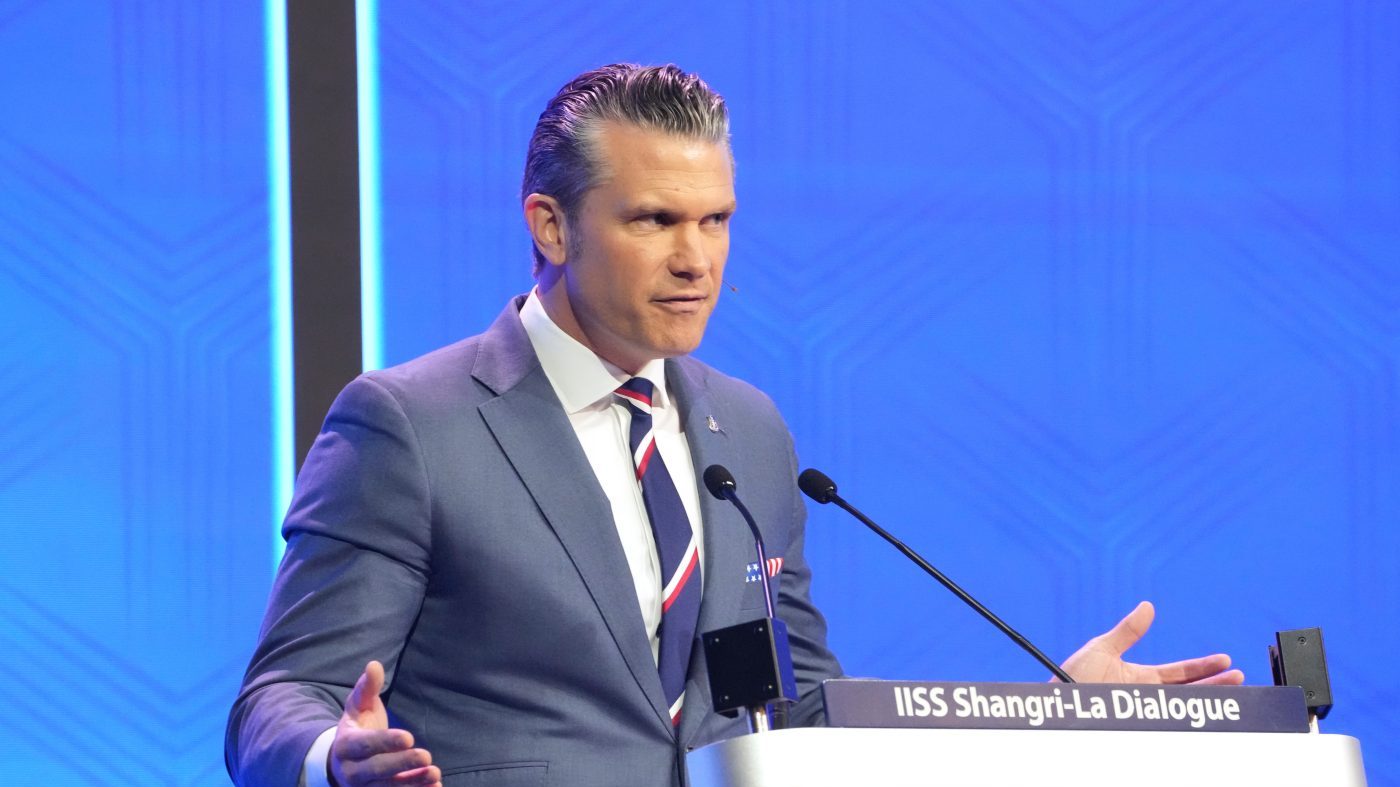
Defense Secretary Pete Hegseth dialed back his confrontational rhetoric toward Beijing on Saturday, urging Pacific allies to share the burden of countering threats during a speech at the Shangri-La Dialogue in Singapore. The remarks came weeks after President Trump joined Hegseth for a bilateral summit in Beijing, where the two leaders agreed on economic goals but left key issues like Taiwan and the Iran war unresolved.
Speaking at the International Institute for Strategic Studies conference, Hegseth emphasized the need for the United States and China to “build a constructive relationship of strategic stability.” This marked a shift from his address at the same forum last year, when he warned that China was “actively training” to take on Taiwan, a self-ruled island Beijing claims as its own. The United States does not formally recognize Taiwan’s sovereignty but maintains unofficial ties and arms sales.
Hegseth’s softer tone followed his two-day trip to Beijing with Trump, during which the president called Chinese leader Xi Jinping a “great leader.” However, the summit left many questions unanswered, particularly regarding Taiwan and the ongoing conflict in Iran. The defense secretary’s Saturday remarks appeared calibrated to avoid escalating tensions while still signaling resolve.
Asked by reporters at the U.S. Embassy in Singapore whether he had adopted a “softer” stance, Hegseth replied, “I think our message today was very much in sync with precisely where the president wants to go, which is we’re going to be strong, but we can speak softly while carrying that big stick and be very clear about the fact that there are places where we can work together with China.” He added, “We respect their ambitions. We know that they have a significant military buildup that comes with considerations we have to take as a sovereign nation to ensure that we’re prepared for any possible contingency.”
Despite the conciliatory language, Hegseth insisted that the U.S. position on Taiwan had not changed. He dismissed a suggestion from a top military official that a $14 billion arms deal to Taiwan had been delayed due to the Iran war. “I would not couple the two in any way at all, and I feel good about not only where we are, but where we are in future production rates as well,” he said. The denial aligns with his earlier rejection of claims linking the Iran conflict to the Taiwan arms package.
Hegseth’s appearance in Singapore comes amid rising doubts over U.S. commitment to Taiwan, as the Trump administration juggles multiple geopolitical crises. His trip to the island nation was seen as an effort to reassure allies that Washington remains a reliable partner. However, the defense secretary’s emphasis on burden-sharing suggests that the U.S. expects Asian allies to increase their own defense spending and contributions to regional security.
The timing of Hegseth’s remarks also reflects the broader tension in U.S.-China relations, which have been strained by competition in technology and military buildup. Republican senators have recently demanded that intelligence agencies focus on China’s AI advances, underscoring the multifaceted nature of the rivalry. Hegseth’s balancing act—urging cooperation while preparing for confrontation—mirrors the Trump administration’s broader approach to Beijing.