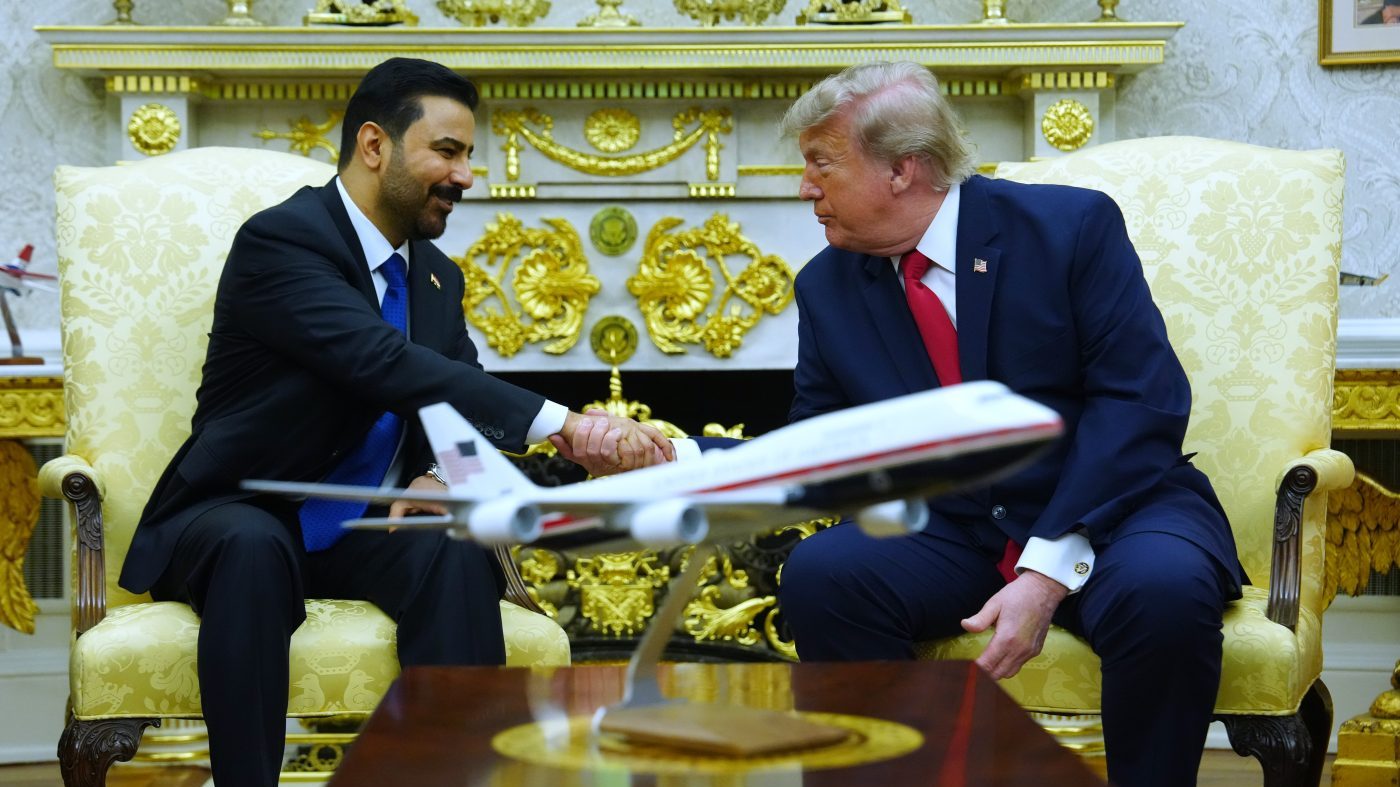
President Trump rolled out the red carpet for Iraq's newly elected Prime Minister Ali al-Zaidi at the White House on Tuesday, signaling a push to lock in American access to Iraq's vast oil reserves. The meeting, which Trump framed as a strategic pivot, comes after the president quietly backed al-Zaidi's rise following last year's parliamentary elections, opposing early front-runner Nouri al-Maliki in favor of the economist-turned-businessman.
“They have tremendous oil reserves. They have tremendous potential wealth, and they have tremendous wealth, not only potential,” Trump said from the Oval Office, as reported by the Associated Press. He added, “We're going to have a long-term relationship with a man that will be a great leader. You mark my words. I knew what I was doing.”
Al-Zaidi, making his first foreign trip as prime minister to Washington, stressed that the visit was about more than diplomacy. “The most important strategic partnership in the world is the United States of America… It's not emotional, it's about money,” he said, underscoring the transactional nature of the budding relationship.
Pipeline Bypasses Strait of Hormuz
At the heart of the talks is a planned oil pipeline connecting Iraqi fields to maritime ports in Turkey and Syria, a project that would reduce reliance on the Strait of Hormuz, a chokepoint now effectively shut by Iranian strikes amid the ongoing U.S. and Israeli war against Iran. The Iraqi government is expected to sign a deal with U.S. firms Chevron and TI Capital, along with Qatar's UCC construction, to build the pipeline, according to the Associated Press.
“Because of their oil, and we're going to be doing a lot of deals,” Trump said. “We're going to create a lot of jobs for both countries, and we're going to be taking out a lot of oil.”
The pipeline push reflects how energy markets are adapting to the disruptions caused by the conflict. On Monday, Trump announced he was reimposing a naval blockade on Iran in response to attacks on commercial shipping, but backed down from a proposed 20 percent fee on ships transiting the Strait of Hormuz. In a Truth Social post, Trump said he withdrew the fee in exchange for trade commitments from Gulf states. “We were doing it as the reimbursement,” he explained. “The Gulf states are going to invest a tremendous amount of money into the United States and that was very satisfactory to me.”
The pivot to Iraq comes as 79% of Americans expect a protracted Iran war, a sentiment that has shaped Trump's foreign policy calculus. The pipeline deal could also ease pressure on global oil markets, but critics warn it may deepen U.S. entanglement in Iraq's fragile politics.
Trump's Gambit in Baghdad
Al-Zaidi's visit underscores a broader effort by Trump to solidify alliances in the Middle East while isolating Iran. The prime minister, a political newcomer with an economics background, has positioned himself as a pragmatist willing to work with Washington. But his decision to prioritize U.S. ties—and oil revenue—could face pushback from Iranian-aligned factions in Iraq's parliament.
Trump's endorsement of al-Zaidi was a calculated move. By sidelining al-Maliki, a Shiite leader with close ties to Tehran, the president aimed to install a partner more amenable to American interests. “I knew what I was doing,” Trump said, defending his intervention in Iraq's internal politics.
The meeting comes amid a volatile backdrop. The U.S. has escalated strikes against Iranian-backed militias in Iraq and Syria, and Trump's hosting of al-Zaidi is seen as an attempt to balance military pressure with economic incentives. For Iraq, the pipeline offers a lifeline to export oil without relying on the Strait of Hormuz, but it also ties Baghdad more closely to Washington's regional agenda.
As the two leaders wrapped up their talks, Trump returned to his favorite theme: dealmaking. “We're going to create a lot of jobs for both countries,” he said, framing the oil agreements as a win for American workers. Whether al-Zaidi can deliver on those promises—and navigate the political minefield at home—remains to be seen.