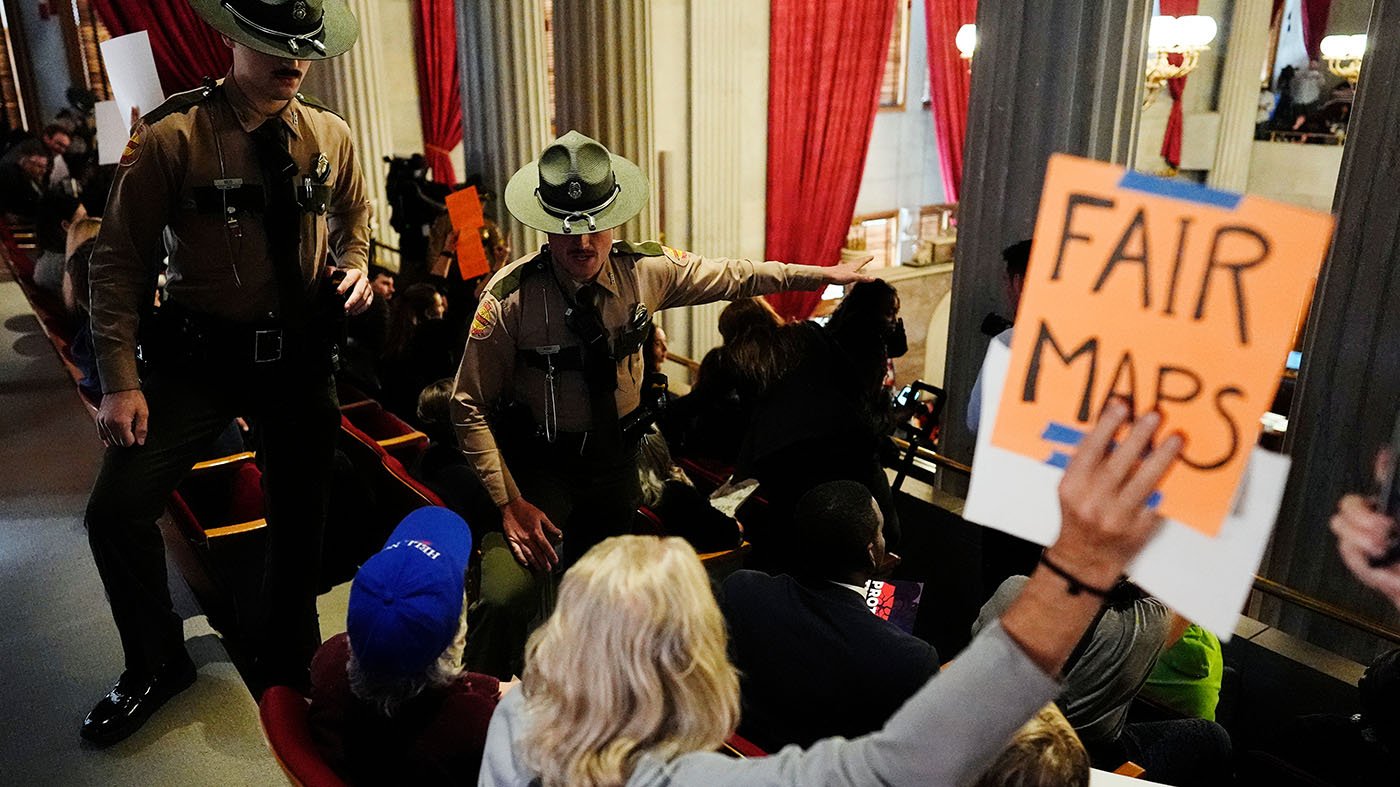
For Americans weary of partisan map-drawing, the worst may be yet to come. The gerrymandering conflict, far from cooling after the midterm cycle, is poised to intensify dramatically ahead of the 2028 elections, with both parties already laying the groundwork for a redistricting war that could dwarf the current one in scope and impact.
Republican leaders are moving swiftly to draft new congressional maps in Southern red states, including some that just completed midterm redistricting. The Supreme Court's recent ban on race-based gerrymandering has only emboldened the GOP, opening fresh pickup opportunities for November and beyond. Democrats, meanwhile, are vowing to match that effort, framing their push as a defense of democratic integrity against what they call Republican efforts to rig elections.
“The challenge in front of us is ensuring a decisive and overwhelming response before 2028,” House Minority Leader Hakeem Jeffries (D-N.Y.) told reporters this month. “Because the Republican effort to gerrymander the national congressional map is not going to end.”
This rare mid-decade redistricting carries political risks. Polls show strong public opposition to partisan map-drawing. Yet both parties have concluded that the raw seat advantage outweighs potential backlash, and preparations for a new wave of redistricting are expected to begin next year.
Republicans won the midterm redistricting arms race, enacting new maps in Texas, Florida, Missouri, Ohio, North Carolina, Tennessee, and Louisiana, with Alabama still litigating. But they haven't exhausted their options. Georgia, which did not redistrict this cycle, is a prime target. Republican Gov. Brian Kemp has called a special legislative session in June to redraw the state's House map ahead of 2028, spurred by the Supreme Court's ruling that invalidated race-based districts protected under the Voting Rights Act for over six decades.
Louisiana and Missouri adopted midterm maps that eliminated only one Democratic seat each, leaving room to make those states entirely red in 2028 if political conditions shift. Alabama's new GOP map, which aims to cut another Democratic seat, remains tied up in court. Texas, which redrew before the Supreme Court decision, could also revisit its lines. Other states where Republicans hope to eliminate the sole Democratic seat—like Indiana, Kansas, and South Carolina—may join the fray next year.
President Trump, who ignited the redistricting fight in Texas, remains a wildcard. Some analysts suggest pressure on state Republicans may ease as Trump leaves office after 2028, but Democratic counter-moves could keep the GOP engaged. “Trump will be more of a lame duck after 2026, so the White House may not exert as much pressure, but Democratic action could spur renewed Republican efforts,” said Kyle Kondik, managing editor of Sabato’s Crystal Ball at the University of Virginia.
Democrats are preparing a full-court press. They retaliated against Texas's midterm map with a gerrymander in California, flipping five GOP seats, but a similar effort in Virginia was blocked by courts, and legal hurdles stalled other blue states. That is set to change. Jeffries pointed to New York, New Jersey, Washington, Oregon, Colorado, Illinois, and Maryland as states where party leaders are already moving to boost Democratic seats in 2028. “That’s at least seven states where we can unleash a decisive and forceful response to what they’re doing in the Deep South,” he said.
Virginia Democrats may try again ahead of 2028. Kondik noted that the bar is higher in blue states where voter referendums are required for new maps, unlike in Texas or Florida where legislatures act unilaterally. The coming redistricting war, already taking shape, promises to be one of the most consequential political battles of the decade, with control of the House hanging in the balance.