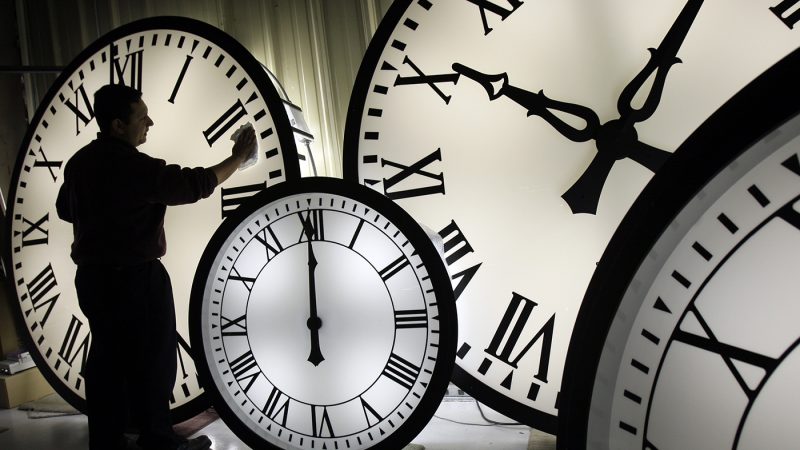
The House voted 308-117 on Tuesday to advance the Sunshine Protection Act, bringing the United States closer to locking the clocks year-round. The legislation now heads to the Senate, where its fate remains uncertain. President Trump has signaled support, calling the measure “a very nice WIN for the Republican Party” earlier this year.
If the Senate passes the bill and Trump signs it, the change wouldn’t take effect immediately. The U.S. is currently observing daylight saving time and will continue until November, when clocks “fall back” to standard time. The real shift would occur once the law kicks in, requiring states to adopt permanent daylight saving time unless they opt out before the effective date.
Currently, only Hawaii and parts of Arizona are exempt—they observe standard time year-round. Nineteen states—including Alabama, Colorado, Florida, Georgia, Texas, and Washington—have already passed legislation to make daylight saving time permanent if Congress allows it. Other states are weighing similar measures or considering permanent standard time instead.
The House vote on permanent daylight saving time underscores the growing bipartisan frustration with the twice-yearly clock change. But the practical consequences vary widely by geography.
What Would Change: Sunrises and Sunsets
The most noticeable impact would come during the winter months. Under permanent daylight saving time, sunsets from November through February would generally occur after 5 p.m., a welcome shift for those accustomed to 4 p.m. darkness. However, sunrises would be pushed later—often after 8 a.m., and in some regions after 9 a.m.
For example, in Chicago, the latest sunrise under the current system is 7:18 a.m., but with permanent DST it would be 8:18 a.m. In Grand Rapids, Michigan, the sun would not rise until 9:14 a.m. in deep winter. In Juneau, Alaska, sunrise would come after 11 a.m.
Opponents of permanent daylight saving time have focused on these late sunrises, citing safety concerns for children heading to school in darkness. The U.S. tried year-round DST in the 1970s, but public support collapsed amid reports of children being struck by vehicles in the morning dark. By February 1974, approval had dropped to 42%.
“I don’t like the biannual clock change any more than the rest of you do,” Senator Tom Cotton (R-AR) said during a floor speech last year, while blocking a fast-track effort. “Not every human problem has a legislative solution.”
What Happens Next
The Senate has yet to schedule a vote on the Sunshine Protection Act. Multiple bills on daylight saving time are pending in Congress, including a proposal to make standard time permanent. The debate mirrors a broader conversation about federal preemption and state flexibility—similar to lawsuits over federal funding cuts that have pitted states against Washington.
For now, the clock is ticking—but not yet changing. Whether the Senate takes up the measure in 2026 remains an open question, one that could reshape mornings and evenings for millions of Americans.