The Next Front in the School Tech War
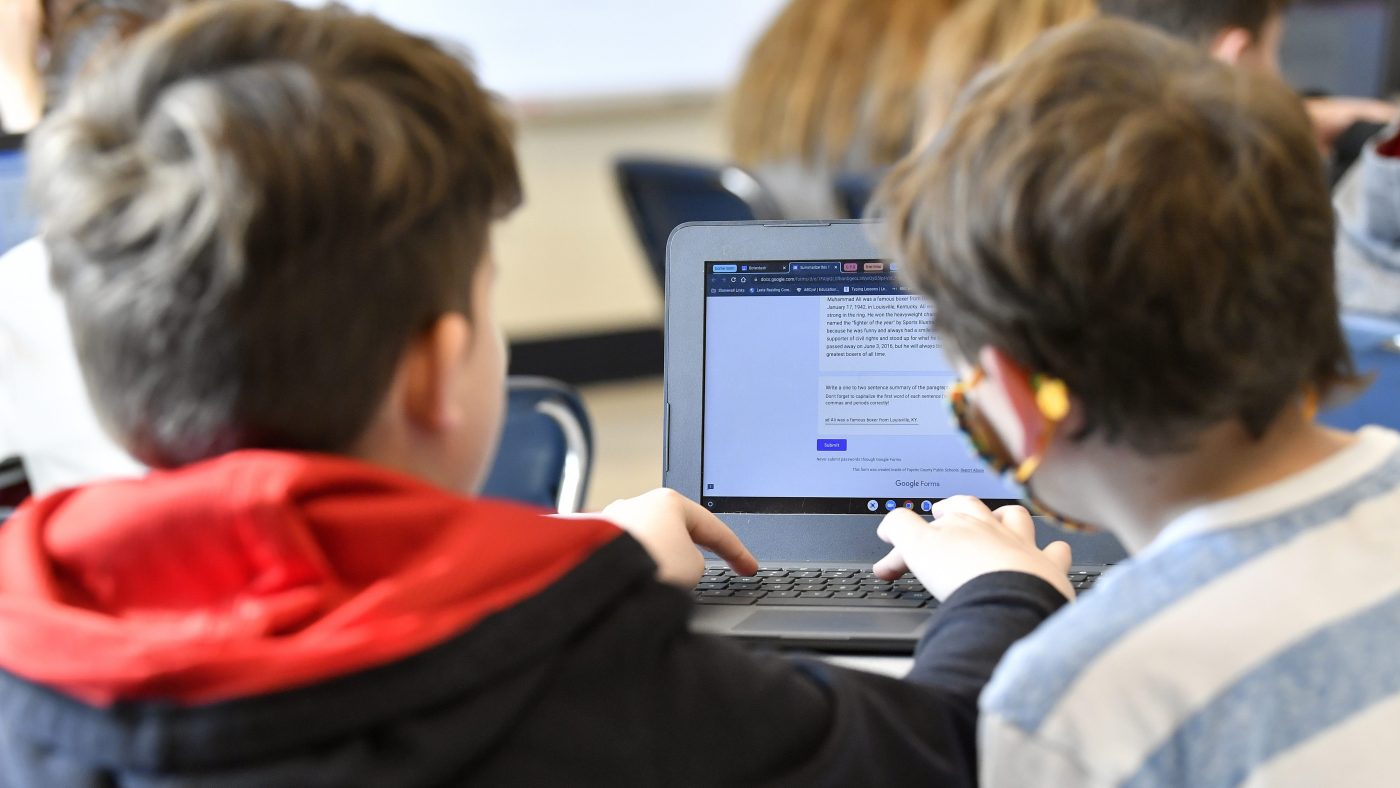
Having secured restrictions on student cellphones in over 30 states, a coalition of parents and advocacy groups is now targeting a more entrenched classroom feature: the personal laptop, Chromebook, or iPad issued to students. This new campaign seeks to roll back the "1-to-1" device programs that became ubiquitous, especially after districts spent millions during the COVID-19 pandemic to enable remote learning.
From Shared Carts to Constant Companions
The shift was profound. What began over a decade ago as shared classroom carts of devices evolved into individual take-home technology for students. David Law, superintendent of Minnetonka Public Schools in Minnesota, noted his district invested in personal devices 15 years ago. While a majority of parents accept the policy, Law said 20 to 30 percent have concerns, with a smaller fraction refusing the devices entirely. He cited benefits like access to current information versus outdated textbooks and the ease of digital assignment management, but acknowledged logistical challenges for families opting out.

"For the majority of our students, their desired platform is technology," Law said, explaining that most secondary students no longer use lockers and that coursework is primarily designed for digital submission. This institutional reliance is compounded by the fact that state standardized tests have largely moved online.
A Rapidly Organizing Opposition
Opposition, however, is crystallizing quickly. Groups like Distraction-Free Schools California and Schools Beyond Screens argue that an overreliance on screens has fundamentally altered the school experience for the worse. "I think the pendulum has definitely swung way too far in one direction," said Jodi Carreon, a leader with the California group. She criticized an "overreliance on screens" that has changed "the very nature of what it means to go to school."
The growth has been explosive. Anya Meksin, deputy director of Schools Beyond Screens, said her Los Angeles-based group expanded from a dozen people to over 2,000 in little more than a year, with interest spreading nationwide. The group has already influenced policy in the massive Los Angeles Unified School District, where three board members introduced a resolution to reform technology use based largely on the advocates' language.
The Neuroscience of Analog Learning
Proponents of limits acknowledge technology is necessary for teaching specific digital skills like typing or graphic design. For core academic subjects, however, they champion analog methods. "If the goal is learning, then in most situations, yes, analog learning is better than digital learning in almost every situation we've looked at," stated Jared Cooney Horvath, a Harvard-trained neuroscientist and author. He advocates for using technology to teach about technology, not as the primary medium for other instruction.
This push comes amid broader national debates over digital privacy and device oversight, and parallels political fights where established institutions resist external pressure. The movement also reflects a growing skepticism of tech-sector influence, a sentiment underscored by recent events like the attack on OpenAI CEO Sam Altman's home.
A Difficult Policy Reversal
The campaign against personal devices faces a steeper climb than the cellphone fight. Schools have made massive financial investments in hardware and have built curriculum and testing around them. Furthermore, many educators and parents see the devices as essential for preparing students for a tech-centric workforce. The challenge for districts is navigating this divide, as Carreon described: "They're sort of taking that first step of just figuring out how they're used, how much time is being spent, and then working with parents on figuring out a better path forward."
As the debate intensifies, it highlights a fundamental tension in modern education policy, reminiscent of conflicts seen in other areas like local enforcement disputes around schools. The outcome will determine whether the personal classroom device, a symbol of 21st-century learning, becomes a permanent fixture or a scaled-back tool used only for specific purposes.