The Senate voted 52-47 early Friday to approve a $69.5 billion budget reconciliation package that funds Immigration and Customs Enforcement (ICE) and Border Patrol through 2029, overcoming internal GOP divisions over a proposed $1.8 billion fund that critics say would reward political allies of former President Donald Trump.
The legislation now heads to the House, where Speaker Mike Johnson (R-La.) aims to pass it next week. The vote caps a months-long battle that saw Democrats block Homeland Security funding and led to a 76-day shutdown of the Department of Homeland Security earlier this year.

GOP Divisions on Display
The only Republican to oppose the bill was Sen. Lisa Murkowski (Alaska), a senior Appropriations Committee member who objected to using the reconciliation process to fund federal agencies for three years rather than through regular appropriations. Her dissent highlighted broader unease among some Republicans about the bill's structure.
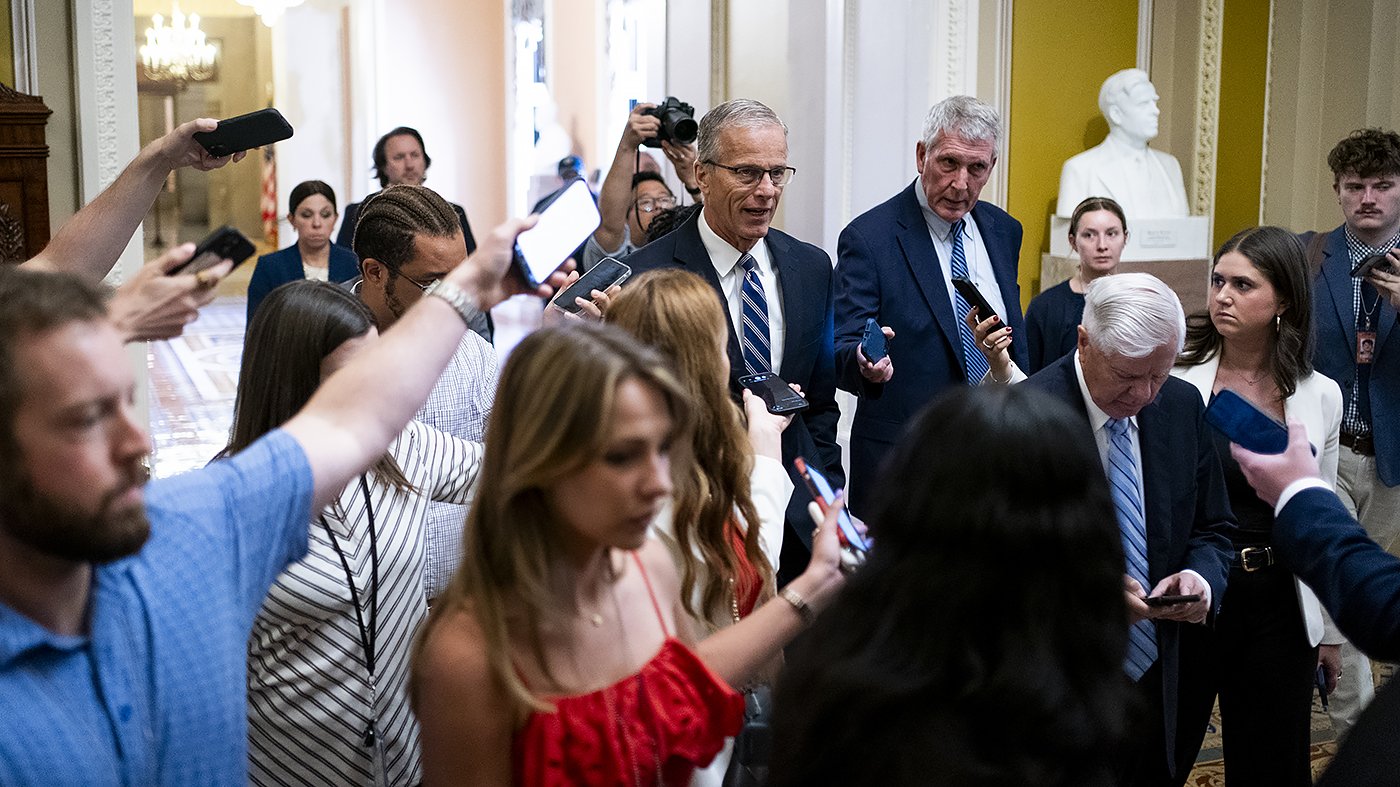
The package faced a series of amendments during a marathon vote-a-rama session, including proposals to block the Trump administration from building a White House ballroom and from establishing the $1.8 billion anti-weaponization fund. None were adopted, but several saw vulnerable Republicans break ranks to support them.
Senate Majority Leader John Thune (R-S.D.) sought to keep his caucus unified, telling colleagues before the votes: "It's a simple bill. It will do nothing more than fund Border Patrol and Immigration and Customs Enforcement for three years." He added, "We are here today only because Democrats refused to appropriate a single dollar for our border and immigration law enforcement."
Democratic Opposition and the Anti-Weaponization Fund
Senate Democratic Leader Chuck Schumer (N.Y.) framed the debate as a battle over priorities, accusing Republicans of ignoring the struggles of average Americans. "Apparently, Republicans think we cannot afford a single penny to help Americans cover the skyrocketing cost of gasoline, of health care, of housing, of food, of energy – you name it – but somehow we can afford to give another 70 billion dollars to Trump's rogue agencies even though ICE and Border Patrol already have a hundred billion dollars cash on hand," he said.
The chamber ground to a halt Thursday when Schumer offered a motion to block the anti-weaponization fund. Three vulnerable Republicans—Sens. Susan Collins (Maine), Jon Husted (Ohio), and Dan Sullivan (Alaska)—voted for it, putting the motion on the verge of derailing the entire bill. The outcome hinged on Sen. Bill Cassidy (R-La.), who had lost his primary last month after Trump endorsed his opponent. Cassidy threatened to support Schumer's amendment unless his own proposal to repurpose the fund for law enforcement officers injured during the Jan. 6, 2021, Capitol attack was adopted.
After nearly three hours of intense negotiations, Cassidy voted against Schumer's amendment but then pushed his own proposal. The Senate parliamentarian ruled it needed 60 votes to pass; it failed 52-47, with six Republicans and all Democrats in favor. Acting Attorney General Todd Blanche had told House lawmakers Tuesday that the administration abandoned plans for the fund, but Cassidy and others remained unconvinced.
Broader Context and Next Steps
The bill's journey reflects the deep partisan rift over immigration enforcement. Democrats announced in January they would not support Homeland Security funding unless the Trump administration agreed to reforms, including requiring judicial warrants for home entries and banning officers from wearing masks. The impasse followed the fatal shooting of 37-year-old Alex Pretti during Operation Metro Surge in Minneapolis.
Republicans ultimately funded the rest of Homeland Security through regular appropriations while moving ICE and Border Patrol funding via reconciliation, sidestepping a Democratic filibuster. The package now awaits action in the House, where Johnson has signaled quick passage.
The fight over the anti-weaponization fund is likely to continue. Cassidy and Sen. Cory Booker (D-N.J.) have urged a judge to halt the fund, and the issue remains a flashpoint within the GOP. The bill's passage marks a significant win for Trump's immigration agenda, but the internal GOP divisions exposed during the process could foreshadow future battles.