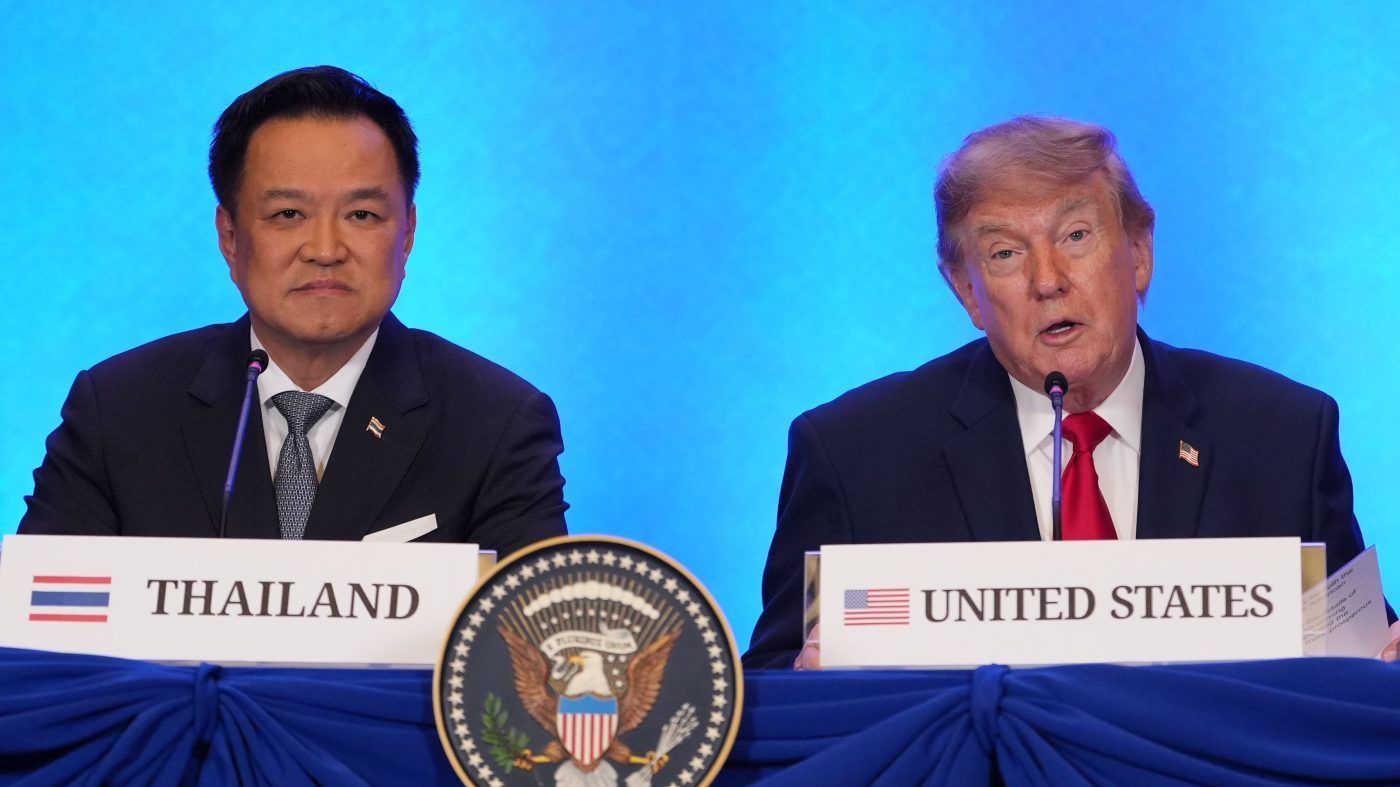
Chinese President Xi Jinping and Russian President Vladimir Putin used their addresses at the Asia-Pacific Economic Cooperation (APEC) summit in China on Wednesday to condemn U.S. sanctions, hours before they were set to sit down with President Donald Trump for an unprecedented three-way meeting.
In his speech, Xi championed free trade and pledged to reduce tariffs, a direct counterpoint to the trade war Trump has waged against Beijing. "We must firmly uphold the rules-based multilateral trading system with the World Trade Organization at its core, support free and open trade and investment," Xi said, according to Reuters. His remarks underscored the widening rift between Washington and Beijing over economic policy, a rift that has defined Trump's approach to China since his first term.
Trump has long accused Beijing of flooding U.S. markets with cheap goods, and he has responded with steep tariffs on Chinese imports. After the Supreme Court struck down his initial tariff plan, the administration imposed additional levies. China's close ties to Iran have also made it a target of U.S. efforts to cripple Tehran's economy, adding another layer of tension to the bilateral relationship.
Putin, for his part, dismissed the impact of Western sanctions, telling the APEC gathering that they have "lost their intimidating effect," as reported by The Associated Press. Russia has faced U.S. and European penalties since its invasion of Ukraine nearly five years ago. While the Biden administration had maintained a close partnership with Kyiv, Trump has been openly skeptical of Ukraine and its president, Volodymyr Zelensky, while cultivating a warmer relationship with Putin. In a controversial move, Trump waived tariffs on Russian diesel and negotiated a purchase deal with Moscow to ease domestic fuel prices amid the Iran conflict, drawing criticism even from some Republicans who accused him of subsidizing Russia's war effort.
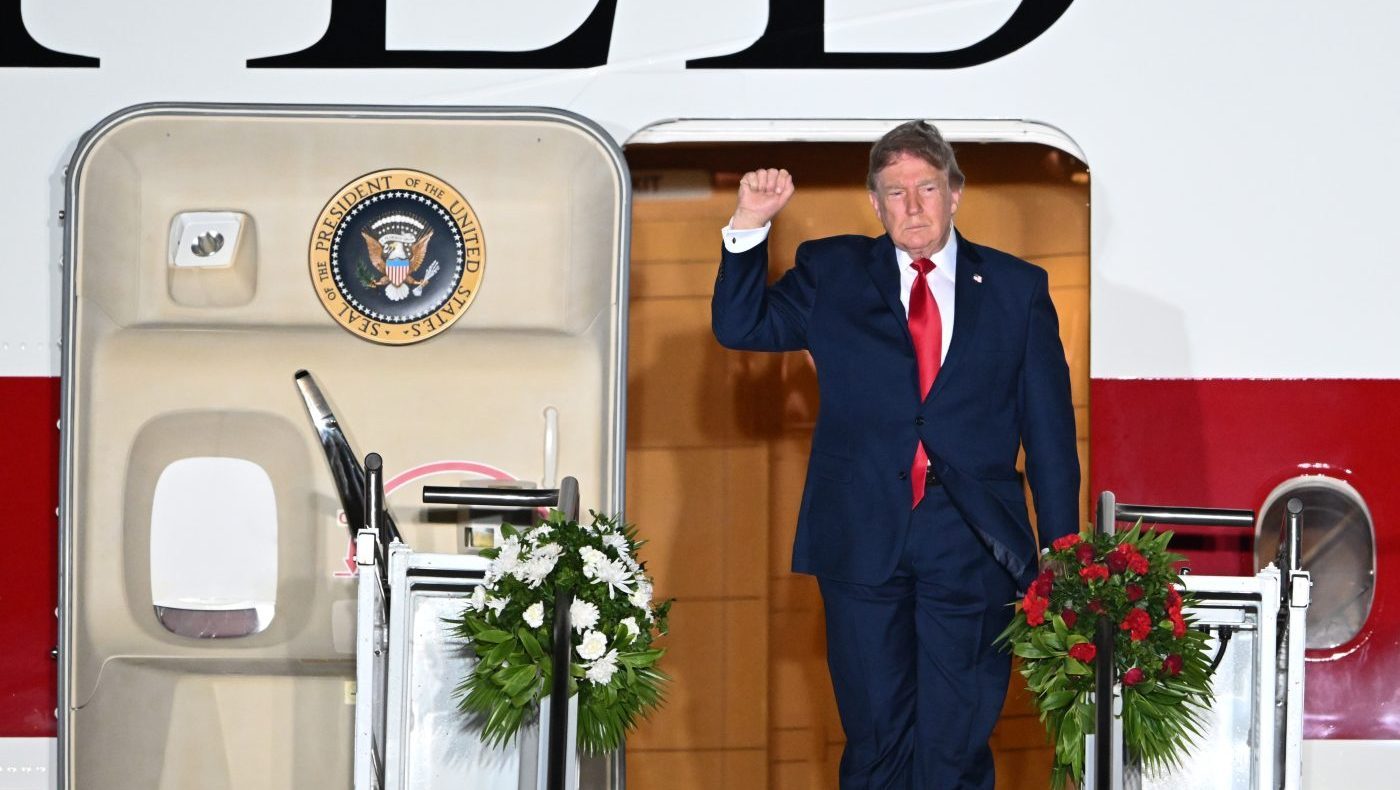
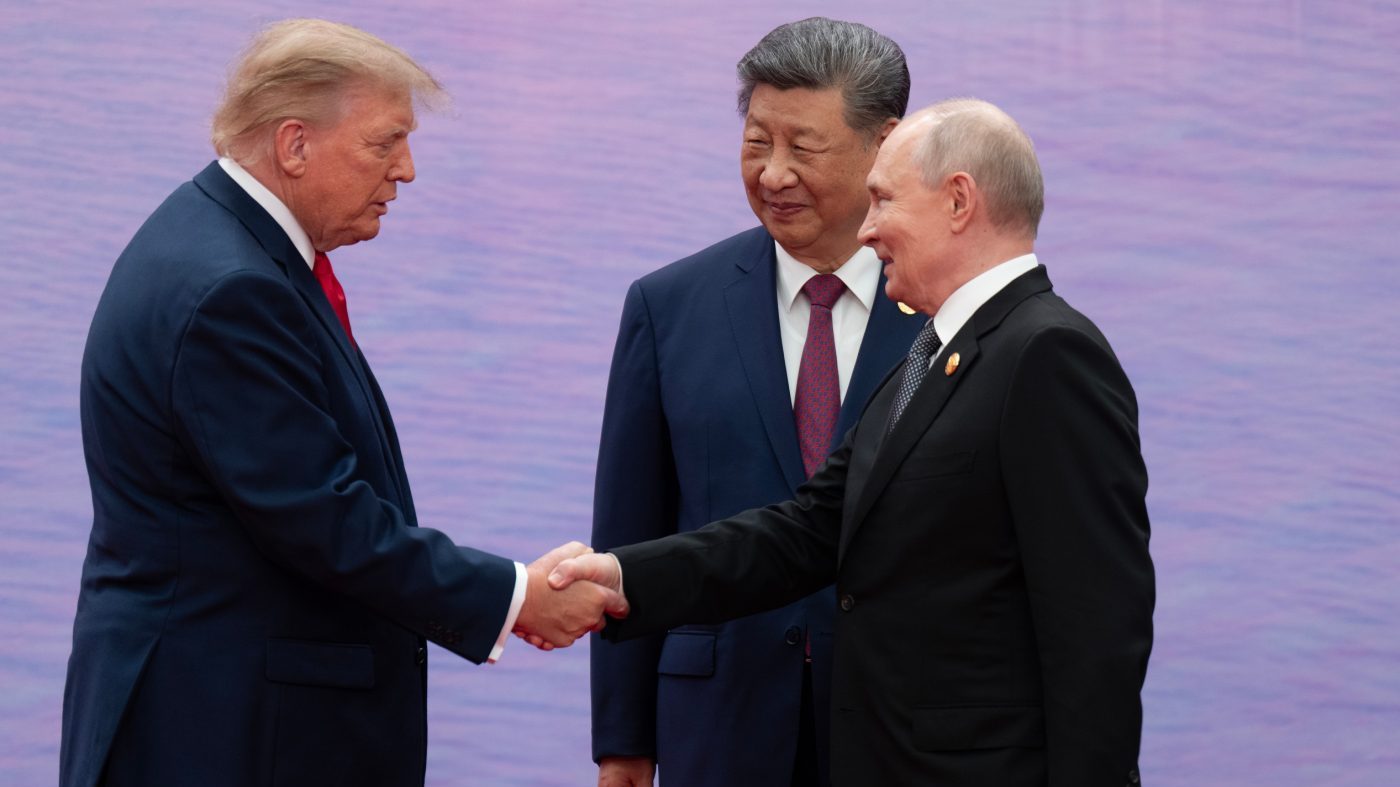
The three leaders exchanged indirect barbs before their scheduled meeting, which marks the first-ever trilateral summit among the U.S., China, and Russia. Trump arrived in China on Wednesday and was greeted on the tarmac by Xi, a gesture reciprocating the welcome Trump had extended to Xi during his visit to Washington earlier this year. Trump also shook hands with Putin at the APEC banquet, setting a cordial tone for the discussions.
According to officials, the trilateral talks are expected to cover a broad agenda, including the wars in Ukraine and Iran, tariff policies, artificial intelligence, and other pressing global issues. However, it remains unclear whether the meeting will yield any concrete agreements or if it will serve primarily as a forum for each leader to restate entrenched positions.
Analysts view the summit as a reflection of a shifting global order, with China and Russia seeking to counter U.S. influence. Trump, meanwhile, has framed his participation as part of a broader strategy to rebalance trade relationships and secure U.S. interests. The president's political standing at home remains a factor, as he faces criticism from both parties over his handling of foreign policy.
As the leaders convened, the international community watched closely for signs of progress or further polarization. The outcome of this summit could shape the trajectory of U.S.-China-Russia relations for years to come, with implications for global trade, security, and diplomacy.