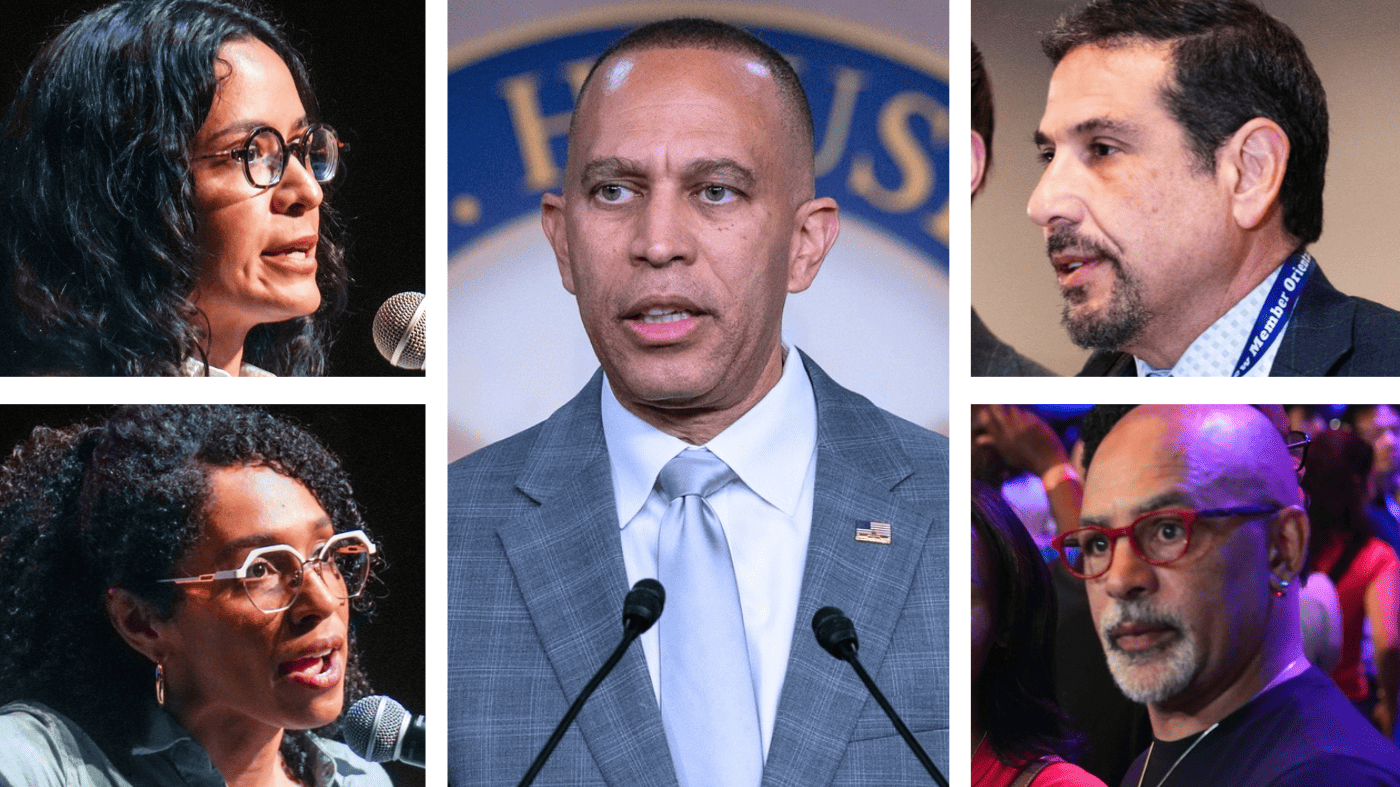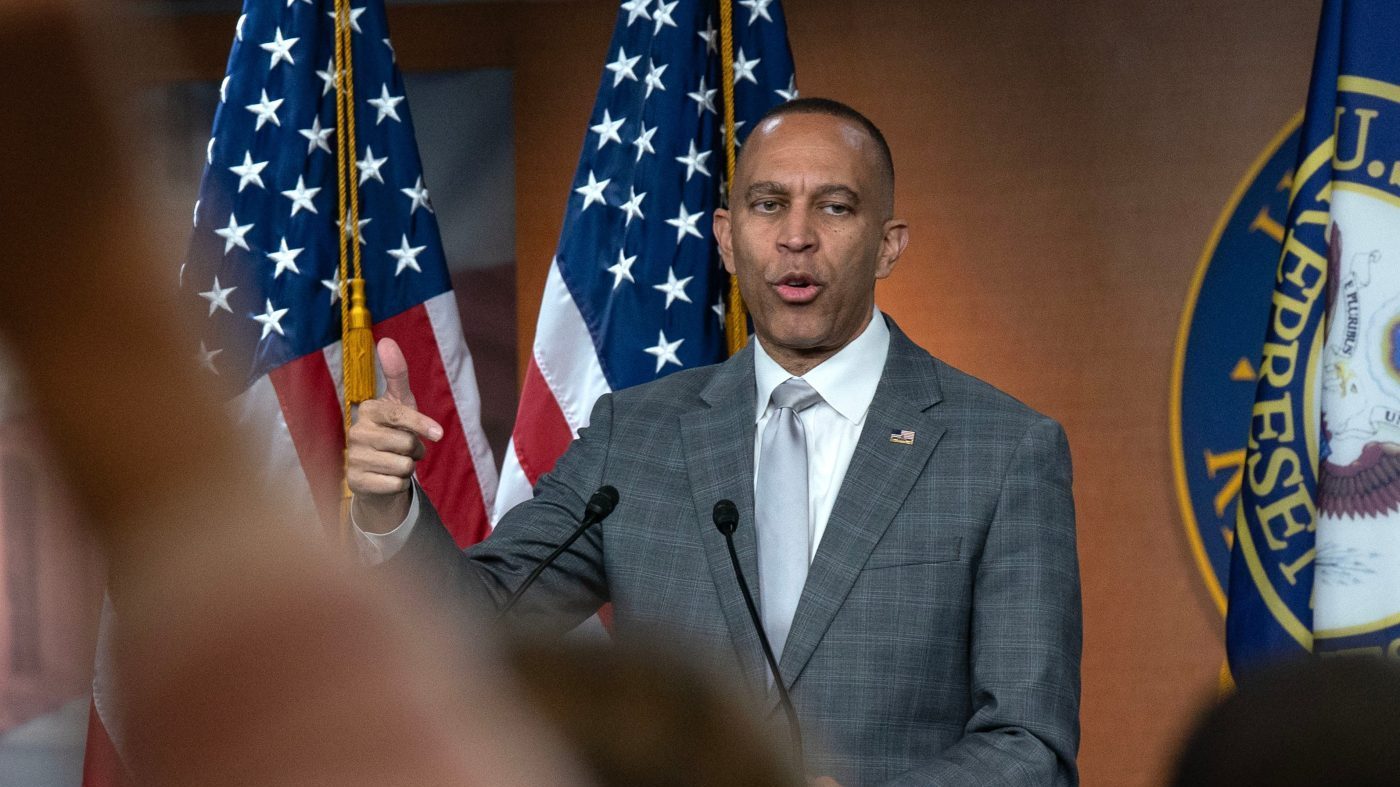
House Minority Leader Hakeem Jeffries (D-N.Y.) is scheduled to address reporters on Wednesday after securing the Democratic nomination for Speaker of the House, a move that puts him on track to make history when the new Congress convenes in January.
Jeffries won 251 votes in the closed-door Democratic caucus vote, a decisive margin that nonetheless highlighted lingering tensions within the party. A faction of progressive lawmakers and some incoming freshmen had publicly pushed for a change in leadership, arguing that the party's top ranks needed fresh faces and a new direction after the midterm elections.
The New York Democrat's nomination sets the stage for him to become the first Black Speaker of the House, a milestone that would resonate far beyond the chamber. However, the formal election will take place on the House floor on Jan. 3, where he will need a majority of all votes cast, not just those from his own party.
In addition to Jeffries, the party also selected Rep. Katherine Clark (D-Mass.) to serve as majority leader and Rep. Ted Lieu (D-Calif.) to chair the House Democratic Caucus, filling out the top tier of the leadership team that will guide the party's agenda in the new Congress.
The leadership vote comes at a critical moment for Democrats, who are preparing to take control of the House with a slim majority. The party faces a series of legislative battles over the next two years, including government funding, debt ceiling negotiations, and oversight of the Biden administration.
Jeffries' path to the speakership has not been without obstacles. Some progressive members have voiced concerns about his commitment to their priorities, while others have called for more aggressive tactics in confronting Republicans. A freshman Democrat has set conditions for supporting Jeffries, signaling that he may need to make concessions to secure the necessary votes.
The press conference, scheduled for noon EST, is expected to address these internal divisions and outline the party's legislative priorities. Jeffries is likely to emphasize unity and the need to deliver on the issues that helped Democrats win the midterms, such as protecting abortion rights, lowering costs, and safeguarding democracy.
Observers note that Jeffries' nomination is a significant shift for the party, which has been led by Nancy Pelosi for nearly two decades. His ascension represents a generational change and a broader effort to diversify the party's leadership. His path to the speakership has been marked by both promise and internal friction, as he balances the demands of the progressive wing with the need to maintain a cohesive caucus.
With the House narrowly divided, Jeffries will need to keep his caucus united on key votes, especially on procedural matters where defections could be costly. Democratic leadership faces a reckoning after two years of missed opportunities, and Jeffries will be under pressure to show that the party can govern effectively.
The upcoming leadership transition is also being watched closely by political analysts, who see it as a test of the party's ability to adapt to a new era. Jeffries is expected to address the press with a message of forward-looking optimism, but he will also need to address the skepticism of those who doubt his ability to lead a diverse and often fractious coalition.
As the Jan. 3 vote approaches, all eyes will be on Jeffries and his team to see if they can translate the nomination into a successful speakership bid. The outcome will shape the legislative agenda for the next two years and set the tone for the 2024 elections.