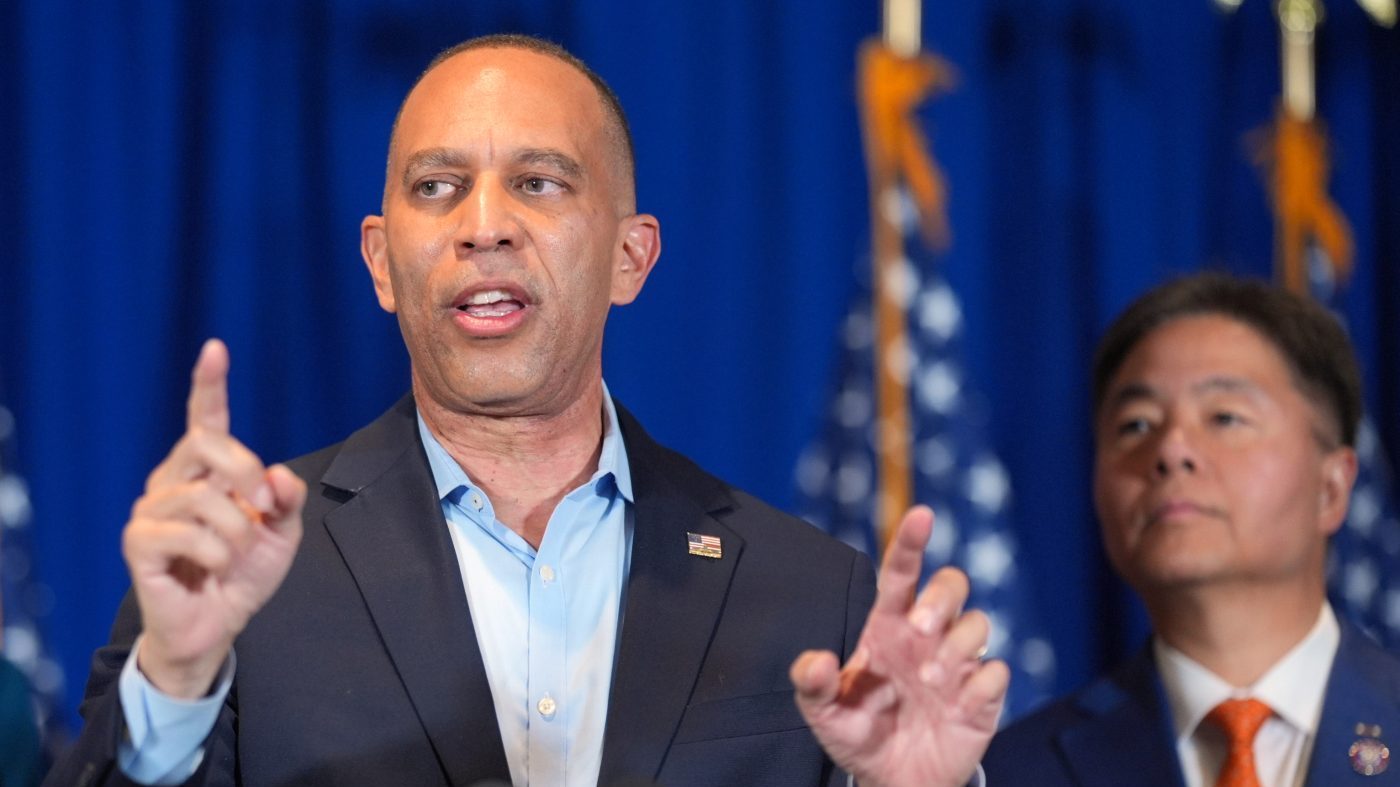
House Minority Leader Hakeem Jeffries (D-N.Y.) is set to hold a press conference Tuesday morning, offering a rare public statement as Democrats gear up for internal leadership elections that have exposed deepening fractures within the caucus. The event, scheduled for 11:30 a.m. EST, comes at a pivotal moment for a party preparing to assume the Speaker's gavel in January while navigating significant internal dissent.
Jeffries, who is widely expected to become Speaker when the new Congress convenes, faces quiet but persistent resistance from a faction of incoming Democrats. Although no formal challengers have emerged against the top leadership slate, several freshmen have signaled they are not prepared to offer blanket support, raising questions about how Jeffries will manage a caucus that is anything but unified. The tensions echo broader concerns about the party's direction after a bruising election cycle, with some moderates and progressives at odds over the legislative agenda.
The leadership vote, which will occur behind closed doors, is seen as a critical test of Jeffries' ability to consolidate power. Reports indicate that some new members are demanding commitments on process reforms, committee assignments, and messaging strategies before they will commit their votes. This dynamic has fueled speculation about potential concessions or back-channel negotiations in the coming days. For a deeper look at the challenges Jeffries faces, see this analysis of party divisions.
Adding to the urgency, Democrats are also clashing over funding for President Trump's military operations in Iran. The dispute has become a flashpoint in the lame-duck session, pitting those who argue for continued support of U.S. troops against a growing bloc that demands an immediate withdrawal of authorization. The funding fight threatens to overshadow leadership elections and could complicate the party's ability to present a united front on national security. Lawmakers are under pressure to resolve the issue before the end of the year, but no clear consensus has emerged.
The press conference is expected to address both the leadership transition and the Iran funding debate, though aides caution that Jeffries may stick to broad themes of unity and preparedness. Political observers note that his remarks will be closely scrutinized for signs of how he intends to bridge the gaps between the party's progressive and moderate wings. Some analysts point to the party's recent electoral setbacks as a backdrop, arguing that Jeffries must balance fresh ideas with the pragmatic demands of governing.
Incoming lawmakers have been vocal about their desire for a more aggressive oversight agenda, particularly targeting the Trump administration's policies. A group of freshmen has already outlined priorities that include investigations into executive overreach and economic inequality. Jeffries has signaled openness to such efforts, but the details remain vague. Meanwhile, the party's base is watching closely, with many activists demanding that leadership take a harder line on issues like healthcare and climate change.
The outcome of the leadership elections will set the tone for the next two years. If Jeffries secures the Speakership without a formal contest, he will still face the challenge of herding a diverse and sometimes unruly coalition. His ability to deliver on campaign promises and maintain party discipline will be tested early, especially with the Iran funding vote looming. For now, all eyes are on Tuesday's press conference as a first indicator of his strategy.
As the party prepares to take control of the House, the stakes could not be higher. The leadership elections are not merely procedural; they are a referendum on the party's future direction. Jeffries' remarks will likely be parsed for every nuance, as both allies and critics seek clues about the priorities of the new majority. With the clock ticking toward January, the pressure is on for Democrats to project unity, even as underlying tensions remain unresolved.