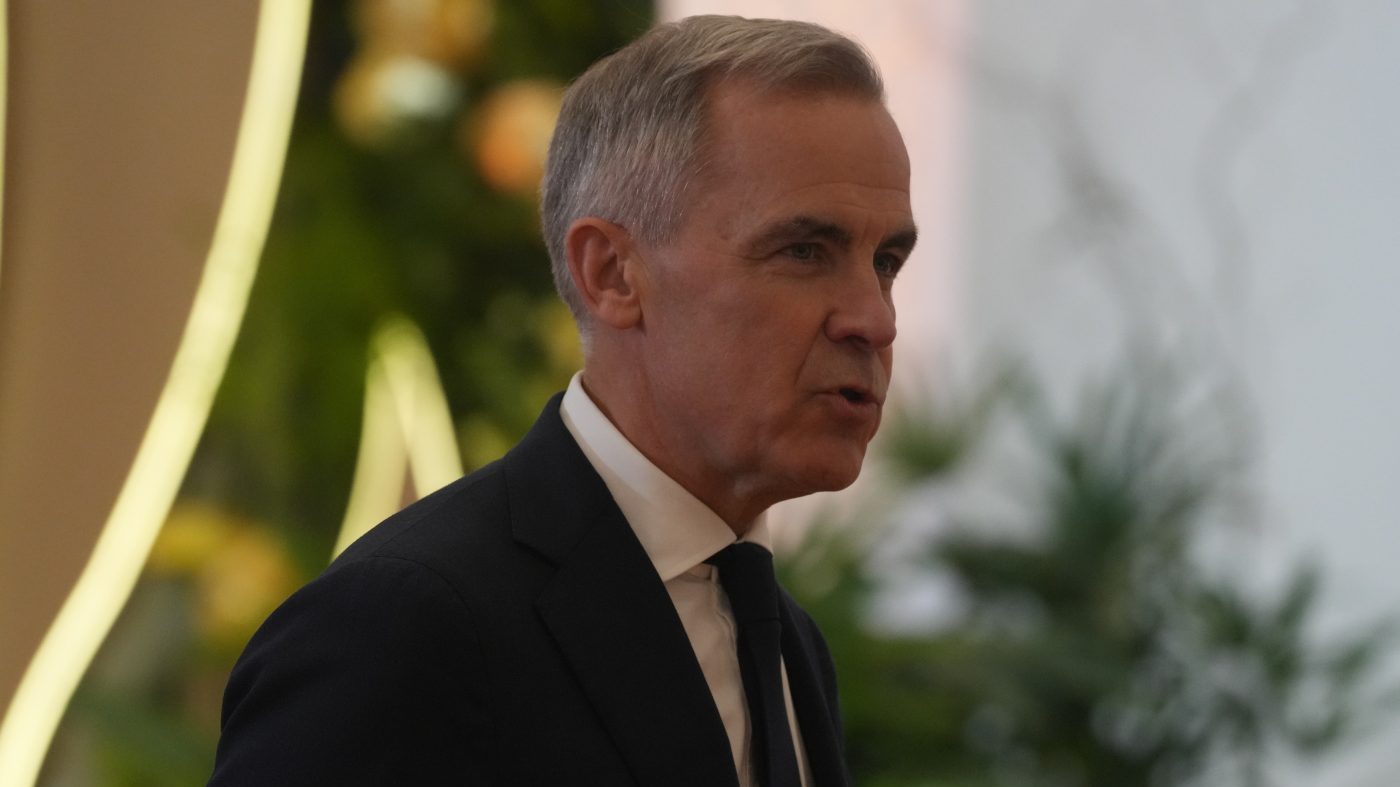
Prime Minister Mark Carney signaled Monday that Canada could pivot to Chinese automakers to rescue its troubled auto sector if negotiations with the Trump administration collapse, injecting a new element of uncertainty into cross-border trade relations.
Speaking to reporters in Cambodia, Carney reaffirmed his priority of securing a deal with Washington but cautioned that Ottawa would explore other partnerships if US trade policies continue to fracture the deeply integrated North American manufacturing network.

“We have the best auto workers in the world, and we want them fully deployed, full opportunity, in an integrated North American market,” Carney said. “That market has become less integrated because of U.S. trade actions.”
The prime minister suggested that Canada could court investment from automakers in China, Europe, or Japan if talks with the US fail to guarantee the industry’s future. When asked whether raising the prospect of Chinese investment was a negotiating tactic, Carney dismissed the idea, saying, “It’s not leverage. But action, reaction.”
“If they’re not fully utilized in a North American context, that provides other opportunities,” he added, referring to Canadian auto workers and plants. “Canada is going to move forward either way.”
Carney’s remarks come just days before he is scheduled to meet Chinese President Xi Jinping in Beijing, with auto manufacturing expected to be high on the agenda. The two countries reached a trade agreement in January that slashed Canadian tariffs on Chinese electric vehicles from 100 percent to 6.1 percent, allowing up to 49,000 vehicles into Canada annually. In exchange, China agreed to ease tariffs on Canadian agricultural goods such as canola.
President Trump has threatened to impose a 100 percent tariff on Canada if it strikes any deal with China, though Carney has since clarified that Ottawa is not pursuing a broader free trade agreement with Beijing. The threat underscores the fragility of the trilateral auto supply chain, where components often cross the US-Canada-Mexico borders multiple times before assembly is complete.
Major automakers like Ford, General Motors, and Stellantis operate plants in all three countries, making them highly vulnerable to tariff disruptions. Carney’s comments reflect growing frustration in Ottawa over the Trump administration’s trade policies, which have unsettled a relationship that has long been a cornerstone of North American economic stability.
Analysts note that Carney’s openness to Chinese investment may be aimed at pressuring Washington to soften its stance, even as he insists it is not leverage. Canada's push for strategic autonomy has gained momentum in recent months, and Carney’s trip to China is likely to test how far that independence can go without alienating its southern neighbor.