In times of crisis, true leadership emerges. While Franklin Roosevelt's policies during the Great Depression may be debated, his steady hand guided a nation through economic collapse and world war. Similarly, Donald Trump's first term seemed stable until a pandemic and social unrest tested his mettle. For Democrats, the last two years have been a test of their own leadership, and many are finding the current top brass wanting.
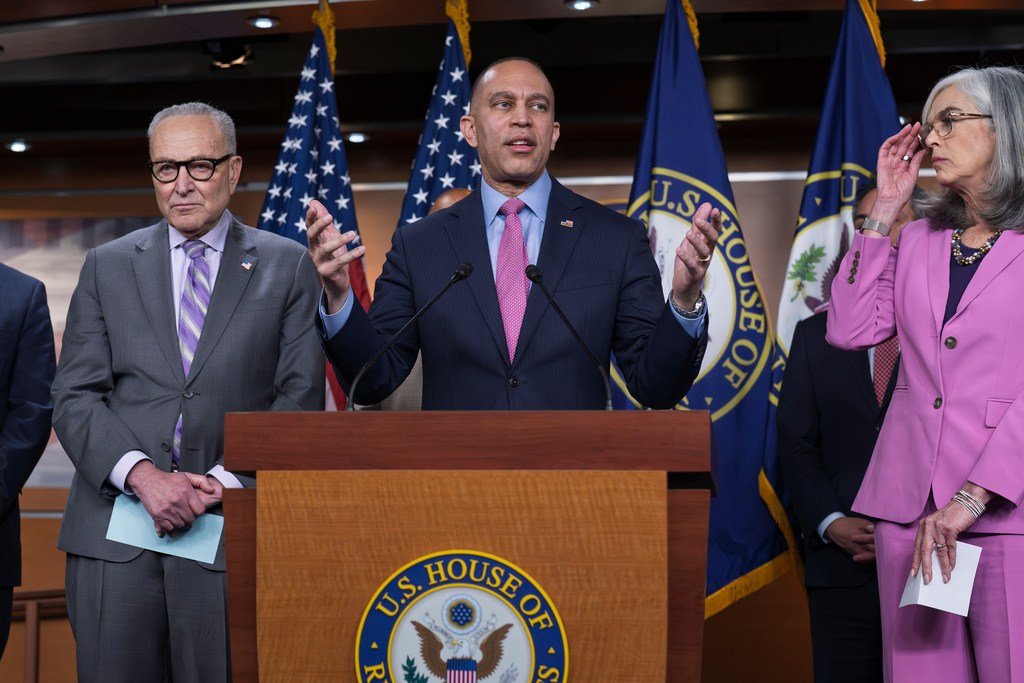
Senate Minority Leader Chuck Schumer (D-N.Y.) and House Minority Leader Hakeem Jeffries (D-N.Y.) have had their job interviews, and according to political commentator Joslin Joseph, they have failed. The botched impeachment of Defense Secretary Pete Hegseth was the final straw, highlighting a pattern of ineffective opposition.

While it's true that being in the minority in both chambers, coupled with a conservative-leaning Supreme Court, would handicap any opposition, Schumer and Jeffries still fell short. Schumer's reliance on “strongly worded letters” while the Trump administration ran roughshod over norms, and Jeffries' oversight of a House that resorted to color-coordinated outfits at the State of the Union, did little to project strength. Worse, rank-and-file members who dared to fight for their constituents often found themselves at odds with the party establishment.
The lack of institutional support for new Democratic talent is glaring. Sen.-elect Abdul El-Sayed (D-Mich.), Sen.-elect Scott Colom (D-Miss.), and Texas Gov.-elect Gina Hinojosa (D) all won despite minimal party backing. Angie Nixon overperformed in Florida's Senate race despite being largely ignored by the national party. Meanwhile, establishment Democrats watched as Sen. Mark Kelly (D-Ariz.) faced administration targeting, Sen. Alex Padilla (D-Calif.) was detained for questioning ICE, and Rep. Ilhan Omar (D-Minn.) endured a witch hunt.
The leadership vacuum allowed for troubling dynamics: Sen. John Fetterman (D-Pa.) cozying up to Trump, Rep. Haley Stevens (D-Mich.) appearing to betray party interests, and an inconsistent stance on Jewish and Muslim voters. Yet, in the absence of top-down direction, many Democrats found their own fight. Rep. Alexandria Ocasio-Cortez (D-N.Y.), once a pariah, is now a potential presidential or Senate contender. Sen. Jon Ossoff (D-Ga.) ran a brilliant reelection, as did other newcomers like Sen.-elect Adam Hamilton (D-Kan.), Rep.-elect Sam Forstag (D-Mont.), Sen.-elect Josh Turek (D-Iowa), and Gov.-elects Rob Sand and Keisha Lance Bottoms.
With the Democrats' surprising recent wins, there is renewed hope. But the next two years of Trump's presidency will be challenging, and the party needs leaders who can navigate adversity. The upcoming battles over inflation, the Iran war, gas prices, AI and data centers, immigration reform, and ICE tactics require a strong hand. Additionally, holding the Trump administration accountable for corruption and crimes, including crypto deals and the Epstein files, is paramount.
Joseph argues that the path forward is clear: replace Schumer and Jeffries with leaders who trust the grassroots and are unafraid to confront the administration. The 2028 Democratic primary promises to be a slugfest, which is healthy for the party, but only if the establishment doesn't stifle it. New leadership at the top is essential to ensure the party doesn't wander aimlessly through the political desert.
As the party gears up for the next Congress, internal challenges are already emerging. Schumer faces a leftward challenge from Van Hollen, and Van Hollen claims Schumer backers will flip in the leadership race. Meanwhile, Democrats vow probes as leadership fights intensify. The question is whether the party can unite behind new faces or remain mired in the status quo.