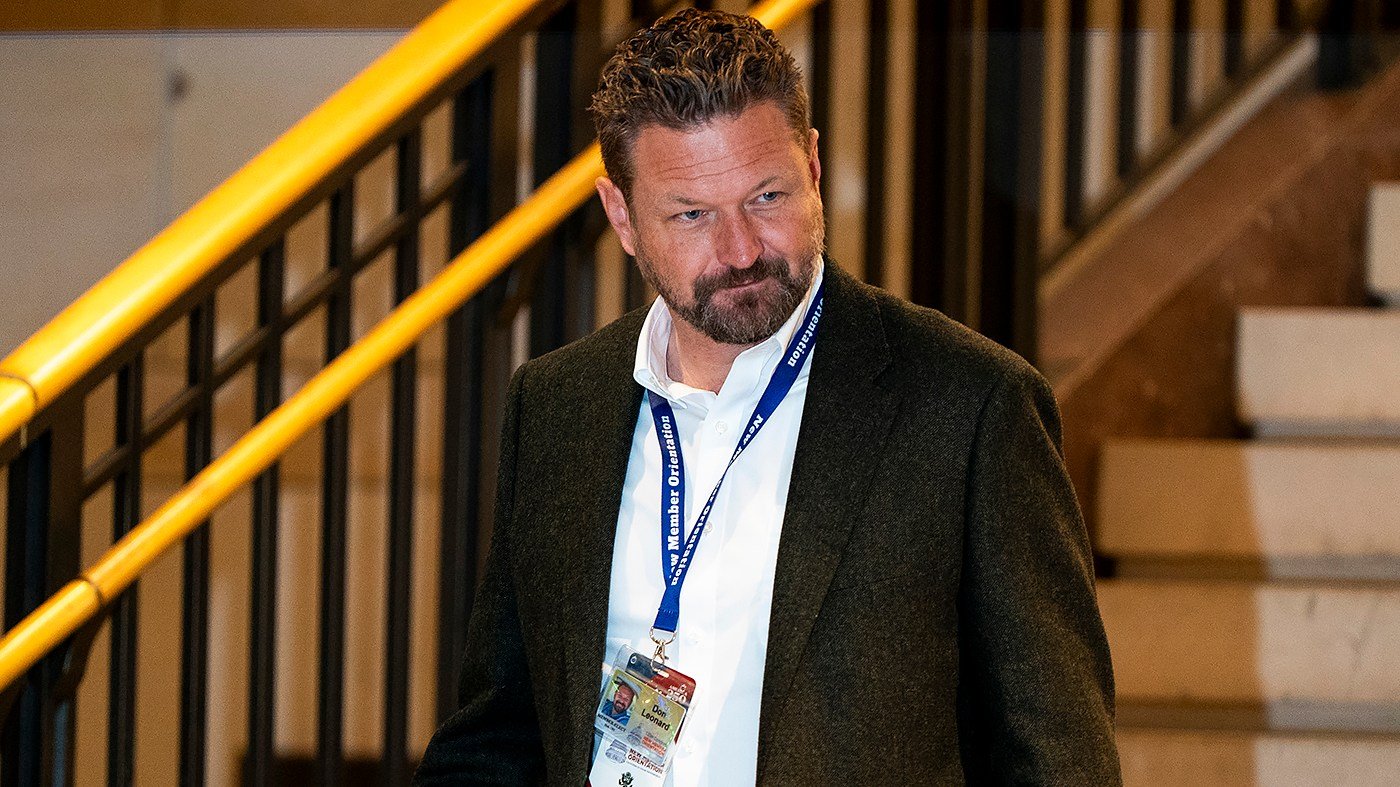
Rep.-elect Don Leonard (D-Ohio) on Sunday publicly staked out his terms for supporting House Minority Leader Hakeem Jeffries (D-N.Y.) in the upcoming Speaker election, signaling potential dissent within the Democratic caucus despite the party's strong midterm performance.
Jeffries is set to face a closed-door vote among House Democrats this week, followed by a public floor vote on January's first day. Given the party's expanded majority, Jeffries is widely expected to secure the gavel, but Leonard's comments underscore that his path may not be entirely frictionless.

Leonard's Red Lines
In an appearance on CNN's "Inside Politics" with Manu Raju, Leonard pointed to a recent letter from Jeffries outlining his speakership agenda. Leonard noted the absence of key priorities: "First of all, there was no mention in the Speaker's letter about corruption, about ending Citizens United."
Leonard, who has positioned himself as a progressive voice, argued that addressing the influence of money in politics is foundational to other policy goals. He referenced an August interview in which Jeffries acknowledged only two pathways to overturn the Citizens United decision: reforming the Supreme Court or amending the Constitution. Leonard insisted, "We need a 28th Amendment in 2028 to get this done — get the money out of our politics. If we can't do that, we will never be able to deliver on health care reform. We will never be able to deliver on child care."
Beyond campaign finance, Leonard also demanded a shift in U.S. foreign policy, specifically calling for an end to American aid to Israel. He framed this as a legal and moral imperative, citing "the conduct of the Netanyahu regime in Gaza." This stance places him at odds with the party's more centrist wing and could complicate Jeffries' efforts to maintain unity.
Dissenting Voices
Leonard is not alone in his reservations. A Change.org petition urging progressive Rep. Ayanna Pressley (D-Mass.) to challenge Jeffries for the Speakership has garnered over 110,000 signatures. The petition, launched in early November by the Coalition for Speaker Ayanna Pressley, describes her as "a beacon of hope and integrity in a tumultuous political landscape."
While Pressley has not publicly declared a bid, the petition reflects a broader undercurrent of discontent among the party's progressive base, who are eager for more aggressive leadership on issues like economic inequality and institutional reform.
Implications for Jeffries
Despite these internal rumblings, Jeffries can afford to lose a handful of votes and still claim the Speakership, given the Democrats' comfortable majority. However, the public airing of demands signals potential challenges ahead for party cohesion, particularly as the Democrats' big win masks a fragile coalition that spans moderates and progressives.
Leonard's insistence on linking domestic reforms to foreign policy shifts may foreshadow broader debates within the caucus over the next Congress. As some Democrats have indicated they will use spending power to shift foreign policy, Leonard's stance could gain traction among like-minded members.
The Speaker vote will be a test of Jeffries' ability to balance competing factions. While he is likely to prevail, the conditions set by Leonard and the symbolic support for Pressley highlight the ideological tensions that could shape the 120th Congress. As southern Democrats push for 2028 investment after historic wins, the party's internal dynamics remain a key storyline to watch.