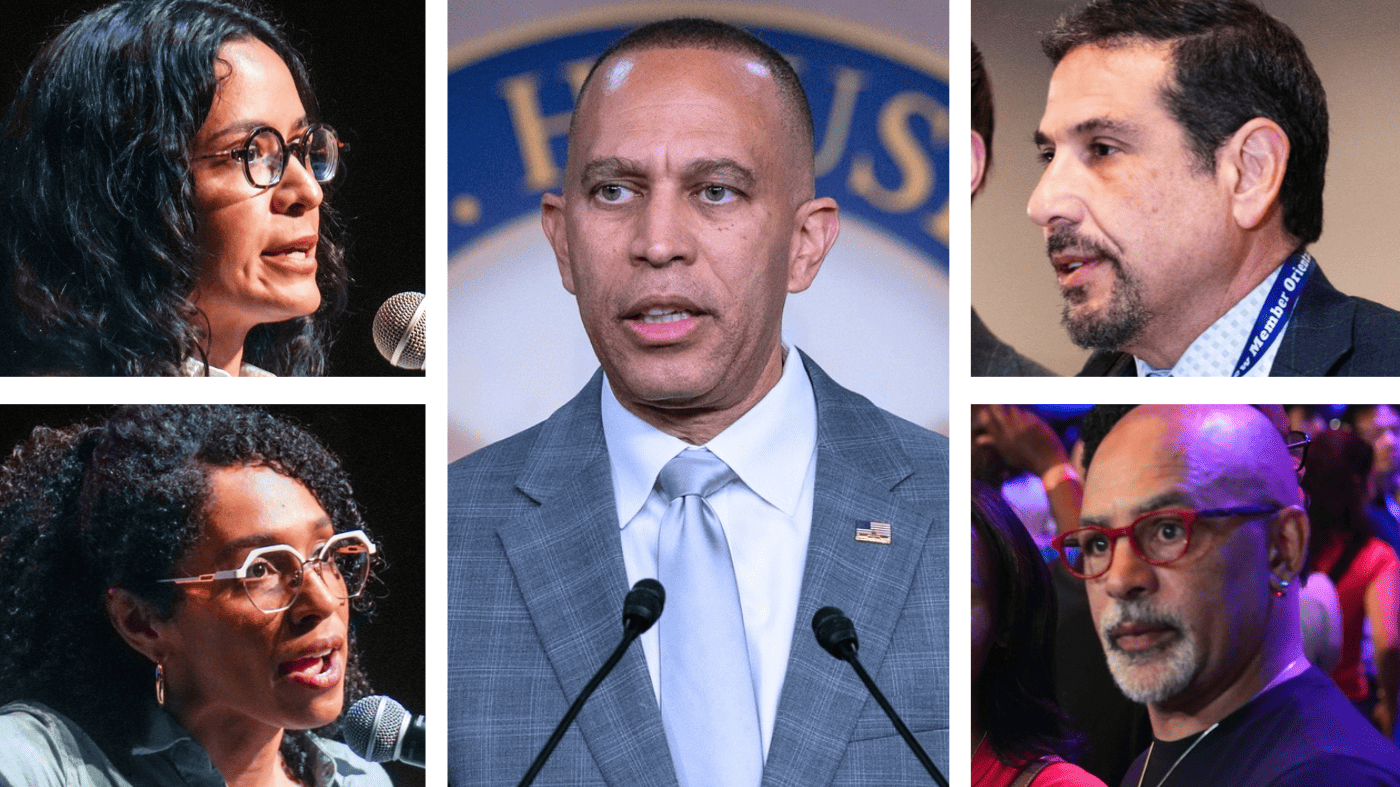
In a striking display of internal party friction, seven incoming House Democrats voted against Rep. Hakeem Jeffries (D-N.Y.) in the Democratic caucus's speaker nomination vote, signaling that the party's progressive wing is prepared to challenge leadership from the start of the new Congress.
The dissenting lawmakers—Reps.-elect Darializa Avila Chevalier (N.Y.), Adam Hamawy (N.J.), Frederick Haynes (Texas), Melat Kiros (Colo.), Donavan McKinney (Mich.), Chris Rabb (Pa.), and Claire Valdez (N.Y.)—were among 11 who voted no on Jeffries, who nonetheless secured the nomination with support from 251 colleagues.
The group issued a joint statement explaining their opposition, saying their constituents sent them to Washington with a mandate on issues including "Medicare for All, stopping ICE terror, getting money out of politics, and ending the genocide in Gaza." They noted that while they had engaged in "good-faith conversations" with Jeffries and seen "meaningful progress," more work remains to align the party's direction with grassroots demands. "Those conversations are ongoing. As such, our vote in caucus today was no," they concluded.
DSA-Backed Freshmen Lead the Charge
Five of the seven—Avila Chevalier, Kiros, McKinney, Rabb, and Valdez—received backing from the Democratic Socialists of America (DSA), which has been vocal in pushing the party leftward. The DSA's newly elected members were already expected to complicate Jeffries's leadership, as the organization remains split on how aggressively to press for changes in party strategy, particularly in confronting President Trump's second term.
Kiros's victory in Colorado was particularly notable; she unseated 15-term incumbent Rep. Diana DeGette in a primary, running on universal childcare and eldercare, as well as a wealth tax targeting billionaires. Other DSA-backed members also defeated long-serving centrist incumbents, underscoring a broader shift within the party's base.
Progressive strategist Nomiki Konst, an inactive DSA member, predicted in October that most left-wing lawmakers would ultimately side with Jeffries, pointing to Rep. Alexandria Ocasio-Cortez's early struggles with then-Speaker Nancy Pelosi. "They have learned the lessons" of Ocasio-Cortez, Konst told The Hill. Still, the visible no-votes suggest that the new cohort is willing to use its leverage early.
Non-DSA Progressives Also Hold Out
Hamawy and Haynes are not DSA affiliates but campaigned on similarly progressive platforms. Haynes, who succeeds Rep. Jasmine Crockett in Texas after her unsuccessful Senate bid, has been outspoken against U.S. military support for Israel's campaign in Gaza. "If it's in Gaza, he's against it," he told WFAA, referencing his Christian faith.
Hamawy, a doctor and veteran, took the seat vacated by Rep. Bonnie Watson Coleman of New Jersey. During his campaign, he refused to commit to supporting Jeffries, telling the New Jersey Globe that Democratic leadership is "failing to meet the moment."
The rebellion comes as Jeffries prepares to make history as the first Black speaker of the House, a milestone he is expected to achieve when the full chamber votes. But the internal dissent highlights the ongoing tension between the party's centrist and progressive factions, a dynamic that will shape legislative battles ahead. Jeffries has sought to bridge the divide, but the seven no-votes suggest that his leadership will face scrutiny from the left from day one.
As the party unites behind Jeffries for the formal floor vote, the progressives' stance serves as a reminder that their support is conditional. Their demands—ranging from Medicare for All to a tougher line on Gaza—are likely to resurface in the coming months, potentially complicating Jeffries's efforts to present a unified front against Republican priorities. The coming Congress will test whether Jeffries's leadership can accommodate a vocal left wing without fracturing the caucus.