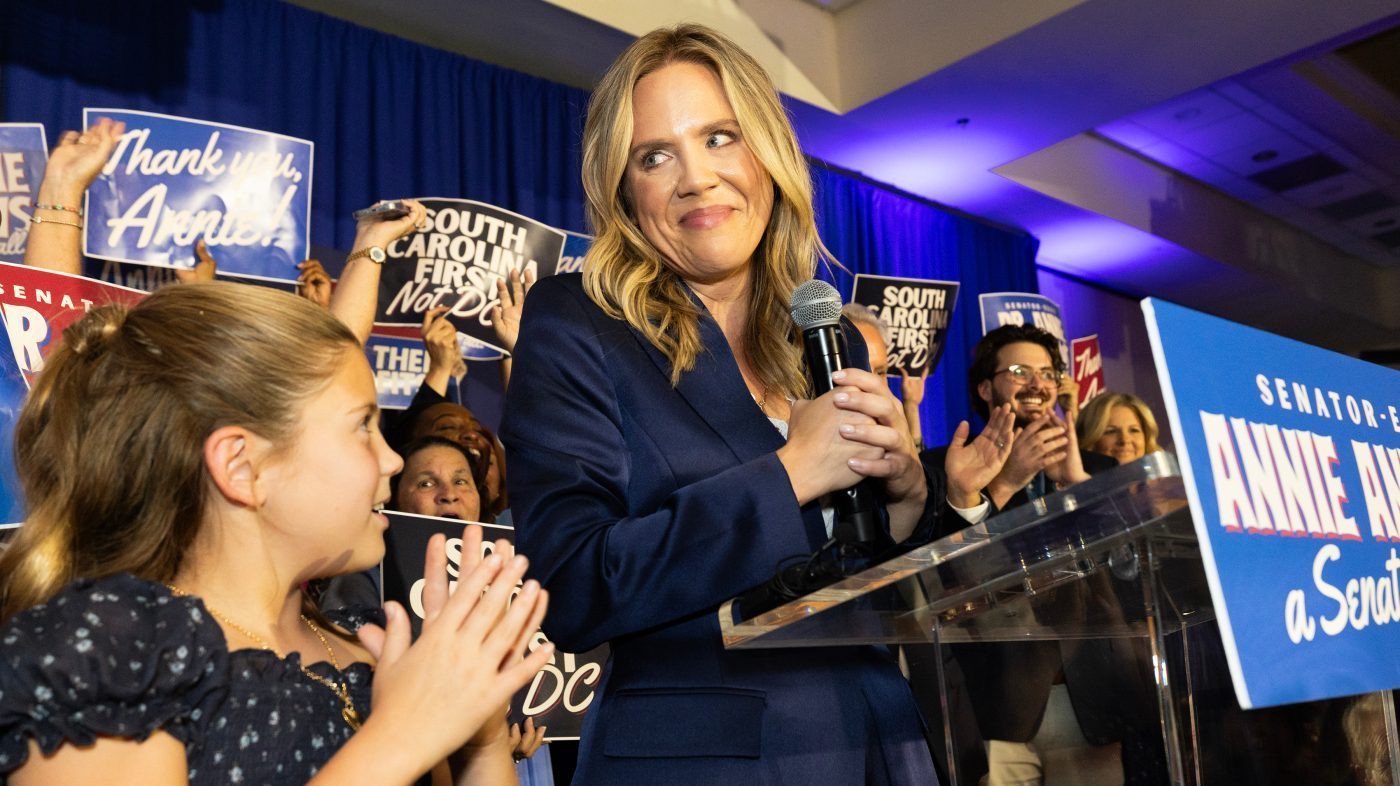
Senator-elect Annie Andrews of South Carolina says the incoming Democratic freshman class is poised to deliver the generational shift in leadership that voters demanded, signaling a break from traditional Washington politics.
“I said on the campaign trail we need generational change in leadership on both sides of the aisle, and what I see happening is that generational change is going to come from my freshman class,” Andrews said during an appearance on MS Now.
“We cannot revert to business as usual in Washington D.C.,” she added. “That is not what the American voters sent us there to do. We have so many problems to solve. Regardless of who the leader is, we have to get to work on day one.”
Andrews’ victory in South Carolina—a state that has leaned Republican for years—was part of a broader Democratic sweep in the midterms. The party flipped GOP-held seats in battleground states including Texas, Kansas, Iowa, and Maine, and with Democrat Mary Peltola’s win in Alaska, Democrats are set to hold 56 Senate seats. They also secured control of the House.
The freshman class includes Senators-elect Abdul El-Sayed of Michigan, James Talarico of Texas, Adam Hamilton of Kansas, Chris Pappas of New Hampshire, and Troy Jackson of Maine. Several have already signaled a willingness to cooperate with President Trump on issues like immigration and healthcare.
El-Sayed recently posted mock-ups of “Trump Care” health insurance cards on social media, pressing the president to back universal coverage. “Donald this is on the table. Guarantee healthcare for every American, from cradle to grave,” he wrote. Talarico has echoed that cooperative tone, saying “the American people cannot wait two years for change. So we must work with President Trump.”
Andrews has also expressed openness to working with Trump “to secure the border, to stop these Medicaid cuts” and to “find a way out of this war.” Her emphasis on bipartisan cooperation reflects a broader theme among the new lawmakers, who face pressure to deliver results quickly.
The freshmen’s arrival comes amid ongoing debates over permitting reform and other legislative priorities. Some have also weighed in on contentious nominations, with one incoming Democrat accusing the defense secretary of murder in recent naval strikes—a sign of the sharp partisan tensions that remain.
Andrews’ victory was narrow, beating Republican Darline Graham by more than 4 percentage points, according to Decision Desk HQ, which had favored Graham before the election. The result underscored the shifting political landscape in the South, a topic that has prompted calls for more investment in the region ahead of 2028.
As the new class prepares to take office, Andrews’ message is clear: voters sent them to Washington to solve problems, not to play politics. Whether that translates into legislative success remains to be seen, but the freshman Democrats are signaling they intend to be a force for change.