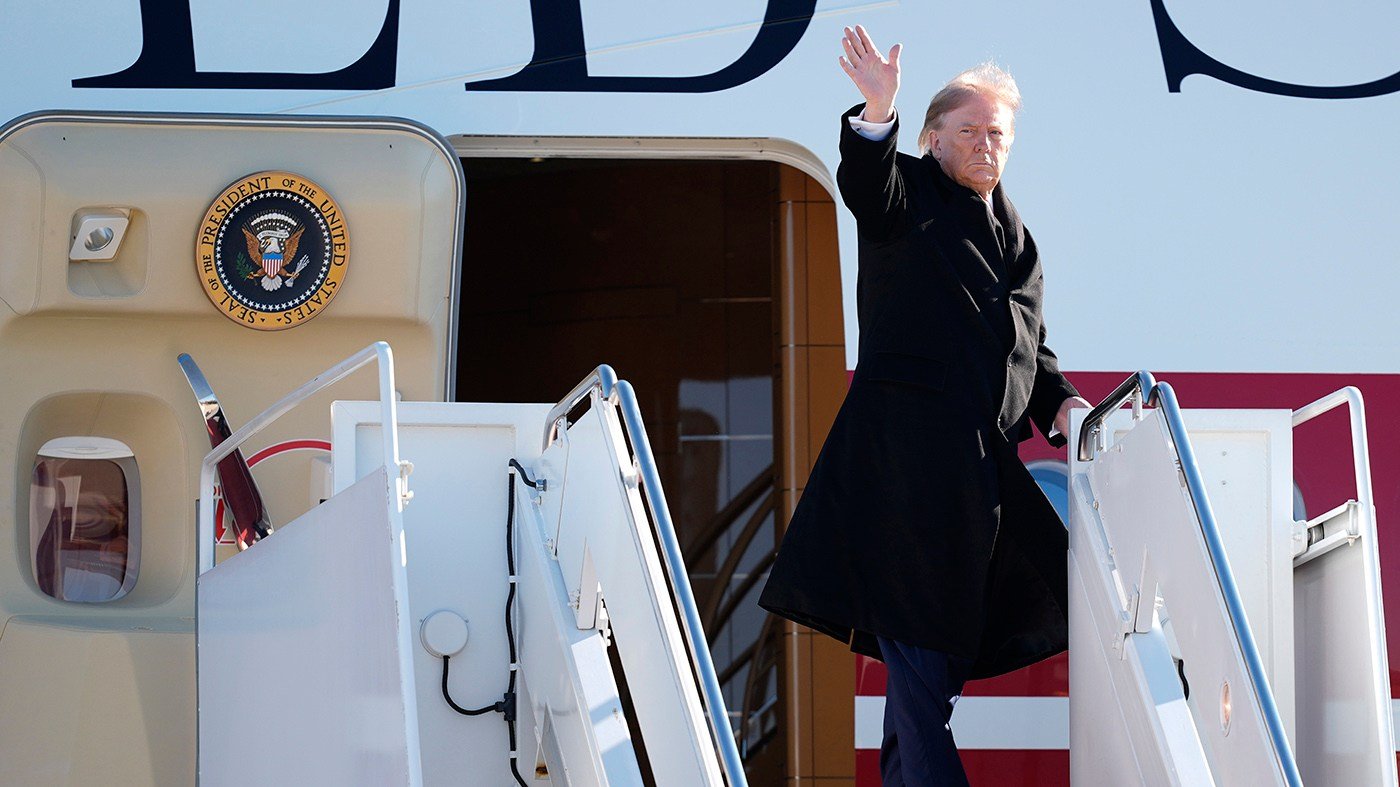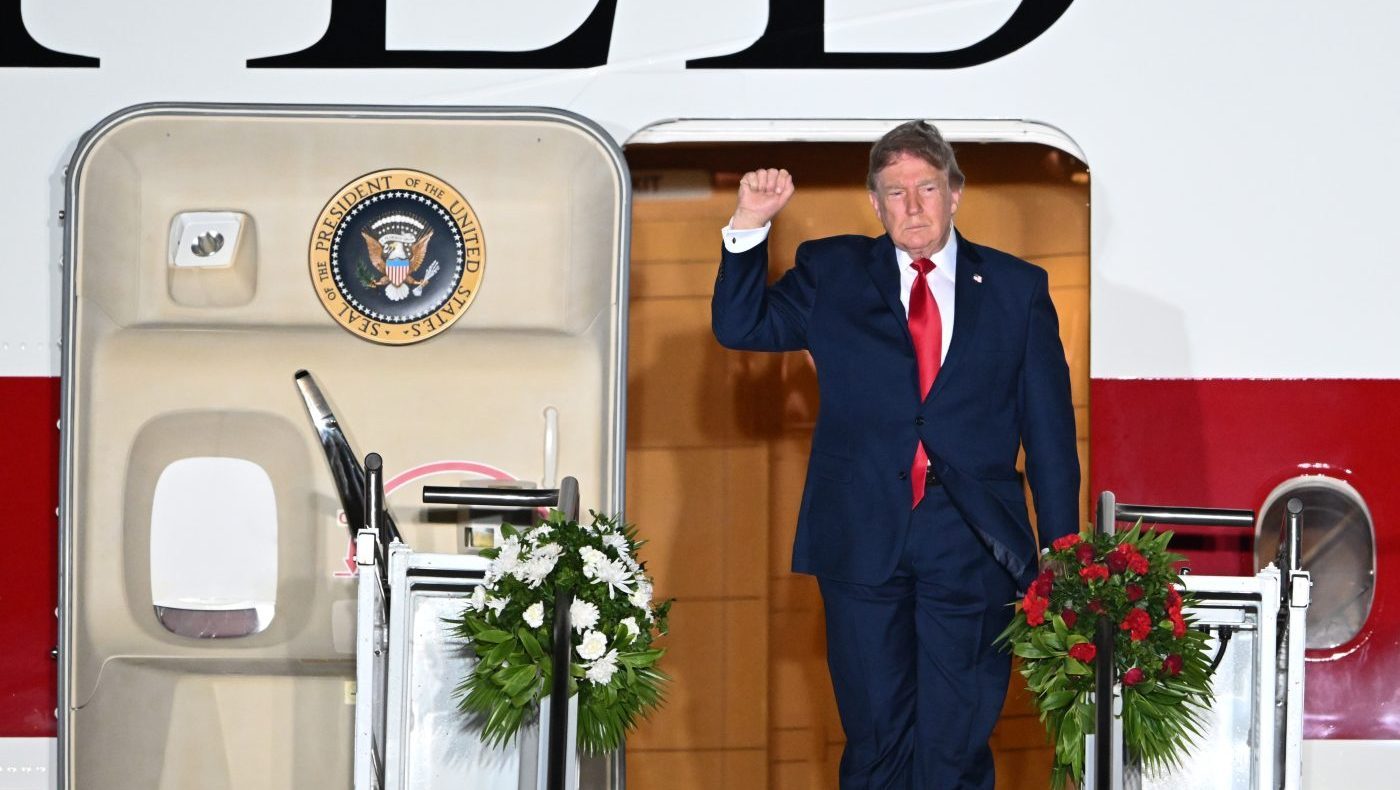
President Trump is heading to Asia this week for a series of high-stakes summits, but he does so as a weakened leader following the Republican Party's sweeping losses in the midterm elections—a result widely interpreted as a referendum on his presidency.
Trump will attend the Association of Southeast Asian Nations (ASEAN) meetings before traveling to China for a trilateral summit with Chinese President Xi Jinping and Russian President Vladimir Putin. The meetings come at a critical juncture for Trump's foreign policy, which has been marked by ongoing conflicts in Iran and Ukraine, and tensions with China over trade and nuclear proliferation.
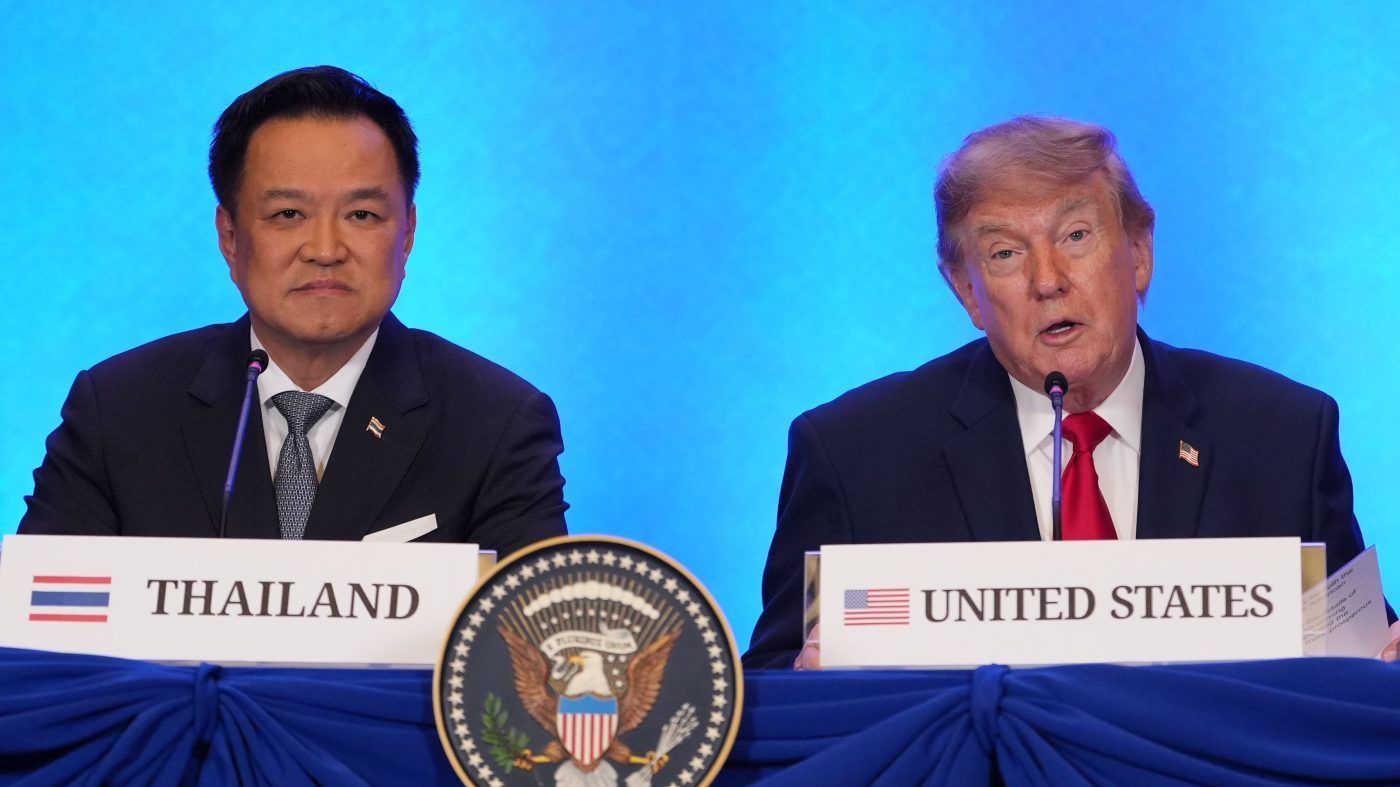
“Even before the midterm elections, many observers at home and abroad already regarded the president as being weaker abroad because of the fallout from the Iran war, because of the continuation of the Russia-Ukraine war,” said Ali Wyne, a senior research and advocacy adviser on U.S.-China relations at the International Crisis Group. “Now he’s perceived, I think appropriately, as being diminished at home as well.”
The trip marks Trump's first international travel since Republicans lost control of both the House and Senate, a blow to his ability to push through his legislative agenda in his final two years. Foreign leaders are closely watching the implications, according to Marc Short, who served as Trump's legislative director during his first administration.
“I’m always amazed at how closely foreign leaders follow our midterm elections, and I think they know what that means,” Short said. “But at the same time, it’s President Trump. It’s relative because they know that President Trump is going to be taking a position of maximalist discretion on foreign policy as chief executive officer.”
Trump has largely bypassed Congress on foreign policy, even when Republicans held majorities. He ordered strikes on Venezuela earlier this year to oust former President Nicolas Maduro without congressional approval, and his ongoing war with Iran has been conducted without official authorization, drawing criticism from Democrats and some Republicans.
“He’s operated on his own counsel,” said Cale Brown, a former State Department principal deputy spokesperson in the first Trump administration and chair of Polaris National Security. “He’s never been one to sort of stick his finger in the air and say ‘well, which way is Congress feeling’ before he acts.”
Brown argued that Trump could be emboldened going into Thursday's meetings. “These relationships have always been very personal ones for the president,” he said, referring to Trump's ties with Xi and Putin. “You could argue that with the midterms behind him, he is in many ways liberated.”
Trump will hold a bilateral meeting with Xi on Wednesday, following Xi's state visit to Beijing in May and Trump's hosting of Xi at the White House in September. The two are also scheduled to meet at the G20 in Miami next month. On Thursday, Putin will join them for a trilateral summit, where Trump has indicated he wants to discuss the U.S. war in Iran, the Russia-Ukraine conflict, and denuclearization.
However, Xi and Putin have shown little interest in compromise. Washington has supported Ukraine against Russia, while China has backed Moscow. Iran has also received support from both Beijing and Moscow in its war with the U.S. On nuclear nonproliferation, China has resisted any checks on its buildup.
“We have three people going into the same meeting, but they’re not talking about the same agenda,” said Steve Yates, former deputy national security adviser to Vice President Dick Cheney and senior research fellow at the Heritage Foundation. “I think that’s fair for a first meeting. I wouldn’t expect this to be a world-changing declaration. And I don’t think the midterms change that for either Xi or Putin.”
Trump is not the first president to negotiate abroad after an election defeat. Former President Carter normalized relations with China during the Iran hostage crisis, which contributed to his nearly 10-point loss to Ronald Reagan in the 1980 election. Yates noted that foreign leaders are not swayed by U.S. political cycles.
“These other countries, and their leaderships, and their one-party states have long memories, and they’re not really moved by the biorhythms that we get caught up in,” Yates said. “In my experience, none of this moves the needle for them.”
Michael O’Hanlon, director of research in the Brookings Institution’s Foreign Policy program, argued that Trump's clout should not be underestimated. “It’s not like they are underestimating an American president’s power because he doesn’t control Congress the way he used to,” O’Hanlon said. “American presidents are still leading the most powerful military and economy on earth.”
Strategists and analysts predict Trump will likely tout the summit as progress regardless of the outcome. “As he’s more constrained at home, more concerned with shoring up his legacy, more hopeful that he can leave office with some dramatic, headline grabbing accomplishments, I suspect he will be more receptive to taking steps that might not be advantageous from the perspective of the U.S. national security interests, but could at least allow him to say he was able to achieve what none of his predecessors could,” Wyne said.
Others note that Xi and Putin may see this as a unique opportunity. “Maybe it’s that [Putin and Xi] would both see this as an opportunity for them,” Short said. Trump wouldn't be the first president to intensify his foreign engagements when facing domestic constraints, but the stakes are high for his legacy and for U.S. credibility on the world stage.