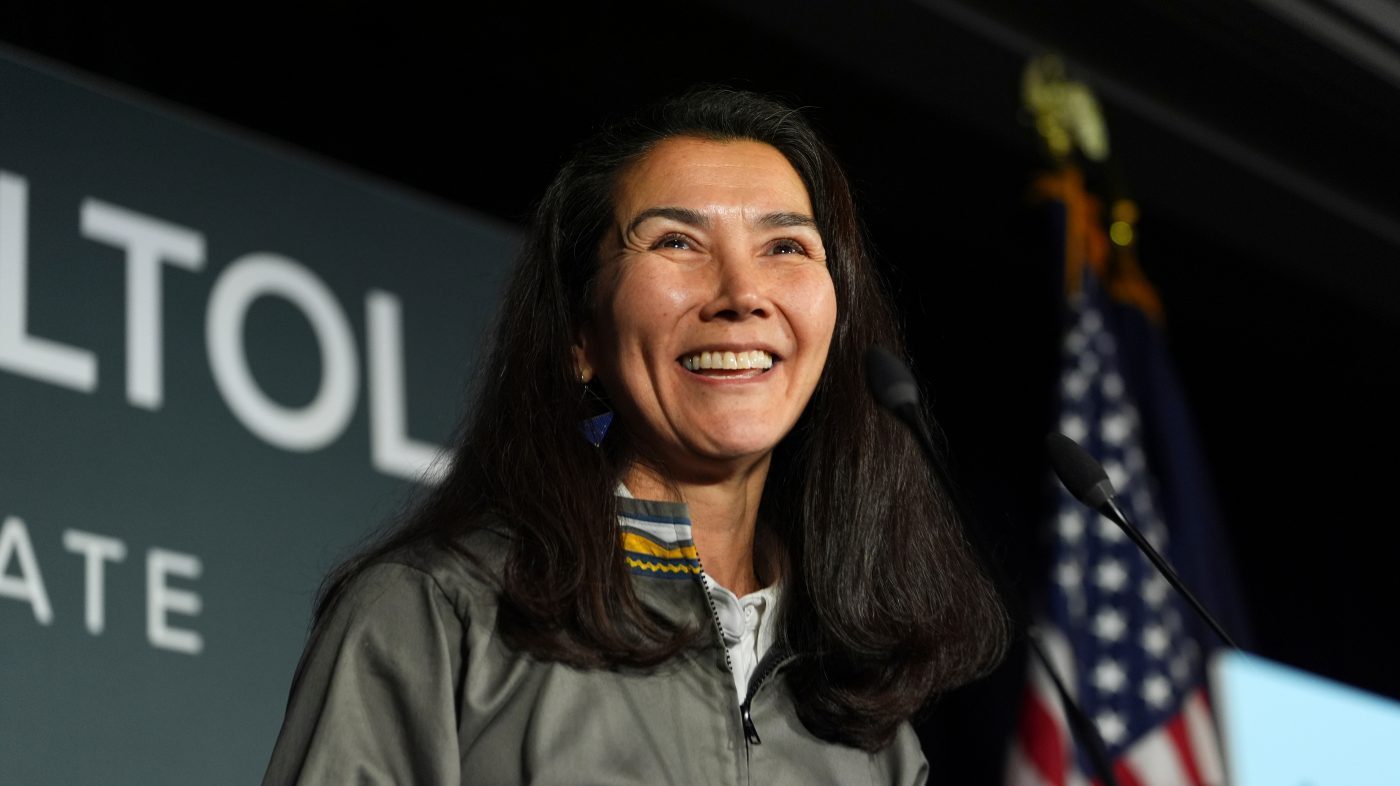
Senate Democrats are closing out a historic midterm cycle with a likely victory in Alaska, where Democrat Mary Peltola is positioned to defeat Republican Sen. Dan Sullivan as late ballots continue to be counted. If confirmed, the win would mark the party's ninth Senate flip of the cycle and expand their majority to 56 seats.
That total falls four short of a filibuster-proof majority, but it strengthens Democrats' hand in negotiating with Republicans on key legislation. Strategists note that the expanded margin also complicates GOP efforts to reclaim the chamber in 2028, a point underscored by shifting Republican calculus after the midterm rout.

Peltola would join a growing class of Democrats elected to six-year terms in traditionally red states, including Sens.-elect Annie Andrews (S.C.), James Talarico (Texas), Josh Turek (Iowa), Adam Hamilton (Kan.), and Scott Colom (Miss.), who won a narrow upset last week.
“I think the victory in Alaska just kind of puts the cherry on top that says this is going to be an interesting couple years,” said Steve Jarding, a Democratic strategist and former senior aide to the Democratic Senatorial Campaign Committee.
The Alaska race is the last unresolved Senate contest. As of Tuesday afternoon, Peltola led Sullivan by about 4 points with 93 percent of the vote counted, according to Decision Desk HQ. She hovered just below the 50 percent threshold needed to avoid a ranked-choice runoff, but her campaign declared over the weekend that “there is no mathematical path for Sullivan to win this race.”
Sullivan's camp has declined to comment on projections, while Republicans have alleged voter confusion due to a same-named candidate. Former President Trump called the race “rigged,” and a federal judge dismissed an administration lawsuit seeking to block certification if Sullivan lost.
National Republican Senatorial Committee spokesperson Bernadette Breslin accused Peltola of “deceiving voters” and letting Democrats attack Alaska during her previous House tenure. Peltola has disputed reporting that she recruited a spoiler candidate.
A 56-seat Democratic majority would be the largest since the 2008 wave, when Democrats held 60 seats including independents. Strategists say the freshmen elected in red and battleground states could reshape the party's approach. “Winning in a place you know that they weren’t supposed to win … I think it sends a signal,” Jarding said, describing the new class as “a new breed of legislator” that defies the status quo.
Basil Smikle, a Columbia University professor and Democratic strategist, noted that the incoming senators come from “very key states” across the Midwest and South, potentially serving as “policy incubators” for the party's 2028 platform. He added that the expanded majority makes it harder for Republicans to regain control next cycle, while also pressuring them to cooperate with Democrats on legislative priorities.
The Alaska outcome also feeds into broader Democratic momentum, including aggressive oversight plans targeting the Trump administration and governing tests as the GOP fractures. With certification set for Nov. 25, the final result will cap a transformative cycle for the party.