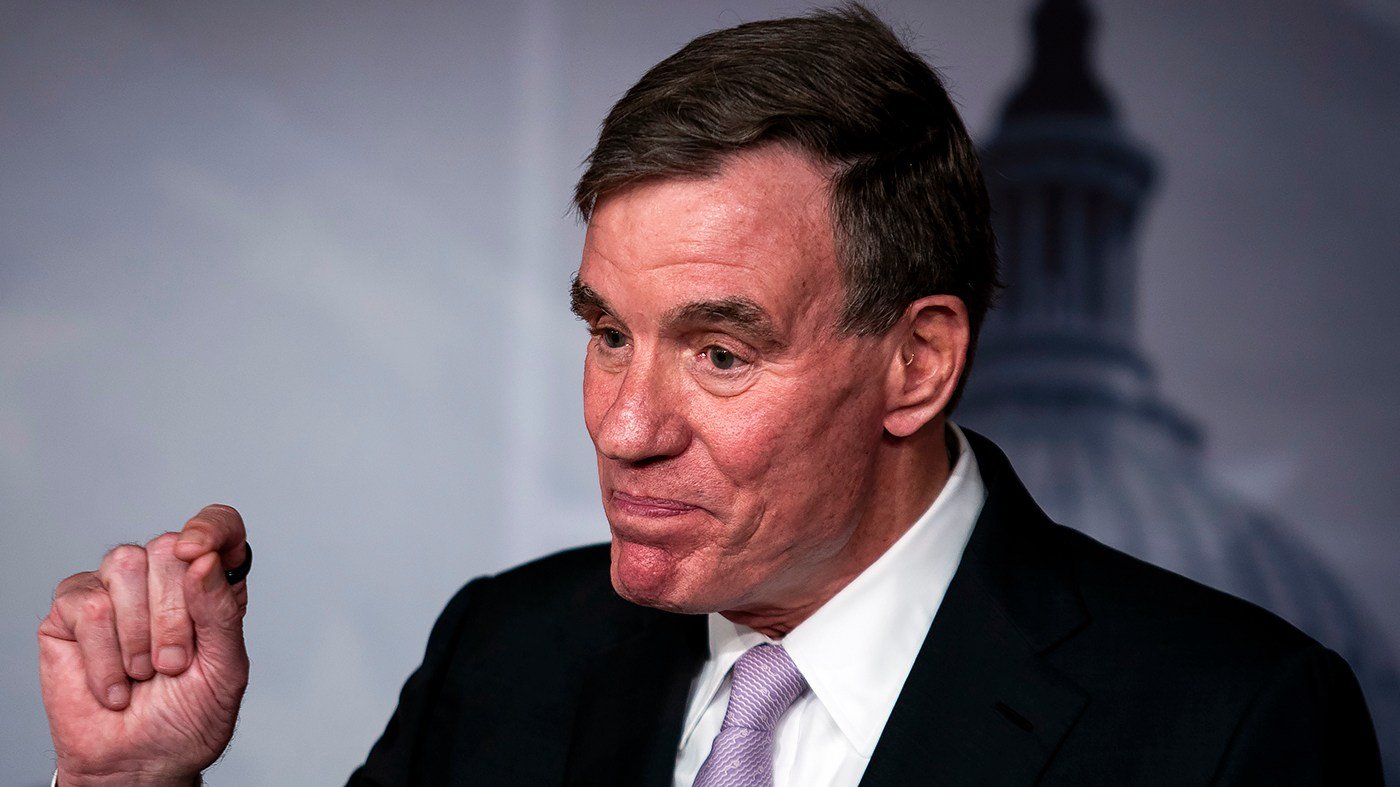
Senate Intelligence Committee Vice Chairman Mark Warner (D-Va.) on Tuesday pointed to artificial intelligence as a contributing factor in a series of high-profile system outages this week, saying the technology is forcing organizations to race to patch vulnerabilities at a pace their infrastructure cannot sustain.
In a statement, Warner, the panel's ranking member, said AI is enabling the discovery of weaknesses across vast networks at unprecedented speed, creating intense pressure on companies and government agencies to fix them immediately. That urgency, he argued, is placing enormous strain on systems not built for such rapid change.
Warner's remarks came after outages hit major U.S. banks, Microsoft, and most notably the Federal Aviation Administration (FAA), whose system failure triggered a rare nationwide ground stop. The disruptions have fueled speculation and concern, but Warner said there is no evidence they were caused by a cyberattack or foreign interference.
“What appears to be happening instead is a consequence of how quickly artificial intelligence is changing the cybersecurity landscape,” Warner wrote. He added that AI is making it possible to identify vulnerabilities across enormous numbers of systems at unprecedented speed, creating enormous pressure on companies and government agencies to patch those vulnerabilities immediately, often all at once, putting tremendous strain on systems that weren’t built to handle that pace of change.
Warner acknowledged that AI can also help organizations defend against threats, but noted that cybercriminals can use the same capabilities to scale and refine their attacks. A Harvard cybersecurity panel made a similar point in June 2025, warning that AI tools are a double-edged sword.
“It feels like every day brings another reminder that AI is moving faster than our ability to manage its consequences,” Warner said. He stressed that he hopes the outages serve as a “wake-up call” for policymakers and industry leaders.
The FAA outage on Friday was traced to a router in Arkansas and a radar facility in Texas that caused a data flood, forcing personnel to shut down the system. The ground stop lasted several hours and led to thousands of flight delays and cancellations. Transportation Secretary Sean Duffy said Saturday that the FAA and FBI “don’t have clarity yet” on the root cause, though he later attributed the telecommunications issues to a contractor’s wire replacement.
“I promise all of you that when I know what happened with that router injecting that overload into our system, I will most definitely share that with you,” Duffy said. “If we were subject to a hack, we will share that with you as well, but all of my intelligence partners are telling me that wasn’t the case.”
The outages have drawn attention from lawmakers and the administration. President Trump downplayed the disruptions, while Vice President Vance sought to calm public concerns. Republicans on Capitol Hill have also demanded answers amid conspiracy theories.
Warner's comments reflect growing bipartisan worry that AI is outpacing the government's ability to manage its risks. The Senate Intelligence Committee is expected to hold hearings on the matter in the coming weeks.