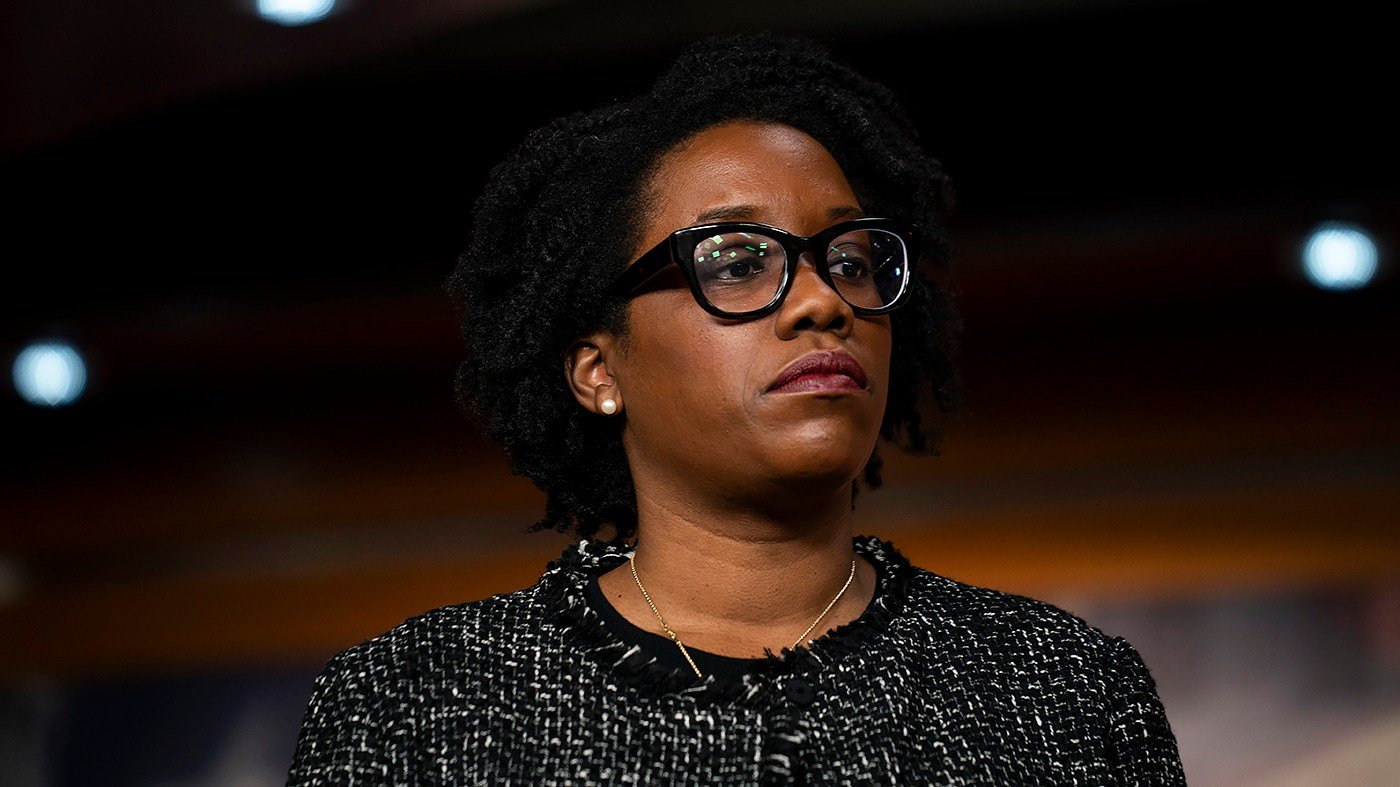
In a tightly fought leadership contest on Wednesday, Rep. Lauren Underwood (D-Ill.) emerged victorious over Rep. Sara Jacobs (D-Calif.) to become the next Democratic caucus vice chair. The final tally was 143-118, a margin that reflected the sharp divisions within the party as it prepares for a new Congress.
Underwood, who currently co-chairs the House Democratic Policy and Communications Committee—the group responsible for crafting the party's messaging and talking points—will step into the role previously held by Rep. Ted Lieu (D-Calif.). Lieu was elected unopposed as caucus chair for the next session, a move that had been widely anticipated.

Jacobs, a progressive from California who sits on the House Democratic Steering and Policy, Foreign Affairs, and Armed Services committees, had campaigned on a platform of generational change and policy innovation. She has been a vocal advocate for allowing new parents in Congress to vote by proxy, a rule change that has gained traction among younger members.
The race drew significant institutional backing: the Congressional Black Caucus (CBC) endorsed Underwood, while the Congressional Progressive Caucus lined up behind Jacobs. That split highlighted the broader ideological tensions within the Democratic conference as it looks to sharpen its agenda after a challenging two years.
Rep. Bennie Thompson (D-Miss.), a CBC member who has worked with Underwood on numerous initiatives, praised her qualifications. “She’s been thorough. She started off in Congress on my committee, and she went over to the Appropriations Committee. And so I’ve worked with her. I have knowledge of her ability, and I’m proud of her skill set. But both of them are good. You know, we had two good choices,” Thompson said.
The leadership elections also saw Rep. Pete Aguilar (D-Calif.) chosen as majority whip and Rep. Katherine Clark (D-Mass.) as majority leader. House Minority Leader Hakeem Jeffries (D-N.Y.) was nominated for Speaker, a role that could make him the first Black Speaker in U.S. history if he secures the gavel.
Underwood’s win is seen as a consolidation of the party’s centrist and establishment wings, while Jacobs’s support from progressives signals that the left remains a powerful force within the caucus. The outcome could shape how the party approaches legislative priorities in the coming term, especially on issues like healthcare, economic policy, and democratic reform.
As Democrats prepare to take control of the House, the new leadership team will face immediate pressure to deliver on campaign promises and to navigate a divided political landscape. The aftermath of recent electoral setbacks will likely inform their strategy, as will the need to balance competing factions within their own ranks.
Observers note that Underwood’s experience on the Appropriations Committee and her role in messaging will be crucial as Democrats seek to communicate a unified vision. Her victory, while narrow, gives her a mandate to help steer the party’s narrative heading into the next election cycle.