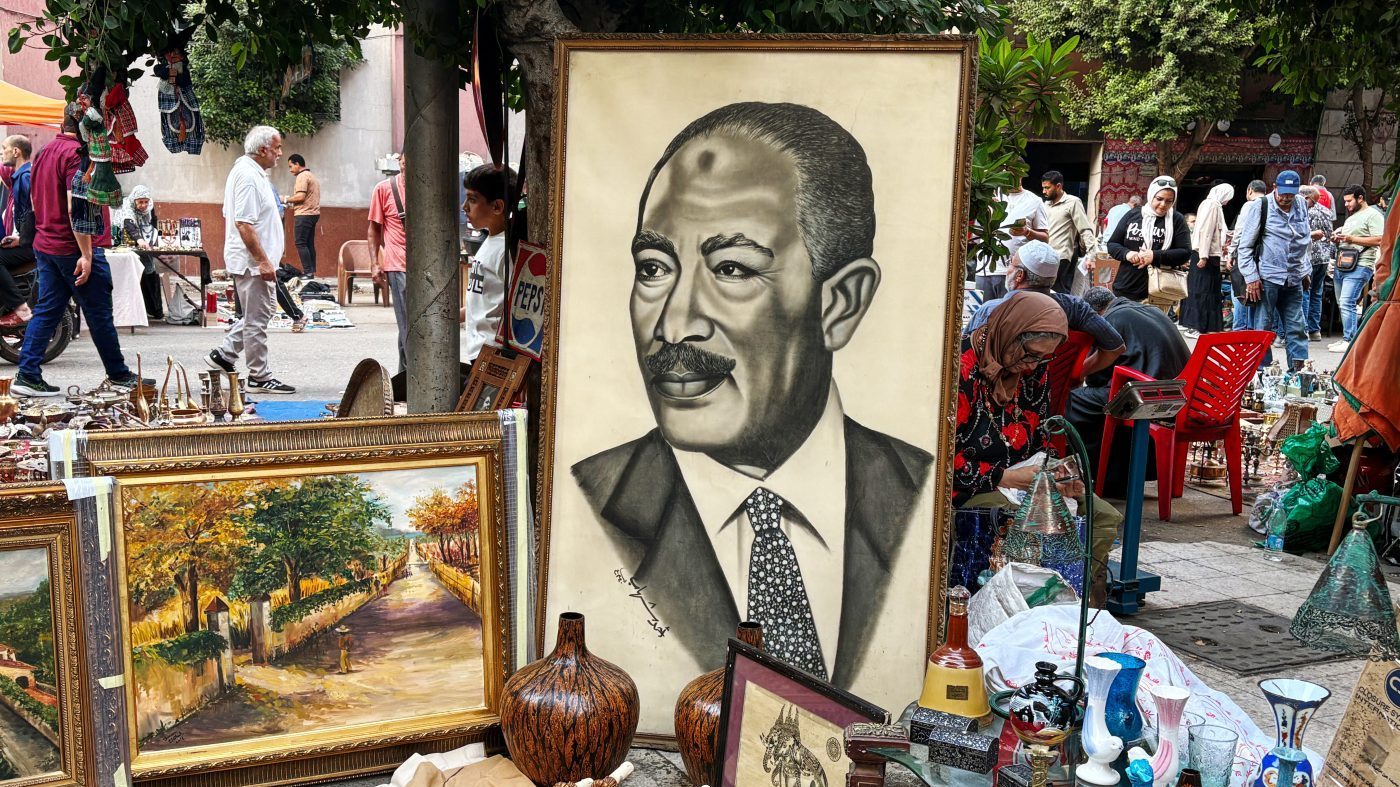
House Speaker Mike Johnson (R-La.) presided over a solemn ceremony at the U.S. Capitol on Wednesday, bestowing the Congressional Gold Medal posthumously on former Egyptian President Anwar Sadat. The honor, the legislative branch's highest civilian award, recognizes Sadat's pivotal contributions to Middle East peace, including the 1978 Camp David Accords and the 1979 Egypt-Israel peace treaty.
Sadat, who was assassinated in 1981, becomes the latest international figure to receive the medal, a distinction previously granted to leaders such as Winston Churchill and Nelson Mandela. The ceremony drew members of Sadat's family, Egyptian officials, and U.S. lawmakers, underscoring the enduring significance of his legacy in a region still grappling with conflict.

Recognition of a Historic Peacemaker
The award highlights Sadat's bold diplomatic gambit in the late 1970s, when he broke with Arab consensus to engage directly with Israel. The Camp David Accords, brokered by President Jimmy Carter, led to a peace treaty that has held for over four decades, making Egypt the first Arab nation to formally recognize Israel. Johnson, in remarks at the ceremony, called Sadat "a visionary whose courage changed the course of history."
The event also served as a reminder of the ongoing complexities in the region. While the peace treaty remains a cornerstone of U.S. foreign policy, recent tensions have tested its durability. Johnson's decision to host the ceremony aligns with his broader focus on foreign affairs, though he has faced criticism from some conservative quarters for prioritizing international gestures over domestic issues.
Political Context and Reactions
The ceremony comes amid a flurry of activity on Capitol Hill, where Johnson has been navigating contentious debates over government funding, defense policy, and internal GOP divisions. His handling of international honors has drawn mixed reactions; some lawmakers praised the recognition, while others questioned the timing. Progressive Democrats, who have been vocal on Middle East policy, largely stayed silent, but a few noted the need for continued U.S. engagement in the region.
Sadat's family, in a statement, expressed gratitude for the honor, emphasizing his vision for a peaceful coexistence. Egyptian officials attending the ceremony echoed those sentiments, framing the award as a testament to the enduring U.S.-Egypt partnership.
Broader Implications
The Congressional Gold Medal is the latest in a series of symbolic acts by Congress to honor historical figures. However, the decision to honor Sadat now carries particular weight, as the Biden administration and Congress grapple with new challenges in the Middle East, including the Israel-Hamas conflict and Iran's nuclear ambitions. Some analysts suggest the award could serve as a diplomatic signal, reinforcing Washington's commitment to the peace framework Sadat helped establish.
As the ceremony concluded, Johnson noted that Sadat's legacy "transcends borders and generations," urging lawmakers to draw inspiration from his example. The event, streamed live, drew attention from international media, reflecting the global interest in the recognition.
For more on congressional actions, follow Johnson's recent political moves and his stance on GOP leadership. The medal ceremony also comes as progressives gain influence in Congress, a dynamic that could shape future foreign policy debates.