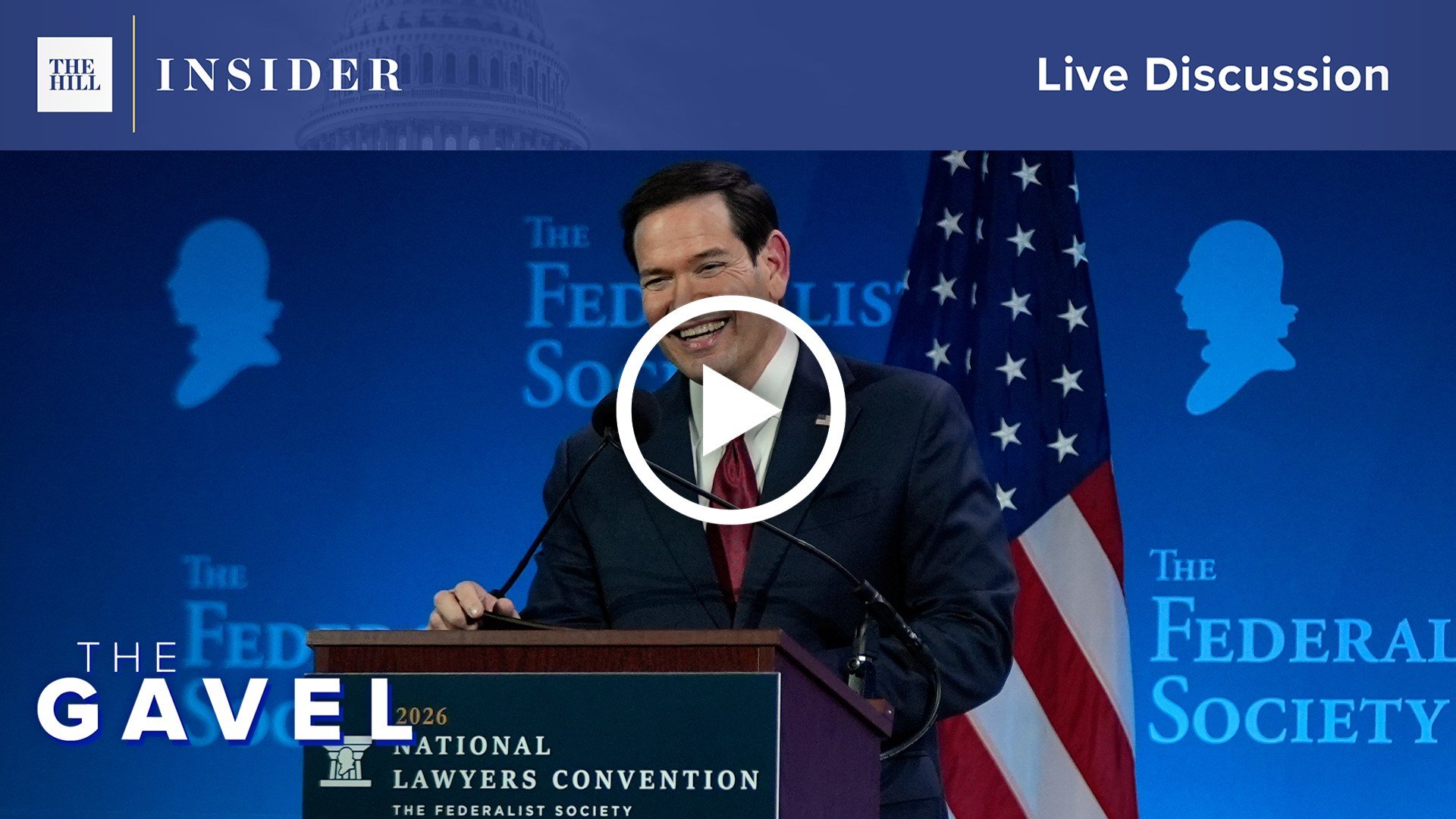
The Federalist Society's annual convention, the premier event for the conservative legal movement, unfolded this week under a cloud of mixed emotions. The gathering, which typically serves as a celebration of conservative judicial philosophy, was instead punctuated by the shock of Democrats' recent midterm victories and a growing uncertainty about President Trump's ability to extend his legacy of federal bench appointments.
Legal Affairs Editor Zach Schonfeld and Legal Affairs Reporter Sophie Brams, hosts of The Gavel, a weekly digest for Hill Insiders that explores the intersection of courts and politics, offered their takeaways from the event. They noted that while the mood remained buoyant in some quarters, the political landscape has shifted in ways that could complicate the movement's long-term goals.
The midterm results, which saw Democrats reclaim the House and narrow the Senate margin, have raised immediate questions about the confirmation pipeline for judicial nominees. "The Federalist Society's influence has been most visible in the rapid confirmation of conservative judges," Schonfeld observed. "With the House changing hands, the legislative calendar tightens, but the Senate remains the key battleground for judicial confirmations." Brams added that the convention's attendees were keenly aware that the window for additional Trump appointments may be narrowing, especially if the Senate flips in 2020.
Beyond the midterm fallout, the convention also served as a platform for dissecting the latest developments at the Supreme Court. The justices have recently taken up several high-profile cases, including disputes over asylum policy and executive authority. The panelists underscored the importance of these cases in shaping the legal landscape for years to come, and they highlighted the Court's conservative majority as a key success of the Federalist Society's decades-long project.
However, the conversation also turned to the limits of that success. As Senator Murkowski has argued, the midterm losses were a direct rebuke of the president, and that sentiment was palpable in the corridors of the convention. "There's a recognition that the movement must navigate a more hostile political environment," Brams said. "The judicial legacy is secure for now, but the broader political fortunes are less certain."
The convention also touched on the president's international agenda, with some attendees drawing parallels between his diplomatic maneuvers and his domestic judicial strategy. Just as Trump's Asia trip opened with diminished political capital at home, so too does his ability to shape the courts now face headwinds. The panelists noted that the president's approval ratings, which have consistently ranked among the lowest for modern presidents, could further complicate his appointments.
Looking ahead, the Federalist Society's leadership remains focused on state-level judicial races and the 2020 election cycle. "The midterms were a setback, but not a defeat," one attendee told The Gavel. "We're already planning for the next round." The organization's ability to adapt to the new political reality will be critical, as will its efforts to maintain momentum in the face of Democratic oversight and potential legislative pushback.
For now, the conservative legal movement finds itself at a crossroads. The Supreme Court's conservative majority is a lasting achievement, but the road ahead is fraught with political uncertainty. As the panelists concluded, the Federalist Society's next moves will be closely watched by both supporters and critics alike.