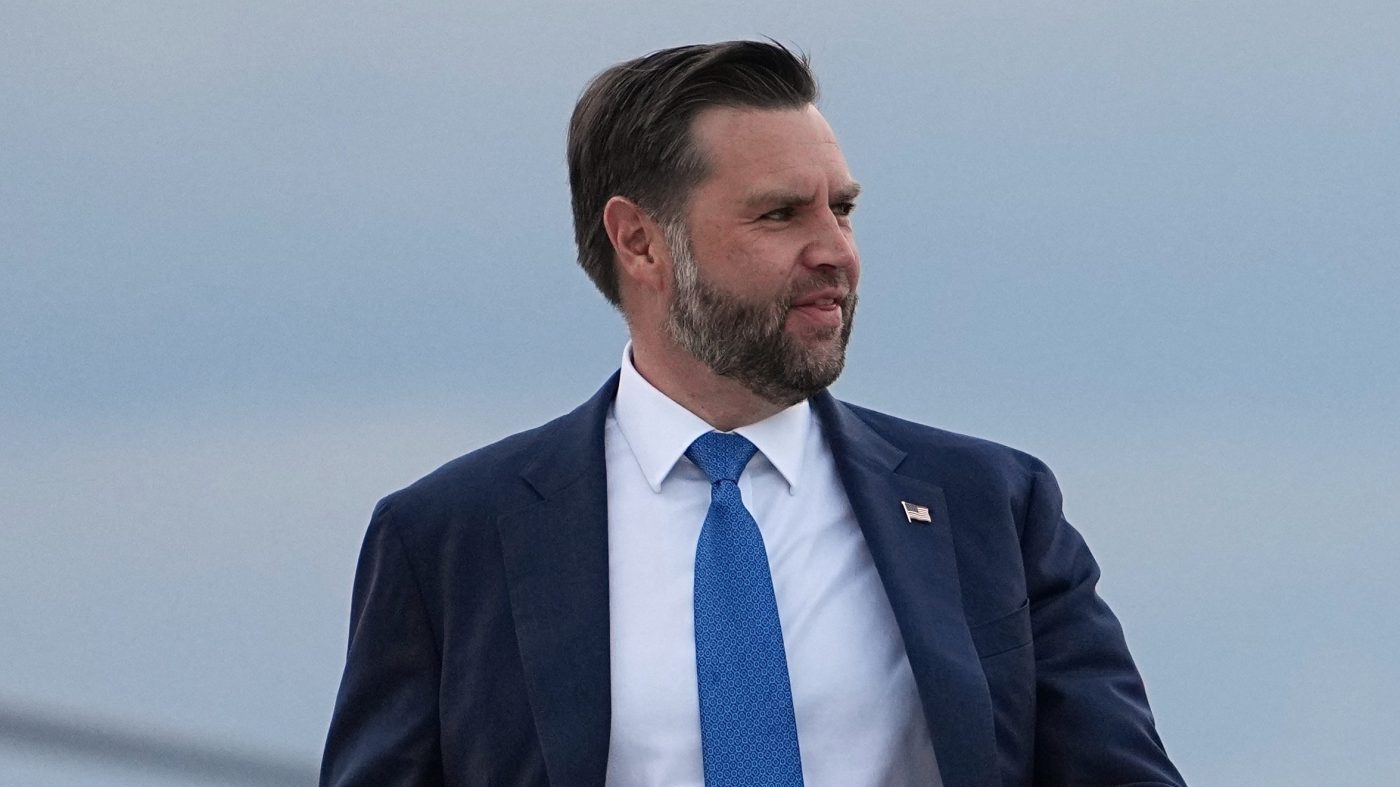
Vice President JD Vance on Monday sought to calm public anxiety over recent technology disruptions, saying Americans do not need to hoard food and water even as European governments urge their citizens to prepare for emergencies. Asked by Fox News host Laura Ingraham whether U.S. households should follow the lead of the U.K. and France—which have advised people to keep several days' worth of supplies—Vance replied that the administration does not foresee a major crisis.
“A lot of my friends have reached out asking if they should prepare to build a bunker or stock up on food and water,” Vance said. “My answer to that is no. We don’t see a crisis coming down. But you have to be prepared for everything.” He credited President Donald Trump with making U.S. cities “better prepared” for emergencies but stressed that preparedness does not imply an imminent threat.
The comments come after a string of high-profile tech failures: a global Microsoft outage last Thursday, a temporary nationwide ground stop of all flights last Friday, and a “software bug” that locked customers out of accounts at J.P. Morgan Chase and other major banks on Monday. Those incidents have fueled online chatter about stocking up on canned goods and water, with some social media users embracing a “prepper” mindset.
European nations have recently launched public awareness campaigns urging citizens to build emergency stockpiles. The U.K. and France have suggested keeping enough supplies for three days, while Germany has recommended up to ten days. U.K. Prime Minister Andy Burnham said last month that the guidance is “not about panicking” but about taking “sensible measures” to ride out difficult situations.
Homeland Security Secretary Markwayne Mullin echoed Vance’s message on Fox News Monday, telling reporter Peter Doocy that the U.K. “does not have the resilience” that the U.S. possesses. “I get this call all the time, Peter, ‘What should we do?’” Mullin said. “Because that’s kind of running over the internet right now too, especially on social media. Should I be worried that 90 days—absolutely not. I’m not stockpiling… We are in good shape here. The panic that people want to draw from is unfounded.”
Former FBI Deputy Director Dan Bongino has also weighed in, advising listeners on his podcast in October to have an emergency radio, batteries, nonperishable food, and water filtration supplies, citing warnings from the U.K. and elsewhere. Meanwhile, former White House press secretary Sean Spicer wrote on X that he was “entering full prepper mode.”
The administration’s pushback appears aimed at preventing public overreaction to what officials characterize as isolated technical glitches rather than systemic threats. Vance’s remarks also signal a contrast with European preparedness campaigns, which some U.S. officials view as overly cautious or even alarmist.
As the political fallout from recent disruptions continues to be debated, the White House is working to project stability. The broader geopolitical landscape remains fraught, but Vance insisted that Americans should trust the government’s readiness. “It’s not about panicking,” he said, echoing the U.K. prime minister’s language, “it’s about being sensible.”
Still, the repeated tech failures have raised questions about the resilience of critical infrastructure. Cybersecurity experts have noted that while individual incidents may be manageable, their frequency underscores vulnerabilities that could be exploited by adversaries. The administration has not announced any new measures to address those concerns, beyond reiterating confidence in existing systems.
For now, the official line is clear: no bunkers needed. But as recent disasters have shown, preparedness can be a prudent hedge even when no immediate crisis is apparent.