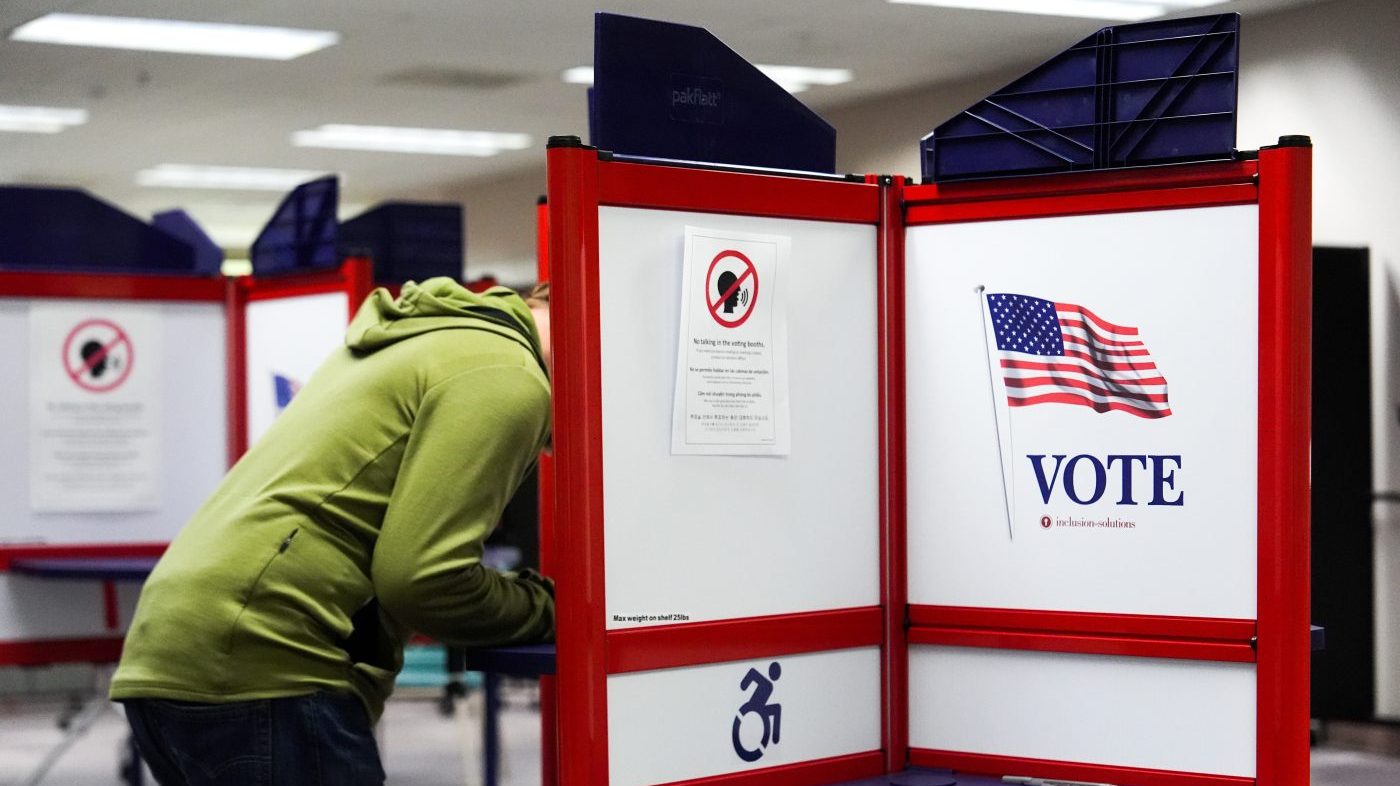
Virginia Democrats are making a final push to redraw the state's congressional districts before the 2026 elections, with voters deciding a critical referendum on Tuesday. The measure would authorize the state legislature to enact a new map that analysts predict would give Democrats an advantage in 10 of Virginia's 11 House districts, potentially solidifying their current 6-5 majority for the remainder of the decade.
Polling Shows Narrow Democratic Advantage
Recent surveys indicate the referendum holds a slim lead. A State Navigate poll last week showed support at 51% against 45% opposition, with 4% undecided. An earlier Washington Post-Schar School poll found 52% of likely voters in favor. Early voting data from L2 suggests Democrats have turned out more heavily so far, though Republicans are expected to close the gap on Election Day.
However, voter confusion appears significant. When the Washington Post-Schar School poll described the proposed map as creating 10 Democratic-favored districts, 48% of respondents called it unfair political representation, while 44% considered it fair. The complexity of gerrymandering as an issue has clouded the campaign.
Misinformation and Confusion Cloud Campaign
The referendum battle has been marked by misleading advertising and similarly named advocacy groups. Opposition ads have featured edited clips of former President Barack Obama—who has actually urged voters to approve the measure—and mailers from the group Justice for Democracy used imagery of the Ku Klux Klan and Civil Rights Movement to target Black voters with messages comparing the redistricting effort to Jim Crow laws. Obama has been a prominent voice in television ads supporting the new maps.
Adding to the confusion, the main pro-referendum group is called Virginians for Fair Elections, while the leading opposition organization is named Virginians for Fair Maps. Both sides have been fueled by substantial dark money spending from organizations that do not disclose their donors.
Dark Money Fuels Both Sides
Non-disclosing 501(c)(4) groups have poured tens of millions into the contest. Virginians for Fair Elections has raised approximately $65 million, with major contributions from House Majority Forward ($38 million) and the Fairness Project (over $10 million). The opposition, Virginians for Fair Maps, has raised close to $23 million through its dark money arm, while Per Aspera Policy Inc.—linked to Republican megadonor Peter Thiel—has funneled nearly $9 million to Justice for Democracy.
National Implications and Florida Parallel
The outcome in Virginia will have immediate consequences in Florida, where Republican lawmakers are scheduled to convene a special session next week to redraw congressional boundaries. A successful Democratic power play in Virginia would increase pressure on Florida Republicans to maximize their own advantages, though they face legal hurdles including the state's constitutional anti-gerrymandering provisions and expected lawsuits from Democrats.
The Virginia referendum represents one of the last major redistricting battles of the current cycle, with both parties seeking to lock in advantages ahead of the 2030 Census. The result could signal whether mid-decade redistricting becomes a more common partisan tactic, potentially triggering a new wave of map-drawing across states where one party controls the process. The decision could set a precedent for other states considering similar measures.
Virginia Governor Abigail Spanberger, whose approval ratings have suffered during this fight, has championed the referendum despite opposition attacks misrepresenting her position. The campaign has also drawn national figures into the fray, with former President Donald Trump and House Speaker Mike Johnson planning a virtual rally against the measure.