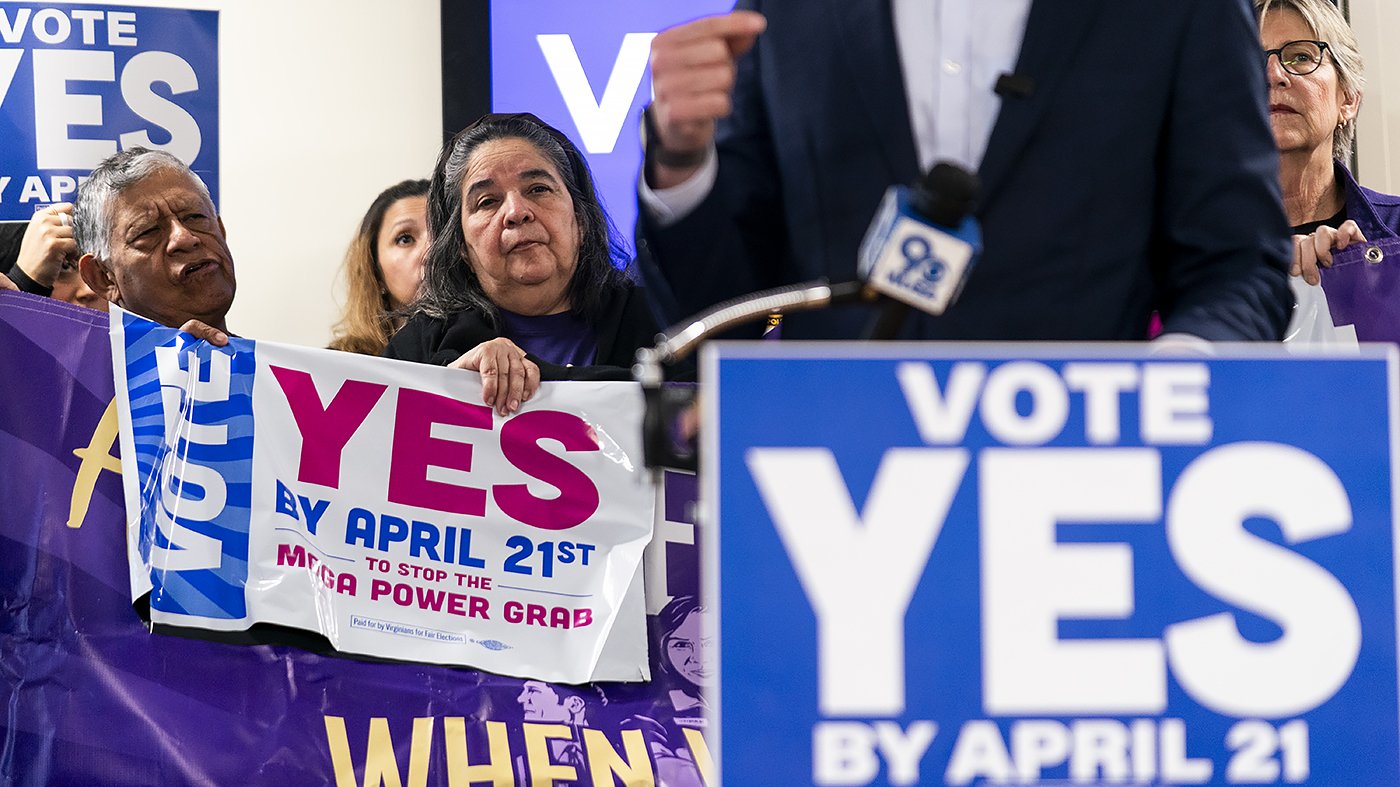
Virginia voters head to the polls Tuesday to decide a high-stakes redistricting referendum that could dramatically alter the state's congressional delegation and provide Democrats a critical advantage in the battle for House control. The ballot measure, if passed, would allow Democratic lawmakers to implement a new congressional map before the next scheduled redistricting in 2030, potentially shifting the current 6-5 Democratic edge to a commanding 10-1 majority.
The Dark Money Engine
The campaign surrounding this referendum has become one of the most expensive state-level political fights in the country, with nearly $100 million flowing through organizations that obscure their funding sources. Both the "yes" and "no" campaigns are primarily financed by 501(c)(4) social welfare groups, which are not required to disclose their donors under federal law.
On the supporting side, Virginians for Fair Elections has raised approximately $65 million, making it the single largest financial force in the referendum battle. Two major dark money groups fuel this effort: The Fairness Project, a Washington-based organization that describes itself as nonpartisan but focuses on progressive ballot initiatives, has contributed over $10 million. House Majority Forward, linked to House Democratic leadership's super PAC, has provided about $38 million.
The opposition campaign has raised roughly $33 million through several groups. Virginians for Fair Maps RC, whose name closely mirrors the supporting campaign, has received nearly $22 million from a dark money organization with the same name. Another anti-redistricting group, Justice for Democracy, has drawn at least $9 million from Per Aspera Policy Incorporated, another opaque organization that has previously received funding from Republican megadonor Peter Thiel.
Familiar Political Players Emerge
Despite the dominance of undisclosed funding, some traditional political actors have publicly aligned with the campaigns. Supporting the redistricting measure are notable Democratic figures including former Speaker Nancy Pelosi, who contributed $20,000, and organizations like the Service Employees International Union ($500,000) and the League of Conservation Voters ($300,000). House Democratic leaders Katherine Clark and Pete Aguilar have also donated.
On the opposing side, former Virginia Governor Glenn Youngkin has reportedly contributed more than $500,000 to efforts against the measure. The referendum has become a national partisan flashpoint, with implications that extend far beyond Virginia's borders.
National Implications and Context
The Virginia fight occurs against a backdrop of similar redistricting battles across the country. Republicans have pursued mid-cycle redistricting in states including Texas and Missouri, while Florida Governor Ron DeSantis has postponed a special session on congressional maps that Republicans view as another opportunity to gain seats. The outcome in Virginia could provide Democrats with as many as four additional House seats this November, significantly impacting which party controls the chamber.
This spending level, while extraordinary for a state referendum, follows patterns seen elsewhere. California's recent redistricting ballot measure attracted over $150 million in spending, while Wisconsin Supreme Court elections have drawn nine-figure sums. The Virginia battle represents another front in the escalating national arms race over redistricting control, with both parties recognizing that map-drawing authority can determine congressional majorities for a decade.
As voters decide, the overwhelming majority of the money influencing their choice comes from sources they cannot trace. This referendum not only tests Virginia's political landscape but also demonstrates how high-profile endorsements and massive undisclosed spending have become standard features of America's most consequential political battles.