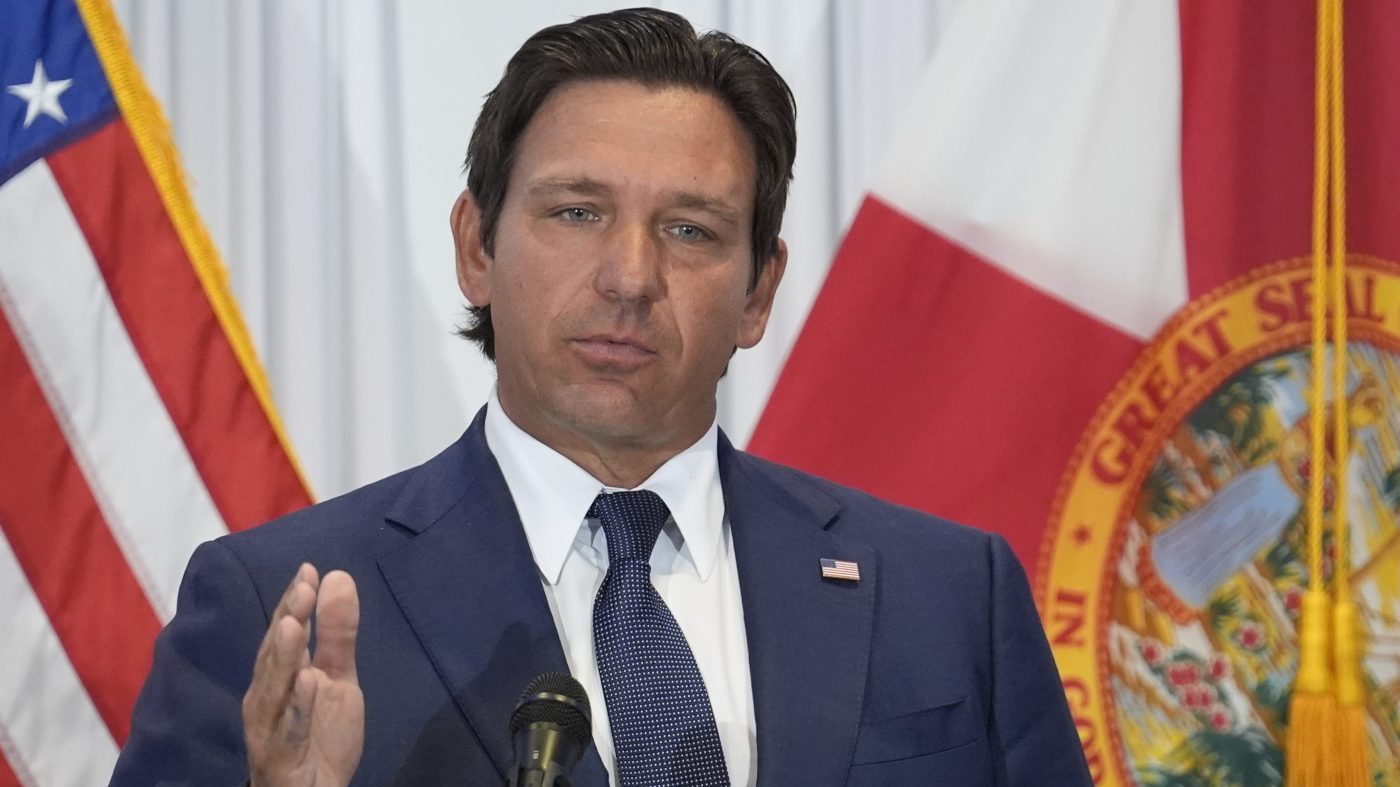
Florida Governor Ron DeSantis has formally postponed a critical special legislative session on congressional redistricting, rescheduling it for late April and broadening its scope to include policies on artificial intelligence and medical freedom. The governor's proclamation on Wednesday moved the session from its original date next week to a window between April 28 and May 1.
Timing and Expanded Agenda
The delay comes as state lawmakers finalize budget negotiations. DeSantis had previously signaled a potential postponement, stating at a press conference in Tallahassee that the redistricting work needed to be completed "within the next couple of weeks." He suggested flexibility, noting, "Maybe on the date that was called, if they, you know, some folks have asked maybe a little bit more time." The rescheduled session will now also tackle emerging issues, with the governor's office expected to present its proposed congressional map directly to the legislature for consideration.

Republican Calculations and Risks
This session represents what analysts see as the final major opportunity for Republicans to redraw congressional boundaries before the midterm elections. The party currently holds a commanding 20-8 advantage in Florida's congressional delegation. However, the effort is fraught with political risk. While some members advocate for aggressive new lines that could potentially net the party additional seats, others fear a backlash that could endanger incumbent Republicans in November. Recent election trends in the state have suggested that an overly ambitious redistricting push could ultimately harm the party's standing.
Further complicating the GOP's task is Florida's state constitution, which contains strict anti-gerrymandering provisions. Governor DeSantis has publicly avoided framing the redistricting effort in terms of partisan gain. Instead, he has pointed to an anticipated—but not yet issued—Supreme Court decision regarding the Voting Rights Act as justification for considering new maps. This legalistic framing is seen as an attempt to navigate the constitutional constraints.
Legislative Expectations and Process
In a memorandum to state senators, Senate President Ben Albritton clarified that the upper chamber is not drafting its own House map. He indicated the Senate expects to receive the governor's proposal and will file it as a Senate bill for the special session. "It is my expectation the Governor’s Office will present his proposal before the Senate Committee on Rules on April 28th," Albritton wrote. This places the onus for the initial map squarely on the governor's office.
Florida House Speaker Daniel Perez echoed the wait-and-see approach in a statement, saying, "we look forward to seeing the governor’s proposed map. The other issues mentioned in the proclamation will be evaluated once we have seen the draft legislation." The dynamic highlights a cautious legislative branch awaiting executive direction on a politically sensitive issue. This internal GOP maneuvering mirrors tensions seen in other states, such as in Virginia where Democrats are nearing a redistricting victory, and contrasts with the procedural delays occurring on the federal level, like the House GOP's postponement of a critical FISA vote.
Broader Political Context
The redistricting push occurs amid other high-stakes political contests that will test party strength, including a special election in New Jersey and a Trump-backed primary in Georgia. The addition of AI policy to the Florida session's agenda also connects to growing state-level scrutiny of technology firms, following actions like the Florida attorney general's probe into OpenAI.
The outcome of Florida's redistricting will have significant implications for the balance of power in the U.S. House of Representatives. With the session now delayed and its agenda expanded, all eyes will be on the map proposal from the governor's office and whether Republican legislators can unite behind a strategy that complies with the state constitution without triggering political consequences that could offset any potential seat gains.