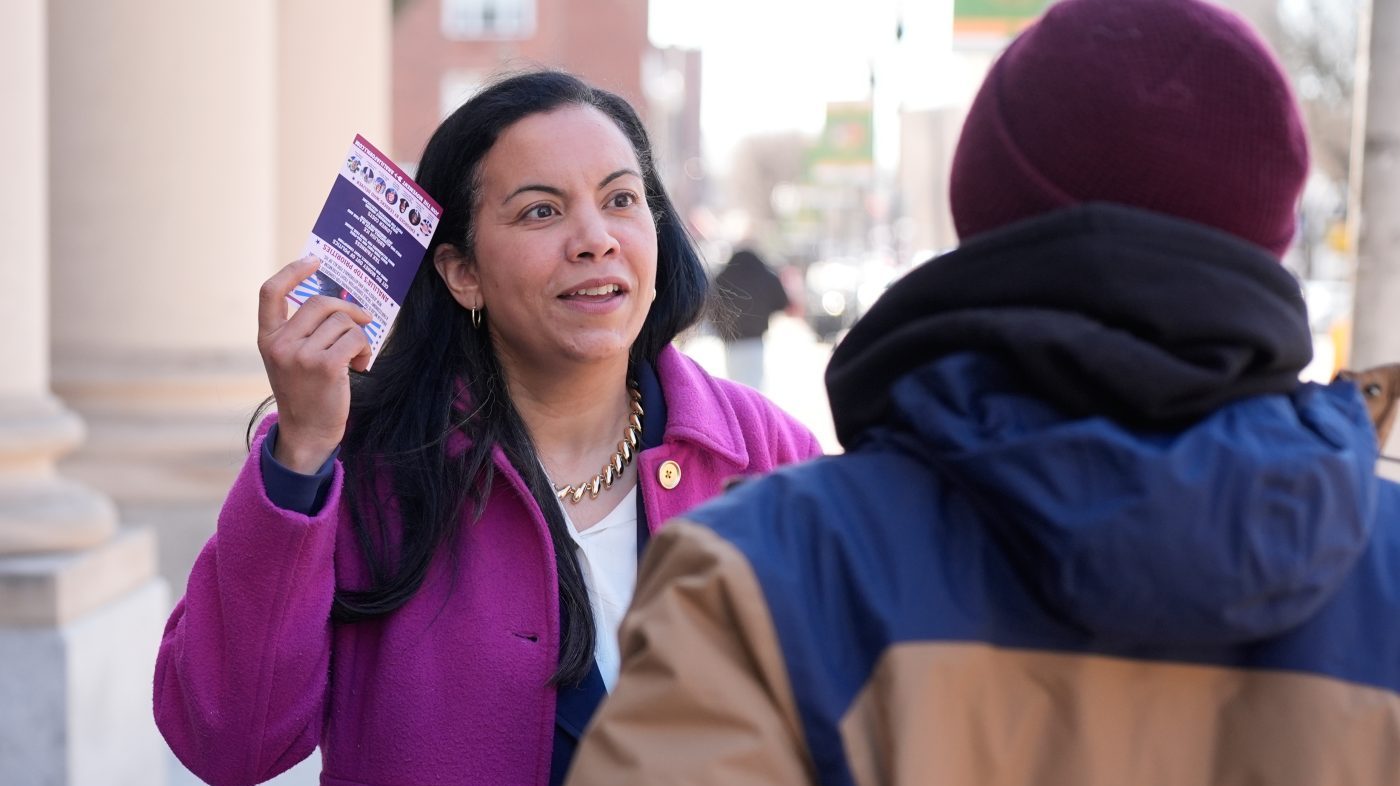
Voters in northern New Jersey’s 11th Congressional District will cast ballots Thursday in a special election to determine who completes the term of former Representative Mikie Sherrill, who vacated the seat after being elected governor. The contest pits progressive Democrat Analilia Mejía, a former senior aide to Senator Bernie Sanders, against Republican Joe Hathaway, a Randolph councilman, and independent candidate Alan Bond.
High Stakes for a Narrow Majority
The outcome carries immediate weight for the House Republican conference and its fragile governing majority. A Democratic victory would slightly narrow the GOP’s margin, complicating legislative maneuvering. More broadly, the race is viewed as an early gauge of Democratic voter energy as the political world begins to turn toward the 2026 midterm elections.
Democrats Hold Early Voting Advantage
Data from early and absentee voting indicates a strong Democratic lead heading into Election Day. Analyses from L2 Data and the anonymous analyst @umichvoter show between 62% and 65% of early votes were cast by Democrats, compared to 20-25% from Republicans. This aligns with the district’s recent electoral history; Vice President Kamala Harris carried it by nearly nine points in 2024, and Sherrill won reelection by about 15 points that same year.
Democratic strategists are watching to see if Mejía can exceed that baseline performance, which would signal robust progressive turnout. Republicans typically see improved participation on Election Day itself, but the early numbers present a steep climb for Hathaway.
A Contentious and Personal Campaign
The campaign has grown notably acrimonious, highlighted by a heated debate earlier this month. Hathaway has aggressively labeled Mejía as a “socialist” and “radical,” focusing intensely on her criticism of Israel’s military campaign in Gaza, which he characterizes as antisemitic. “Probably most starkly highlighted in this race has been her extreme antisemitic rhetoric against the Jewish people and the state of Israel,” Hathaway told The Hill, noting the district's significant Jewish population.
Mejía has forcefully rejected these accusations, framing Hathaway as a loyalist to former President Donald Trump who would enable a conservative agenda in Congress. “The bottom line is that in order to take away another rubber stamp in Congress for Donald Trump, we need to show out in full force,” she said in an interview.
Israel Policy as Central Flashpoint
The war in Gaza has emerged as a defining issue, exacerbated by the involvement of the American Israel Public Affairs Committee’s super PAC in the Democratic primary. Hathaway has pointed to a forum where Mejía did not raise her hand to affirm the Jewish right to self-determination in their ancestral homeland.
Mejía argues her criticism is directed at Israeli leadership, not the Jewish people. “Do we not want a member of Congress who will uphold international law?” she asked during the debate, vowing to combat antisemitism while holding allies accountable. This foreign policy clash echoes broader Democratic tensions, similar to debates seen in other contexts like the U.S.-Iran standoff over the Strait of Hormuz.
Progressive Momentum Expected to Prevail
Political operatives from both parties anticipate a Mejía victory, citing the district's Democratic lean and the party's consolidation behind her candidacy. She has been endorsed by Sherrill and her former primary opponent, ex-Representative Tom Malinowski. A win would add another progressive voice to the House Democratic caucus and serve as a data point for the left's organizational strength, a dynamic also being tested by potential 2028 hopefuls courting key voter blocs.
The result will offer clues about whether progressive economic messaging, which has sometimes struggled to connect, as seen in an analysis of anti-billionaire rhetoric, can drive turnout in a favorable district. All eyes are now on northern New Jersey for a result that will reverberate in both Washington and the early landscape for the next election cycle.