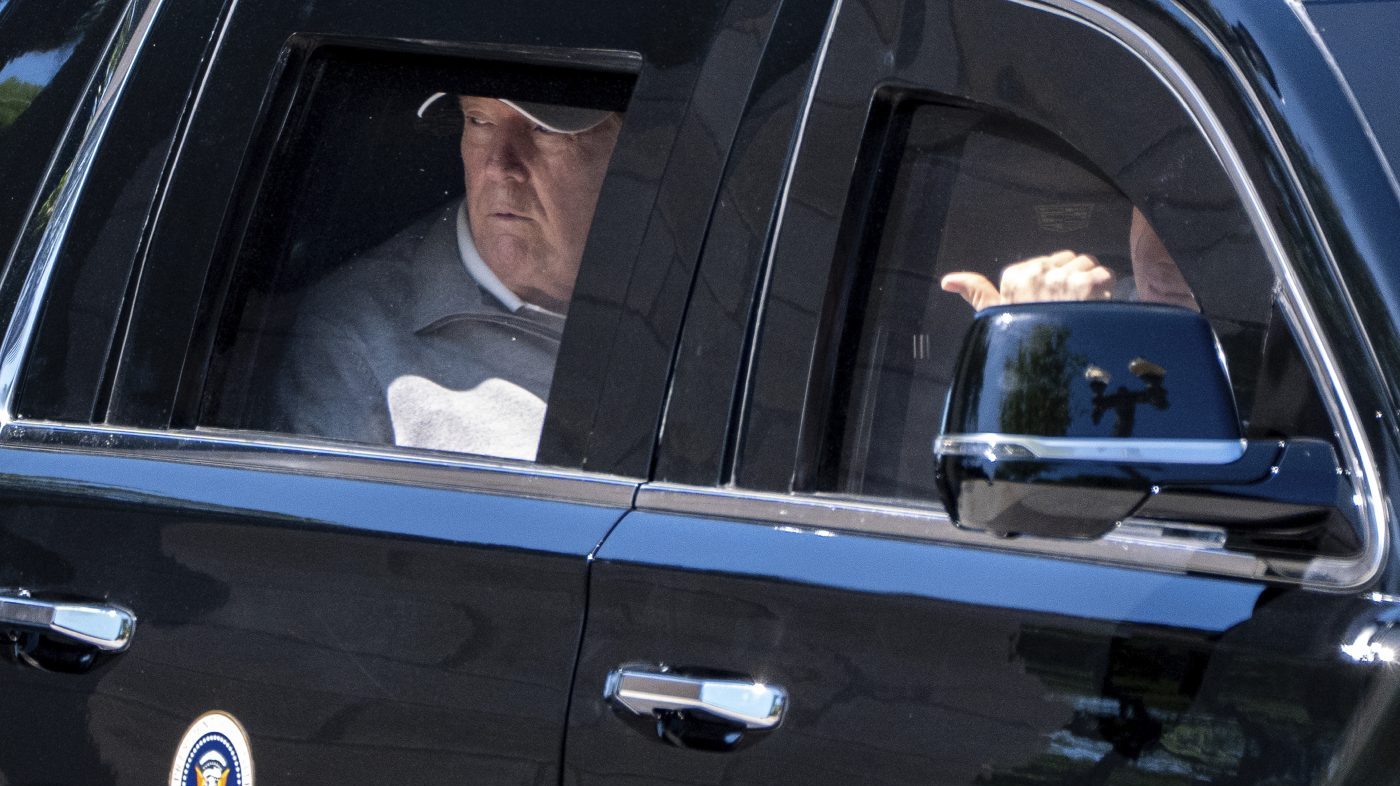
President Donald Trump on Saturday called for the cancellation of the concert celebrating America's 250th birthday, following a wave of artist withdrawals from the Great American State Fair scheduled for the National Mall. In a series of posts on Truth Social, Trump proposed replacing the event with a “giant MAKE AMERICA GREAT AGAIN RALLY” and directed his team to explore a rally on Wednesday at the same location.
Trump wrote that the concert should be scrapped in favor of “a giant MAKE AMERICA GREAT AGAIN RALLY, for 250, instead of having overpriced singers, who nobody wants to hear, whose music is boring, and yet who do nothing but complain.” He further demanded, “Cancel it, just like I canceled my involvement with the failing and unsafe to be in Kennedy Center, because a Highly Conflicted, Crooked Federal Judge, said that I should not be allowed to spend my time and money in order to MAKE THE CENTER GREAT AGAIN.”
The president’s remarks came amid a legal setback: on Friday, U.S. District Judge Christopher Cooper ordered Trump’s name removed from the Kennedy Center within 14 days, a ruling Trump has blasted as part of a “rigged” court system. Trump escalated his attack on the judiciary, writing that Cooper and other judges handling his cases “should be IMPEACHED.” This judicial clash echoes broader tensions over the administration’s policy moves, as Trump has repeatedly denounced federal judges who have blocked his executive actions.
Several artists who had been slated to perform at the June 25 celebration withdrew, citing concerns over the event’s political nature. Country singer Martina McBride stated she “was assured this was a nonpartisan event that was meant to celebrate ALL 50 states.” Rapper Young MC wrote on Facebook that “the artists were never told about any political involvement with the event,” and noted that “despite the claims by the organizers that the event is non-partisan, SPIN magazine describes it as ‘Trump-backed.’” He added, “I hope to perform in D.C. in the near future at an event that is not so politically charged.”
Trump dismissed the departing performers as “Third Rate ‘Artists,’” and vowed to deliver a “major speech” instead. He instructed his representatives “to look at the feasibility of doing an AMERICA IS BACK Rally on Wednesday, Washington, D.C., same time, same location.” The abrupt pivot has raised questions about the administration’s ability to manage large-scale patriotic events amid ongoing security concerns as the America 250 celebrations approach.
Freedom 250, the 501(c)(3) nonprofit organizing the anniversary events, had previously assured the public that the festivities would “honor our history and engage all Americans — welcoming all who share our goal of commemorating this milestone in a way that uplifts and unites America.” A spokesperson for the group declined to comment on Trump’s latest demands, but the organization now faces a logistical and political crossroads.
The controversy underscores the deepening partisan divide over national commemorations. Trump’s call to replace a bipartisan celebration with a campaign-style rally mirrors his broader strategy of using official events to reinforce his political brand. Critics argue the move risks politicizing a milestone that should transcend party lines, while supporters see it as a necessary correction to what they view as a hostile cultural establishment.
As the administration explores the rally option, the fallout from the Kennedy Center ruling continues. Trump’s threat that the center “will collapse, both structurally and financially” without his involvement has alarmed arts advocates. Meanwhile, the president’s attacks on Judge Cooper have drawn rebukes from legal experts who warn that such rhetoric undermines judicial independence.
The White House has not yet confirmed the date or details of the proposed rally. With the June 25 concert in jeopardy, the nation’s 250th birthday celebration is now in flux, caught between competing visions of unity and partisan spectacle.