Republicans on Capitol Hill are trapped in a frustrating cycle of infighting, as internal divisions over an immigration enforcement funding package and the renewal of warrantless surveillance powers leave the party no closer to a breakthrough than a month ago. The standoff has deepened frustration among lawmakers who had hoped to deliver major legislative wins ahead of the midterm elections.
Senate Republicans left Washington last week without passing the reconciliation bill that would fund immigration enforcement. The holdup centers on a $1.776 billion 'anti-weaponization fund'—designed to compensate individuals who claim they were unfairly targeted by the Biden Justice Department—which derailed plans to meet President Trump's June 1 deadline. Privacy hawks are also demanding a warrant requirement and a permanent ban on a central bank digital currency (CBDC) in any long-term extension of Section 702 of the Foreign Intelligence Surveillance Act, which expires in mid-June.
Frustration Boils Over
'This can be a very frustrating place. There's no question about that, but I wish we could get more done,' said Rep. Buddy Carter (R-Ga.), who recently lost his Senate primary bid. Rep. Don Bacon (R-Neb.) added, 'I think we're living in a little bit of dysfunction and chaos.'
The immigration package and FISA extension aren't the only items stuck in legislative limbo. The Senate has yet to take up the House-passed farm bill and housing bill, and any amendments would require sending them back to the House for another vote. Prospects are also dim for a third party-line package that could include funding for the Iran conflict, defense spending, healthcare reform, and fraud prevention.
Finger-Pointing Across Chambers
Rep. Byron Donalds (R-Fla.) blamed the Senate for the paralysis. 'I want the American people to understand that what really holds up this town ... what holds up this town more and more: lazy senators,' Donalds said. He noted that the House had already passed a three-year extension of Section 702 with a CBDC ban, but the Senate refused to take it up. Congress instead passed two short-term extensions after Senate Majority Leader John Thune (R-S.D.) warned that a CBDC ban would be dead on arrival in the upper chamber.
'Asking us what we're doing. Oh, what are they doing? Maybe they should communicate, maybe they should, you know, talk ... it's a novel concept,' Donalds added.
Key Disputes Over Funding and Surveillance
The 'anti-weaponization' fund has alarmed many Senate Republicans, who worry it could allow January 6 rioters—including those convicted of assaulting police officers—to receive compensation. Thune said last week that the White House must address these concerns before the immigration bill can advance after the Memorial Day recess. Another provision allocating $1 billion for a new White House ballroom and Secret Service priorities was ruled against by the Senate parliamentarian, leaving lawmakers split on how to revise it.
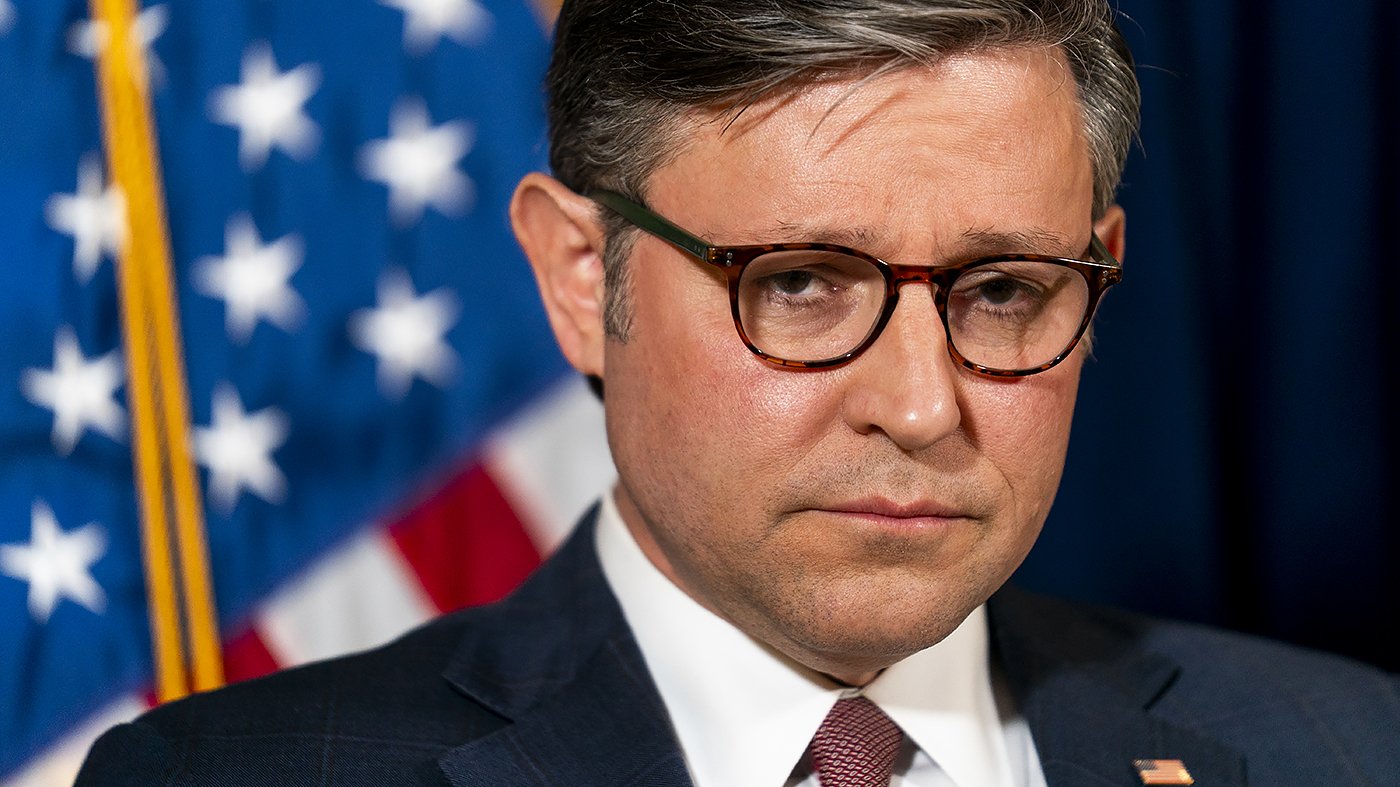
In the House, privacy-minded conservatives have yet to reach a deal with Speaker Mike Johnson (R-La.) on Section 702 reforms. 'Here we go again,' said Rep. Eric Burlison (R-Mo.), a Freedom Caucus member. 'We were almost there. We were almost at a point where we had an agreement. So maybe we can move that ground a little bit.'
Bacon expressed cautious optimism, noting that 'this place works very slow until it doesn't.' He added, 'We have to get FISA done. We got to fund Border Patrol and ICE. If we work with 60 Democrats on FISA, we can get this done pretty quick.' Johnson could use a suspension of the rules to pass a long-term FISA extension, which would require two-thirds support, but that would need significant Democratic backing.
Rep. Tim Burchett (R-Tenn.) was less hopeful. Asked if he was confident lawmakers would meet the FISA deadline, he replied, 'No, I'm not. I'm not confident at all.'
The legislative gridlock comes as Republicans grapple with broader challenges, including ongoing debates over defense policy and international affairs. For now, the party's internal divisions and cross-chamber tensions show no signs of easing, leaving key priorities in jeopardy.