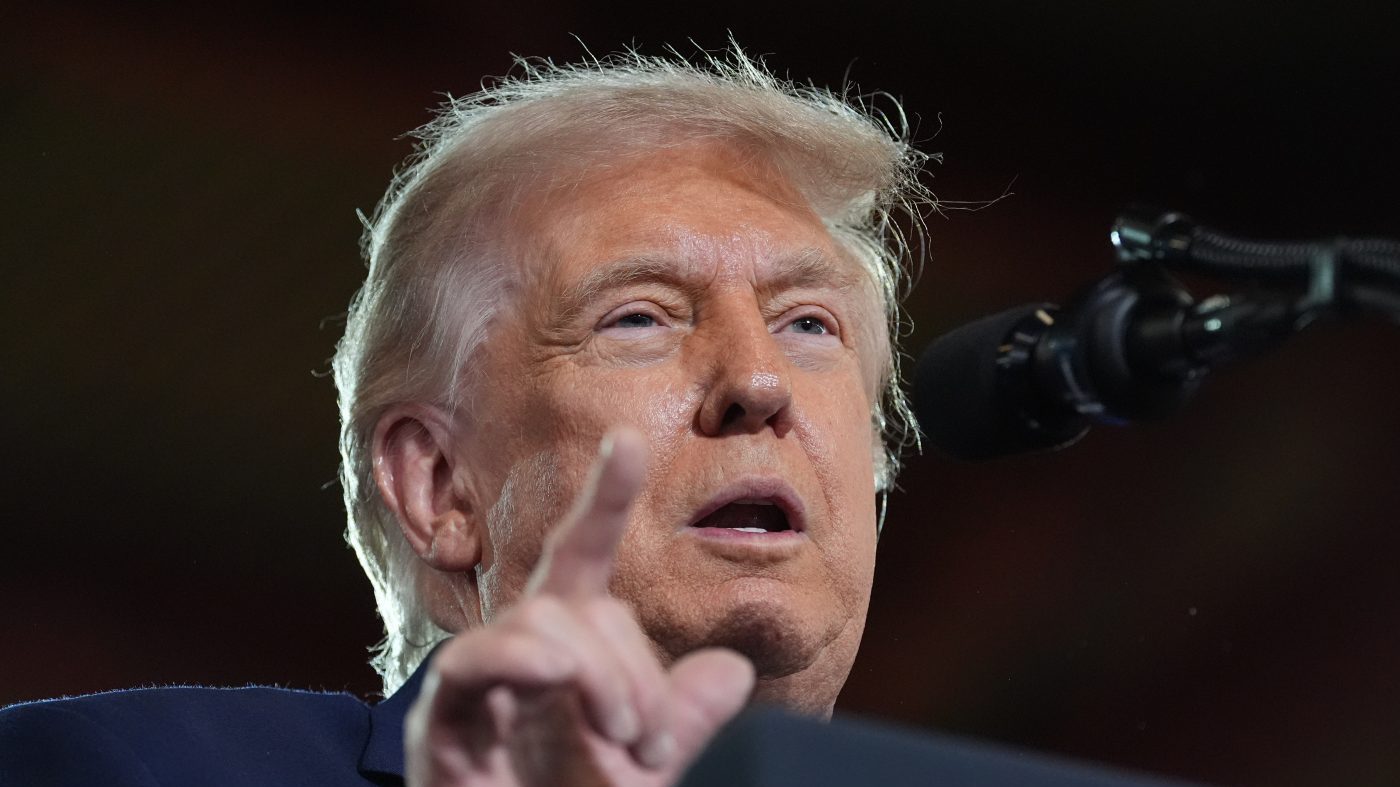
President Donald Trump on Monday revised tariffs on select imported steel, aluminum, and copper products, lowering the rate on some derivative goods from 25 percent to 15 percent. The adjustment, announced via a presidential proclamation, targets items including agricultural equipment and certain heating, air conditioning, and ventilation (HVAC) systems.
The move comes after Trump initially imposed 25 percent tariffs on these derivative products on April 2, citing Section 232 of the Trade Expansion Act of 1962. That provision grants the president broad authority to restrict imports on national security grounds, a tool Trump has repeatedly used during his tenure.
Commerce Secretary Howard Lutnick recommended the reduction, the proclamation states, pointing to “recent circumstances” that have affected domestic industries relying on such equipment. The document emphasizes that these products play a critical role in the U.S. economy, noting that “American farmers use agricultural equipment to produce the food upon which our Nation relies; construction equipment is essential for the continued reindustrialization of our Nation; and material-handling equipment enables industrial logistics and factory operations.”
However, the order maintains 25 percent tariffs on aluminum lithographic plates and steel racks, which were also included in the April derivative tariffs. Trump wrote that keeping those levies at the higher rate will “ensure that the tariffs on metal products are not circumvented,” signaling continued vigilance against potential loopholes.
Under the new framework, companies from certain foreign nations can qualify for a reduced 10 percent tariff on products “composed” entirely of aluminum or steel that was melted and poured in the United States. This provision applies to firms in Argentina, Ecuador, El Salvador, Guatemala, Japan, Liechtenstein, South Korea, Switzerland, Taiwan, the United Kingdom, and the European Union.
For Canadian and Mexican products that qualify for preferential treatment under the U.S.-Mexico-Canada Agreement (USMCA), the 25 percent tariffs will apply only to the non-U.S. content of the product. The proclamation defines “non-U.S. content” as the total value of the product minus the value attributable to parts produced in the United States.
Trump first employed Section 232 tariffs on aluminum and steel imports in 2018 during his first term. More recently, he invoked Section 122 of the Trade Act of 1974—which allows the president to address balance-of-payments deficits—to impose a sweeping 10 percent levy on nearly all U.S. imports after the Supreme Court struck down his emergency tariffs earlier this year. But a three-judge panel of the U.S. Court of International Trade last month ruled against those global tariffs, determining the administration improperly used the provision.
The latest tariff adjustments come amid ongoing trade tensions and legal battles over Trump’s trade authority. Critics argue the piecemeal approach creates uncertainty for businesses, while supporters say it protects domestic industries. The administration has not indicated whether further changes are planned.