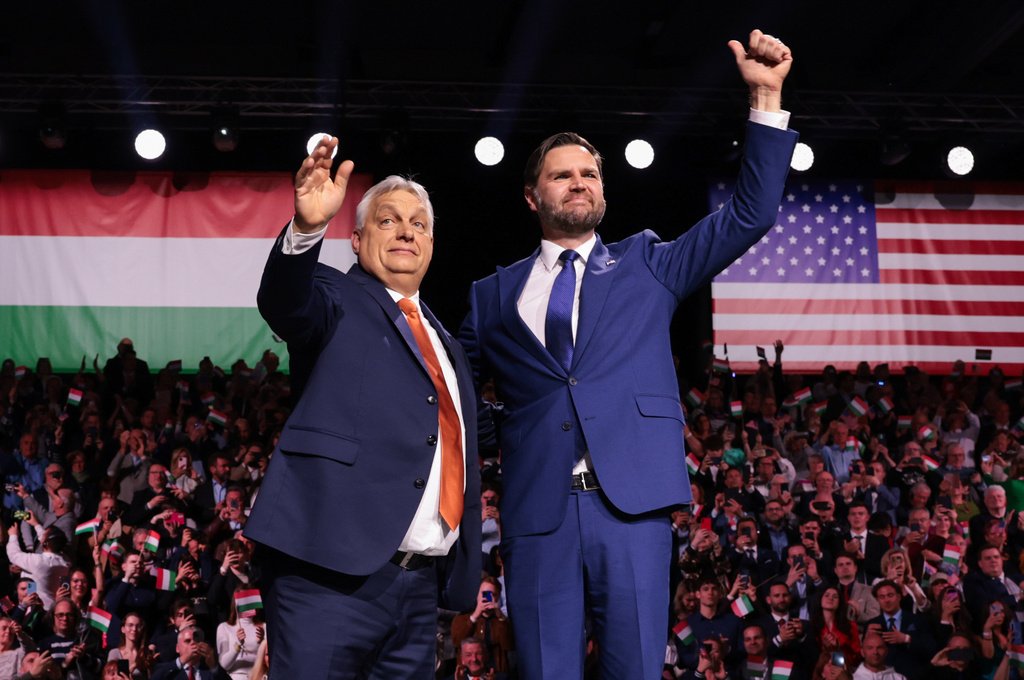
In an unusual diplomatic breach of protocol, Vice President JD Vance used an official state visit to Hungary to deliver a direct campaign endorsement for Prime Minister Viktor Orban's reelection. Standing before thousands of supporters at Budapest's MTK Sportpark, Vance framed the election as a battle for "sovereignty and democracy," explicitly urging the crowd to "stand with Viktor Orban" at the polls.
Despite Vance's public insistence that he wasn't in Hungary to influence voters, his rally speech constituted clear electoral intervention. The Trump administration had coordinated this support for months, with President Trump releasing a video titled "A Complete and Total Endorsement" in March, Secretary of State Marco Rubio delivering similar messages in February, and Donald Trump Jr. posting election-day appeals on social media.
A Resounding Rejection
The administration's full-court press proved ineffective. Orban lost by such a significant margin to opposition Tisza party leader Peter Magyar that the prime minister conceded defeat immediately, calling the results "clear." This rejection came despite years of Orban cultivating close ties with Trump and positioning himself as a champion of what he terms "illiberal Christian democracy."
Ironically, during his visit, Vance accused the European Union of "one of the worst examples of foreign election interference I have ever seen." He was referring to financial penalties Brussels imposed on Hungary for democratic backsliding, claiming EU bureaucrats "tried to destroy the economy of Hungary" despite the bloc underwriting Hungary's economy for two decades.
Hypocrisy and Historical Context
Vance's criticism of EU intervention while openly campaigning for Orban drew immediate condemnation. EU spokesman Thomas Regnier noted that "in Europe, elections are the sole choice of the citizens." Magyar himself stated: "No foreign country may interfere in Hungarian elections. This is our country."
The incident highlights a long history of foreign electoral interventions. According to research by international relations professor Dov H. Levin, the United States has intervened in more foreign elections than any other country between 1946 and 2000, attempting to influence 81 of 938 competitive national elections. Such interventions, Levin found, increased vote share by about 3 percent on average—enough to potentially change outcomes in close races.
This episode reflects the broader pattern of the Trump administration testing diplomatic norms, similar to when the Lebanese president publicly contradicted a Trump administration announcement about direct talks with Israel. The administration's foreign policy approach often prioritizes ideological alignment over traditional diplomatic restraint.
While experts debate how much foreign interference actually sways voters, the Hungarian result demonstrates clear limits. No amount of external support could overcome domestic dissatisfaction with Orban's government. The failed intervention also complicates U.S.-EU relations, particularly as the administration pursues other controversial policies like dismantling energy efficiency standards that European allies support.
The outcome serves as a cautionary tale about the risks of overt electoral meddling. As one former congressional staffer observed, the Trump team's efforts proved that "no amount of foreign pump-priming can replenish an empty well"—a lesson that may resonate as the administration continues its unconventional approach to international relations.