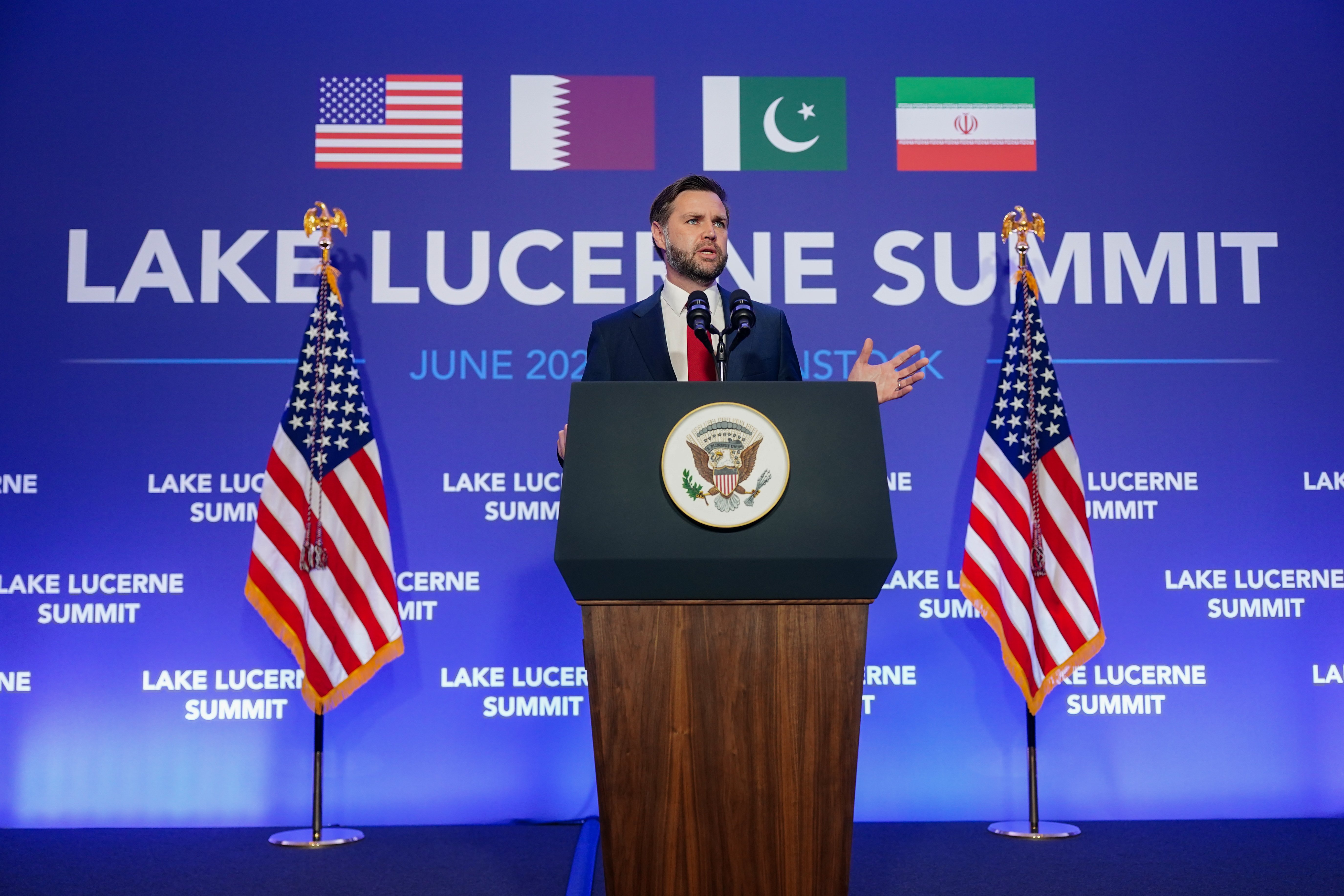
Vice President JD Vance’s first face-to-face meeting with Iranian officials in Switzerland kept the fragile peace process alive, but the path ahead is cluttered with explosive obstacles over Tehran’s nuclear ambitions and the ongoing Israeli campaign in Lebanon.
Nuclear Details and Lebanon Tensions
The talks near Lucerne yielded what Vance portrayed as a minor victory: an apparent Iranian pledge to allow International Atomic Energy Agency inspectors back into the country. Yet that concession merely mirrors the Obama-era deal President Trump once denounced as a disaster. Iran has not confirmed the move, and the U.S. simultaneously lifted 60-day restrictions on Iranian oil sales, giving Tehran a financial lifeline after weeks of American and Israeli bombing that began February 28.
The most volatile issue remains Lebanon, where Israeli Prime Minister Benjamin Netanyahu’s government presses its invasion against Hezbollah. The gap between U.S. and Israeli objectives is widening. More than 4,100 people have died since early March, according to Lebanese authorities, with 47 killed in a single 24-hour period from Israeli airstrikes. Four Israeli soldiers died when Hezbollah struck their tank.
Domestic Blowback and Political Peril
The 14-point Memorandum of Understanding released last week has drawn fire from both flanks. Senator Ted Cruz (R-TX) warned Trump is “receiving some really bad advice,” while conservative commentator Ben Shapiro called the deal a “disaster.” Senate Minority Leader Chuck Schumer (D-NY) mocked it as “the art of the surrender.”
Trump’s approval on Iran remains stuck near second-term lows. An AP/NORC poll found 65 percent of adults unhappy with his handling of the situation. The president has tried to frame the deal as a win, threatening on social media to “hit Iran very hard again” if it does not rein in Hezbollah. That threat nearly derailed the Swiss talks, though Vance noted negotiations continued past 1 a.m.
Oil Prices and Strait of Hormuz
Despite the political noise, the administration’s primary goal—reopening the Strait of Hormuz—has seen real progress. The U.S. reported 55 merchant ships transited the channel on Saturday, a fraction of pre-war traffic but a sharp improvement from near-total blockage. West Texas Intermediate crude traded around $75 a barrel Monday, down from a crisis peak above $112. The national average gas price fell below $4 to $3.93, according to AAA.
Those numbers matter for Trump’s party, which faces midterm elections in just over four months. A new poll shows Trump's Iran approval remains low despite the deal, adding pressure on vulnerable GOP incumbents.
Technical Talks and the 60-Day Clock
Vance and Iranian Parliament Speaker Mohammad Bagher Ghalibaf have left Switzerland, leaving technical negotiators to flesh out the MOU’s skeletal framework within 60 days. The Obama-era JCPOA took 18 months to negotiate and ran nearly 160 pages. Key questions remain: Will all of Iran’s highly enriched uranium be diluted? Will any be shipped abroad? Iran insists on its right to enrich for peaceful purposes—a red line for Washington.
Meanwhile, Vance faces growing GOP backlash over the deal, with conservatives accusing the administration of conceding too much too soon. The vice president’s upbeat characterization of the talks as a “very, very good day” has done little to quiet critics on either side.