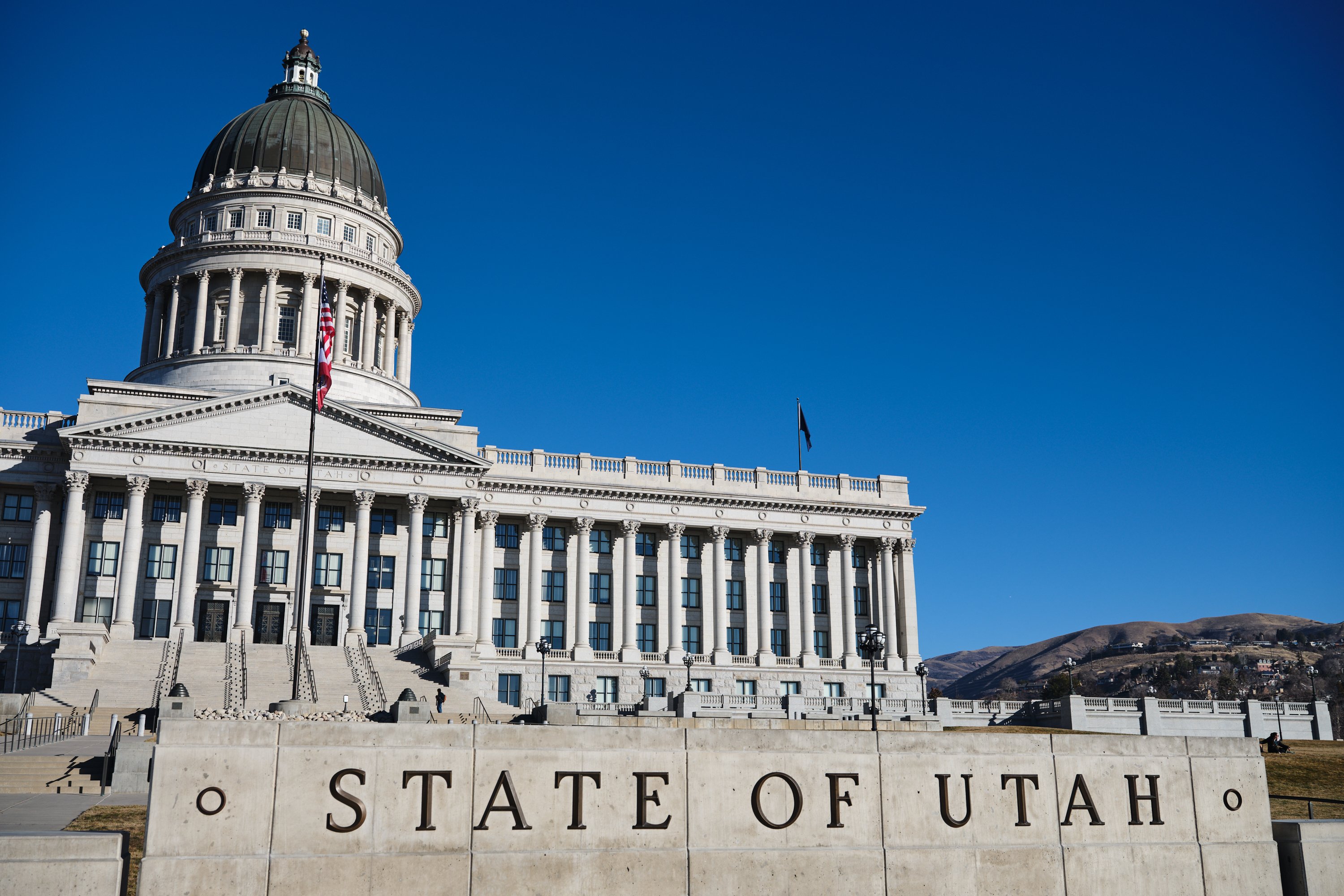
A Republican-led campaign to dismantle Utah's independent redistricting commission has collapsed after failing to secure a place on the November ballot. The measure, which sought to repeal a voter-approved commission established in 2018, fell short when thousands of citizens withdrew their support from the required petition.
Signature Threshold Not Met
Under Utah law, citizen-led initiatives must gather approximately 141,000 valid signatures, representing 8% of registered voters, across at least 26 of the state's 29 Senate districts. While organizers for the repeal effort, known as Utahns For Representative Government, initially surpassed this benchmark in February, a subsequent campaign by opposition groups successfully convinced 9,000 signatories to remove their names. This reversal ultimately left the petition below the legal threshold.
The targeted law, Proposition 4, was passed by voters in 2018 to create a seven-member independent commission tasked with drawing and recommending political maps to the state legislature. The GOP push for repeal aligned with a broader national trend of state lawmakers seeking to regain control over the redistricting process. The effort garnered high-profile support from former President Donald Trump, Vice President JD Vance, Senator Mike Lee (R-Utah), and Governor Spencer Cox.
Organized Opposition and Spending
Opposition was spearheaded by the group Better Boundaries, which campaigned aggressively for voters to rescind their signatures before the April 23 deadline. "With reports suggesting the Prop 4 repeal may not qualify for the ballot, we will continue to help Utah voters who felt they were misled about what they signed to remove their signatures," Elizabeth Rasmussen, executive director of Better Boundaries, told the Deseret News.
Campaign finance reports revealed significant outside spending in the signature-gathering phase. According to The Salt Lake Tribune, an external group spent $4.3 million to hire out-of-state workers to collect signatures in favor of the repeal, a tactic that fueled criticism from opponents.
This setback for Utah Republicans mirrors the complex political dynamics surrounding redistricting nationwide. As seen in the recent Missouri Supreme Court decision upholding a GOP-led mid-decade remap, control over district lines remains a fiercely contested battleground. Similarly, Democratic leaders like Hakeem Jeffries have warned that aggressive partisan gerrymandering can provoke electoral consequences, a point underscored by the recent special election upset in Florida.
The failure of the Utah initiative also arrives amid a charged national political climate where voting procedures and ballot access are under intense scrutiny. The Supreme Court is currently examining rules for counting ballots received after Election Day, and some Republican-led election reforms, like those in the SAVE America Act, have faced analysis suggesting they could unintentionally disadvantage their own voters.
For now, Utah's independent redistricting commission remains intact. The outcome demonstrates the potent role of direct citizen engagement, where a well-organized campaign to withdraw petition support can counter a well-funded signature drive. It leaves state lawmakers, who had sought to reclaim sole authority over map-drawing, facing the existing commission framework as they approach the next redistricting cycle.