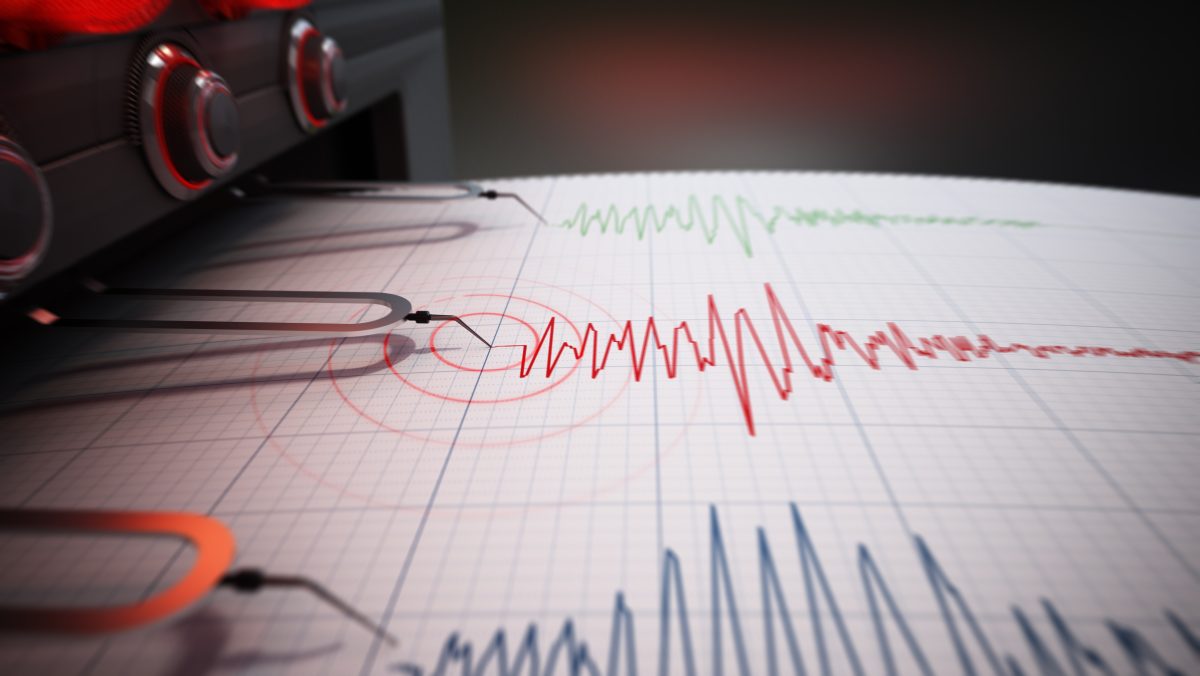
The Imperial County desert experienced a significant earthquake swarm over the weekend, with more than 350 tremors recorded since Friday evening, according to the U.S. Geological Survey. The strongest quake, a magnitude 4.7, struck near Brawley at 11:10 p.m. Saturday, rattling residents across the region but causing little to no damage.
The California Governor’s Office of Emergency Services confirmed it is coordinating with local agencies in response to the swarm, which began around 5:40 p.m. Friday with a series of microearthquakes. By Sunday afternoon, the USGS had logged 354 events, a number that continued to climb as aftershocks persisted.

Nearly 200,000 residents reported feeling shaking, from strong tremors in Brawley to weaker shaking in cities like El Centro, Calexico, El Cajon, Poway, and Chula Vista. The USGS ShakeAlert system was activated multiple times, sending warnings to mobile phones just before midnight Saturday.
The swarm occurred in the Brawley seismic zone, an area the California Institute of Technology describes as “prone to earthquake swarms.” According to the USGS, this zone has a history of such swarms, linked to geothermal energy exploitation and its location near the complex Brawley fault zone, which connects intricately to the Imperial fault zone. Unlike typical earthquake sequences that follow a mainshock-aftershock pattern, swarms consist of multiple similar-sized quakes without a clear primary event.
Officials emphasized that while the shaking was widespread, damage was minimal. The USGS reported light to no damage across the area, though the cause of the swarm remains unclear. Residents are advised to follow standard safety protocols: “drop, cover, and hold on” when shaking is felt or alerts are received.
The swarm comes amid broader political and policy discussions in California, including debates over disaster preparedness and state response mechanisms. For instance, California’s anti-hate program recently faced scrutiny over funding a group whose leader made controversial remarks, while the state is also pursuing record fines against State Farm over wildfire claims failures—both issues highlighting the state’s complex governance landscape.
As the region remains seismically active, authorities continue to monitor the situation. The USGS encourages residents to report their experiences to help refine early warning systems and improve future response efforts.