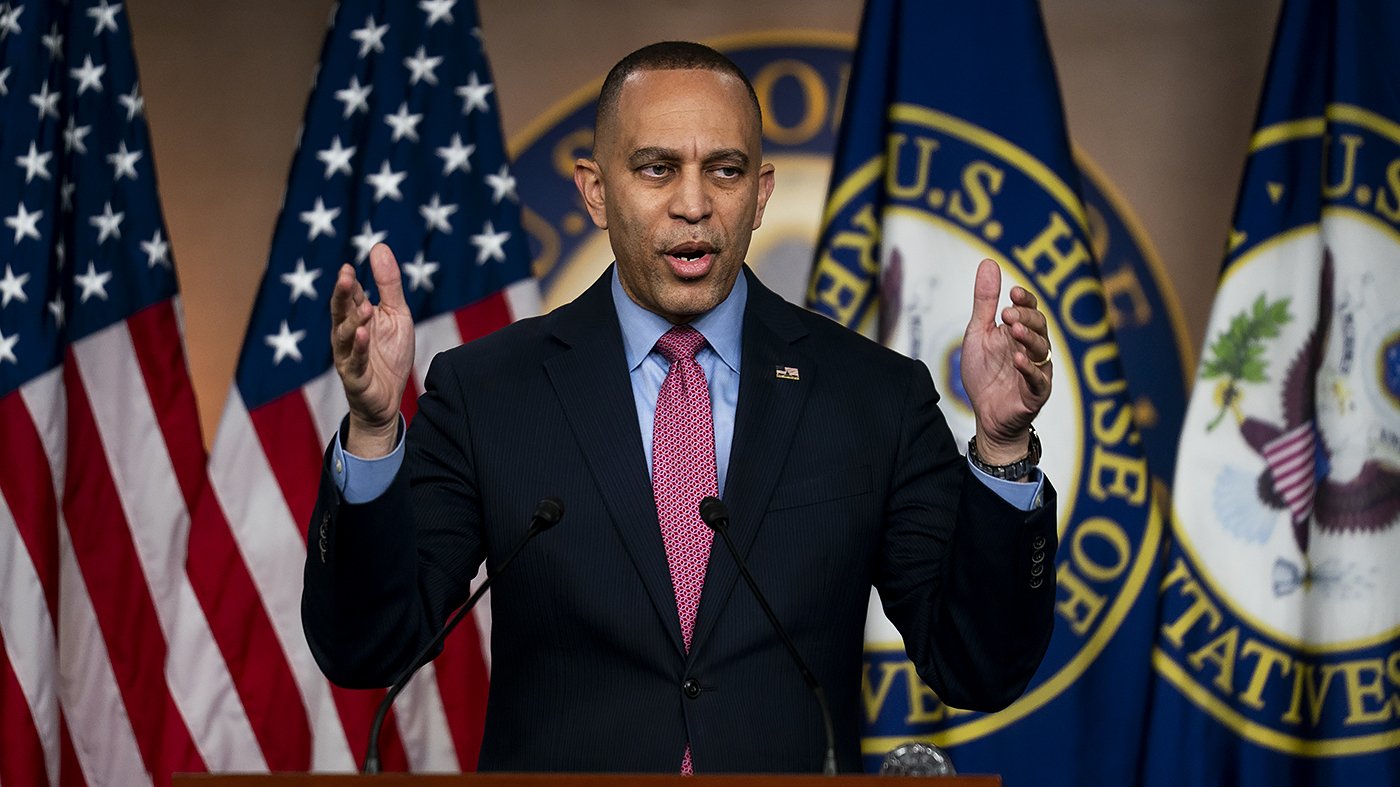
House Democratic Leader Hakeem Jeffries issued a stark warning to Republican strategists on Tuesday, suggesting their aggressive redistricting campaigns could ultimately undermine their own electoral prospects. The caution followed a significant Democratic victory in a Florida special election for a state House seat that had previously favored former President Donald Trump by double digits.
A Warning Shot from Florida
In a social media post, Jeffries highlighted the victory of Democrat Emily Gregory, a health and fitness business owner, who defeated Republican Jon Maples by 2.2 percentage points in a Palm Beach County district. The area notably includes Trump's Mar-a-Lago resort. "We will crush House Republicans in November if DeSantis tries to gerrymander the Florida congressional map," Jeffries declared, framing the local win as a potential harbinger for the national midterm elections.
The victory is part of a broader pattern of Democratic overperformance in recent special elections. It follows another upset earlier this year in Texas, where Democrat Taylor Rehmet captured a state Senate seat in a Trump-favored district. These results suggest shifting political dynamics in key suburban areas that were once Republican strongholds.
DeSantis's Redistricting Gambit
The political clash centers on Florida Governor Ron DeSantis's call for a special legislative session next month focused on redrawing the state's congressional maps. Republicans currently hold a commanding 20-8 advantage in Florida's U.S. House delegation and are reportedly aiming to secure up to five additional seats through the redistricting process. However, the governor's authority to order such a session has already been challenged by some legal observers.
This move by Florida is part of a nationwide, off-cycle redistricting battle that began when Texas redrew its congressional maps last year, abandoning the traditional once-a-decade timeline tied to the U.S. Census. States including California, New York, and Maryland subsequently initiated their own map revisions, creating a continuous state of political warfare over district boundaries.
Strategic Implications for November
Jeffries and other Democratic leaders interpret Gregory's win as evidence of a rising wave of voter sentiment against the GOP, potentially imperiling Republican redistricting math. The Democratic victory in a district Trump carried by 11 points in 2024 serves as a direct counter-narrative to Republican assumptions about voter behavior in Florida, a critical battleground state.
The outcome also provides Democrats with a powerful rhetorical tool. They can now argue that even carefully engineered maps, like the one that created this Florida House district, may not withstand shifting voter allegiances, particularly in affluent, educated suburban communities. For more on recent Democratic gains in the state, see the analysis of Brian Nathan's Florida Senate victory in Tampa.
The special election result places additional pressure on Florida Republicans as they prepare for their redistricting session. Any map perceived as an extreme gerrymander could mobilize Democratic voters and independent moderates, potentially creating the backlash Jeffries predicted. The national Democratic apparatus is likely to use this Florida result to solicit donations and motivate volunteers, arguing that Republican overreach is creating unexpected opportunities.
As both parties brace for a contentious election cycle, the fight over Florida's maps will be a critical test of political power. The clash between Jeffries's warning and DeSantis's ambition sets the stage for a high-stakes confrontation with implications far beyond the Sunshine State, influencing control of the U.S. House and the political landscape for the remainder of the decade.