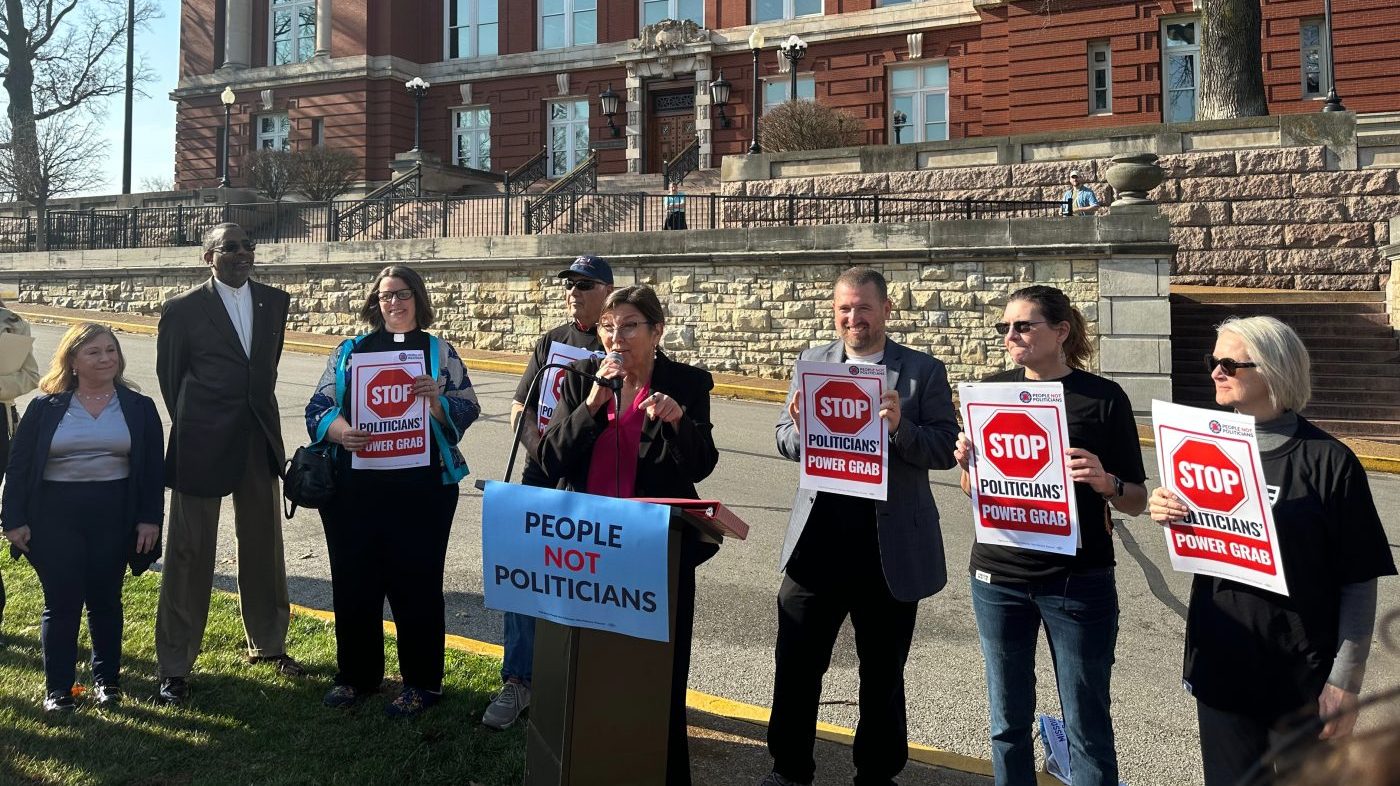
The Missouri Supreme Court delivered a significant victory to state Republicans on Tuesday, ruling in a 4-3 decision that the legislature possesses the authority to redraw congressional districts outside the traditional post-census timeframe. The ruling upholds a map passed last year that dismantles Democratic Representative Emanuel Cleaver's district, creating a new pickup opportunity for Republicans in the upcoming general election.
A Constitutional Question Settled
Writing for the majority, Judge Zel Fischer stated that while the Missouri Constitution requires the General Assembly to redistrict after receiving certified census data, it does not explicitly prohibit the legislature from exercising its "plenary power" to legislate congressional boundaries at other times. "The circuit court correctly concluded the new map did not violate the Missouri Constitution," Fischer wrote, affirming the lower court's judgment.
The decision centers on constitutional interpretation. Democratic-aligned groups had argued that by specifying one mandatory time for redistricting, the constitution implicitly forbids it at any other point in the decade. Fischer rejected this reasoning, noting that "Appellants acknowledge the Missouri Constitution does not expressly prohibit mid-decade congressional redistricting and, instead, argue the 'Constitution denies such power by clear implication.' Appellants are incorrect."
National Redistricting Battlefield
Missouri now joins a growing list of states where partisan control has triggered mid-decade map changes, turning redistricting into a continuous political battle rather than a once-a-decade process. Republicans in Texas and North Carolina have pursued similar strategies, often backed by national party apparatuses, while Democrats in California successfully redrew lines following a voter-approved initiative.
States including Ohio and Utah have also enacted new maps this cycle, some under court mandate, while Florida and Virginia may see additional changes before November. This trend reflects the high stakes of House control, where even single-seat advantages can determine legislative majorities.
Political Consequences and Next Steps
The immediate effect solidifies a congressional map that analysts believe favors Republicans in six of Missouri's eight districts, up from the previous five. The reconfigured Fifth District, previously represented by Cleaver, now incorporates more Republican-leaning rural areas, diminishing Democratic prospects.
Despite the legal setback, Democratic advocates are pursuing a parallel political strategy. Organizers are working to place a referendum on the November ballot that would overturn the new map through a direct vote, setting the stage for continued conflict over Missouri's congressional representation. This judicial ruling, like recent actions by the U.S. Supreme Court on election procedures, underscores how courts are increasingly arbitrating fundamental political disputes.
The 4-3 split decision highlights the deep judicial divisions surrounding redistricting authority. The dissent, while not detailed in the available excerpt, likely argued for a stricter interpretation of constitutional limits on legislative power, a debate playing out in state courts nationwide. This ruling follows other high-profile state court actions on law enforcement and public safety, such as when Missouri police intercepted fentanyl-laced dolls, demonstrating the broad scope of state judicial influence.
As both parties leverage every available tool—legislative, judicial, and ballot initiative—to shape electoral maps, the Missouri decision reinforces that absent explicit constitutional prohibitions, the party controlling state government holds considerable power to adjust political boundaries between censuses. This ruling may encourage similar efforts in other states where one party holds unified government control, ensuring redistricting remains a perennial feature of the American political landscape.