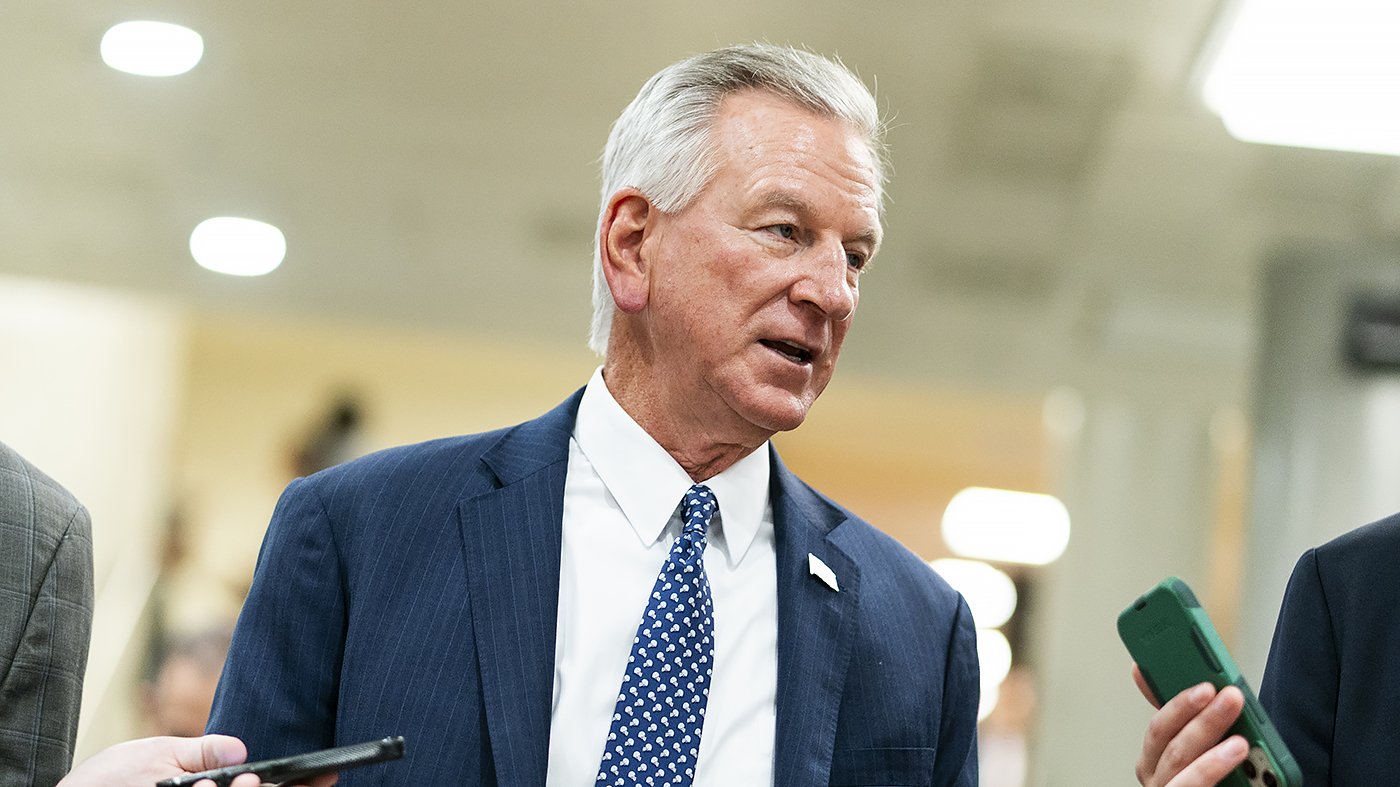
Senator Tommy Tuberville, the Alabama Republican and former major college football coach, unveiled legislation on Tuesday aimed at imposing federal restrictions on how often student-athletes can switch schools. The bill represents a direct congressional challenge to the current transfer landscape, which Tuberville bluntly stated has "screwed up" college sports.
The One-Time Transfer Rule
The core of Tuberville's proposal would permit athletes a single transfer without penalty. Any subsequent move would require the athlete to sit out for a full academic year before competing for their new team. This framework seeks to roll back the effects of a 2024 settlement between the NCAA and the Department of Justice that established a policy allowing unlimited transfers.

"Transferring every year interrupts a student's education and is bad for team morale," Tuberville wrote in a social media post announcing the bill. He framed his legislation as a simple fix: "That's why I'm introducing a bill that would allow student-athletes to transfer 1 time without penalty, no questions asked. After that if you choose to transfer, you sit out a year."
Clash Over 'Unrestricted Free Agency'
Drawing on his coaching background at Auburn, Ole Miss, Texas Tech, and Cincinnati, Tuberville argued the current environment has devolved into "unrestricted free agency rather than amateur competition." In an interview with Outkick, he claimed athletes are now "selling themselves" for financial offers in the range of $50,000 to $100,000 through Name, Image, and Likeness (NIL) deals, rather than committing to athletic programs.
This view conflicts sharply with the Biden administration's position. Assistant Attorney General Jonathan Kanter of the DOJ's Antitrust Division has previously asserted that college athletes should not have to "unfairly limit their mobility" and should be free to choose institutions that "best meet their academic, personal and professional development needs."
The NIL and Transfer Portal Nexus
The debate is inextricably linked to the NCAA's 2021 adoption of NIL policies, which allow athletes to earn compensation from endorsements. While previously banned, the change was driven by athlete and coach advocacy. However, Tuberville and other critics contend it has fueled a transactional transfer market, where schools promise superior brand deals to lure athletes feeling overlooked at their current programs.
Citing NCAA statistics, Tuberville said the issue prompted thousands to enter the transfer portal last year alone: 3,200 football players, 2,300 men's basketball players, and 1,500 women's basketball players. He portrays this churn as fundamentally destabilizing to both teams and academic continuity.
Political Dimensions and Executive Action
The issue has reached the highest levels of Republican politics. Tuberville confirmed he has discussed the problem with former President Donald Trump. Earlier this month, Trump indicated he would soon sign an executive order addressing college athletics, NIL deals, and the transfer portal, suggesting federal intervention could become a campaign issue. This move by Tuberville adds to a series of Republican-led policy pushes on cultural and institutional matters, similar to recent efforts like Governor DeSantis's proposal to replace the TSA with private security.
The bill enters a complex legal and political arena. It pits congressional authority against both a major antitrust settlement and the traditional governance structure of the NCAA. Its progress may also intersect with other simmering political conflicts over federal authority, akin to Minnesota's escalating legal fight with the federal government over evidence. Furthermore, the focus on a specific regulatory fix contrasts with broader administrative controversies, such as the lawsuit proceeding against Elon Musk's role in the prior administration.
Tuberville's legislation is likely to face significant hurdles in a divided Congress, but it signals a growing willingness among lawmakers to directly regulate the business of college sports, an area long governed by the NCAA and shaped by court rulings. The proposal sets the stage for a renewed debate over the balance between athlete freedom, educational stability, and the preservation of traditional collegiate athletic models.