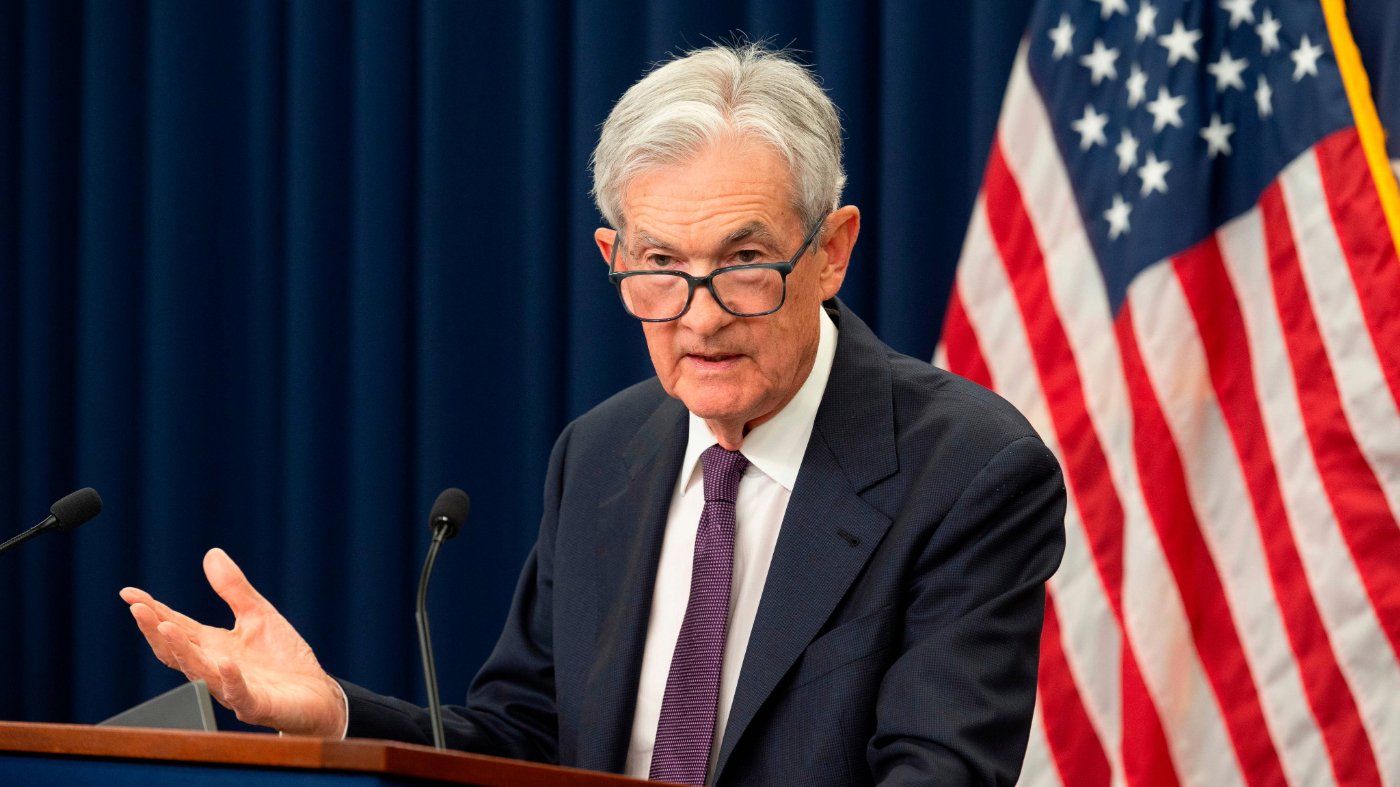
Federal Reserve Chair Jerome Powell acknowledged during the March Federal Open Market Committee press conference that a series of global supply shocks have complicated the central bank's fight against inflation. Powell framed the COVID-19 pandemic, Trump-era tariff hikes, and two recent oil price spikes as isolated events, but conceded that these disruptions have stalled progress on lowering price pressures. The Fed opted to hold policy steady, a decision that reflects growing unease about the persistence of inflation.
The traditional Fed playbook has been to look past supply shocks, reasoning that interest rate adjustments cannot fix disrupted supply chains and could harm the broader economy. However, Powell's admission signals a potential shift in that approach. Analysts like Jon Hilsenrath argue in a recent Fortune piece that the frequency of these shocks may indicate a deeper global economic disorder, which could make inflation more stubborn and entrench expectations.

This view is not universally held. Many economists still treat these events as anomalies, a legacy of the post-Bretton Woods era where currency crises and asset bubbles were seen as outliers. In my book Global Shocks, I distinguish between shocks occurring during high-inflation periods—where central bank tightening had predictable market effects—and those in low-inflation eras, where policy responses varied widely across countries.
The current cycle is unique because the shocks are supply-driven rather than demand-driven. The COVID-19 pandemic was the most severe public health crisis in a century, triggering a massive Fed response: rates cut to zero and large-scale bond purchases. While this fueled a strong recovery, the Fed misjudged the temporary nature of supply disruptions and underestimated the impact of $5 trillion in federal spending. It was slow to tighten in 2021, only accelerating when Russia invaded Ukraine and oil prices surged in 2022.
The subsequent shocks are directly linked to decisions by President Donald Trump. His tariff increases, the highest since the 1930s, prompted the Fed to cut rates in 2024, hold them steady through early 2025, and resume easing later that year as inflation moderated. The second shock—the war with Iran—has caused what the International Energy Agency calls the largest oil disruption in history. Energy experts describe it as a nightmare scenario that could reshape markets for years.
The key uncertainty is how long it will take to reopen the Strait of Hormuz and rebuild oil inventories. The International Monetary Fund's latest World Economic Outlook projects disruptions fading by mid-2026, with global growth slowing to 3.1% this year from 3.4% in 2024-2025. A more protracted conflict could trigger a global recession. Unlike the 1979 Iranian Revolution, which quadrupled oil prices and caused a debt crisis among developing nations, international credit flows have so far remained stable.
That stability may be fragile. The U.S. worked closely with G7 allies to stabilize financial systems in the 1980s, but the current administration's unilateral military action against Iran has strained those alliances. Whether cooperative spirit can be restored is an open question.
Domestically, monetary policy is on hold as Kevin Warsh prepares to take over as Fed chair. Warsh has signaled support for easing, betting that an AI boom will reduce inflation risks. However, three regional bank presidents opposed signaling further rate cuts at the April FOMC meeting. The Wall Street Journal reports that the Fed may not look past this energy shock, as inflation is rising again.
Nicholas Sargen, Ph.D., an economic consultant affiliated with the University of Virginia's Darden School of Business, notes that the second edition of his book Global Shocks is forthcoming. His analysis underscores the challenge: the Fed's traditional framework for handling supply shocks may no longer suffice in an era of cascading global disruptions.